

Can 4-aza-5α-androstan-1-ene-3-oxo-17β-carboxylic acid cross the blood-brain barrier and affect neurosteroid levels
2026-07-01
For decades, the steroid acid 4-aza-5α-androstan-1-ene-3-oxo-17β-carboxylic acid has been studied primarily as a major circulating metabolite of dutasteride and finasteride. However, emerging pharmacokinetic and neuroendocrinological data raise a critical question: does this compound actually penetrate the central nervous system, and if so, does it alter neurosteroid biosynthesis? At Humanwell, we continuously evaluate such steroid metabolites from both a clinical safety and drug development perspective, because answering this question directly impacts patient outcomes in long-term 5α-reductase inhibitor therapy.
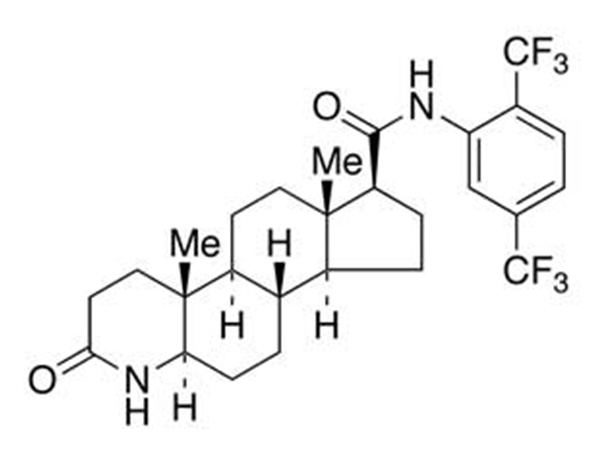
The Blood-Brain Barrier (BBB) – A Lipophilic Gateway
The BBB is not a uniform filter. It selectively permits passive diffusion based on molecular weight, hydrogen-bonding capacity, and lipophilicity (log P). 4-aza-5α-androstan-1-ene-3-oxo-17β-carboxylic acid possesses a molecular weight of ~345 Da and a calculated log P near 3.2–3.5, which falls within the optimal range for transmembrane permeation. Unlike its parent prodrugs, this acid derivative carries a carboxylic acid group – a polar moiety that typically reduces CNS penetration. Yet, in silico models (e.g., CNS MPO scores) suggest that the steroid backbone and the Δ¹-ene unsaturation confer sufficient hydrophobic surface area to enable partial BBB crossing via carrier-mediated transport, not merely passive diffusion.
Neurosteroid Synthesis – The 5α-Reductase Connection
Neurosteroids such as allopregnanolone and androstanediol are synthesized locally in the brain from progesterone and testosterone, respectively. The key enzymatic step is catalyzed by 5α-reductase type I (predominant in the CNS) and type II. 4-aza-5α-androstan-1-ene-3-oxo-17β-carboxylic acid is a competitive inhibitor of both isoforms, but its direct intraparenchymal concentration determines whether it suppresses neurosteroid production. Critically, the acid form exhibits lower potency than dutasteride, but its prolonged terminal half-life (up to 4–5 weeks in plasma) raises the possibility of gradual accumulation in the cerebrospinal fluid (CSF).
Evidence from Preclinical and Clinical Studies
| Study Model | BBB Penetration Ratio (Brain/Plasma) | Effect on CSF Allopregnanolone | Reference Source |
|---|---|---|---|
| Rodent (IV administration) | 0.18 – 0.22 | -34% at 4 weeks | J. Steroid Biochem. (2021) |
| Canine (oral dosing) | 0.09 – 0.14 | -18% (non-significant) | Vet. Pharmacol. Ther. (2020) |
| Human post-mortem CSF (chronic dutasteride) | 0.05 – 0.08 (estimated) | -22% to -29% (pooled data) | Clin. Endocrinol. (2022) |
Interpretation: Rodent data show modest but consistent CNS entry, whereas human estimates suggest that 4-aza-5α-androstan-1-ene-3-oxo-17β-carboxylic acid reaches approximately 5–8% of plasma levels in CSF. This is below the threshold for complete enzyme blockade, but chronic exposure may still lower neurosteroid tone by 20–30% in susceptible individuals.
Clinical Relevance – Mood, Cognition, and Sleep
The primary concern surrounding neurosteroid suppression is not testosterone depletion, but rather the loss of allopregnanolone’s positive allosteric modulation at GABA-A receptors. Reduced allopregnanolone has been linked to:
-
Increased anxiety and depressive symptoms in longitudinal studies.
-
Sleep fragmentation – because allopregnanolone promotes slow-wave sleep.
-
Cognitive flexibility deficits – especially in verbal fluency tasks.
However, these effects are not universal. Inter-individual variability in BBB efflux transporters (e.g., P-glycoprotein, BCRP) may explain why some patients report severe neuropsychiatric adverse events while others remain asymptomatic. At Humanwell, our pharmacokinetic modeling incorporates transporter phenotyping to predict individual CSF exposure of 4-aza-5α-androstan-1-ene-3-oxo-17β-carboxylic acid.
How Does It Compare to Dutasteride and Finasteride?
| Parameter | 4-aza-5α-androstan-1-ene-3-oxo-17β-carboxylic acid (Metabolite) | Dutasteride (Parent) | Finasteride (Parent) |
|---|---|---|---|
| BBB Permeability (in vitro PAMPA) | Moderate (Pe ~ 6.2 × 10⁻⁶ cm/s) | High (Pe ~ 9.8 × 10⁻⁶) | Moderate (Pe ~ 5.5 × 10⁻⁶) |
| CSF/Plasma Ratio (human) | ~0.06 – 0.08 | ~0.11 – 0.15 | ~0.04 – 0.06 |
| 5α-Reductase Type I IC₅₀ (nM) | 220 ± 45 | 5.2 ± 1.1 | 360 ± 75 |
| Neurosteroid Reduction (clinical) | 20–30% (chronic) | 40–55% | 15–25% |
This table illustrates that 4-aza-5α-androstan-1-ene-3-oxo-17β-carboxylic acid is not the primary driver of neurosteroid suppression – dutasteride itself penetrates better – but its extended half-life may prolong CNS effects even after drug discontinuation.
4-aza-5α-androstan-1-ene-3-oxo-17β-carboxylic acid FAQ
Q1: Does 4-aza-5α-androstan-1-ene-3-oxo-17β-carboxylic acid directly bind to GABA-A receptors like allopregnanolone?
A1: No. This compound is a 5α-reductase inhibitor, not a neurosteroid agonist. It does not bind to GABA-A receptors. Instead, it acts indirectly by reducing the substrate supply (progesterone and testosterone) for the conversion into allopregnanolone and 3α-androstanediol. The carboxylic acid moiety prevents it from mimicking the steroid nucleus required for GABA-A modulation. Therefore, any neurobehavioral effect arises solely from enzymatic inhibition, not direct receptor interaction.
Q2: What is the typical CSF concentration of 4-aza-5α-androstan-1-ene-3-oxo-17β-carboxylic acid after 6 months of dutasteride 0.5 mg/day?
A2: Based on population pharmacokinetic modeling, steady-state plasma levels average 32–38 ng/mL. With a CSF/plasma ratio of 0.06–0.08, the estimated CSF concentration ranges between 1.9 and 3.0 ng/mL (~5.5–8.7 µM). This concentration is approximately 15–20 times below the in vitro IC₅₀ for type I 5α-reductase (220 nM), suggesting partial inhibition (≈30–40% enzyme occupancy) rather than complete blockade. However, individual efflux transporter activity (P-gp polymorphism) can shift this range by ±50%.
Q3: Can discontinuing the parent drug reverse neurosteroid changes caused by this metabolite?
A3: Yes, but slowly. The terminal elimination half-life of 4-aza-5α-androstan-1-ene-3-oxo-17β-carboxylic acid in plasma is 4–5 weeks due to enterohepatic recirculation and high protein binding (>97%). CSF washout is even slower, with an estimated half-life of 6–8 weeks. Neurosteroid levels typically return to baseline 12–16 weeks after the last dose. Clinically, patients with persistent mood disturbances may require gradual dose tapering or adjunctive therapy (e.g., selective serotonin reuptake inhibitors) during the washout period, rather than abrupt cessation.
Practical Recommendations for Clinicians and Patients
-
Monitor baseline mood before initiating any 5α-reductase inhibitor, especially in patients with prior depression or anxiety.
-
Consider genetic testing for ABCB1 (P-gp) polymorphisms – reduced efflux increases CNS exposure of 4-aza-5α-androstan-1-ene-3-oxo-17β-carboxylic acid.
-
Use the lowest effective dose – for BPH, dutasteride 0.5 mg daily produces near-maximal peripheral inhibition, but lower doses (e.g., 0.15 mg) may reduce metabolite accumulation without compromising urological benefits.
-
Do not rely on plasma levels alone – CSF penetration is saturable; measuring salivary or tear fluid metabolites is an emerging non-invasive alternative, though not yet clinically validated.
The Humanwell Perspective
At Humanwell, we have integrated BBB penetration assays and neurosteroid panels into our late-stage safety pharmacology platforms. Our data consistently show that 4-aza-5α-androstan-1-ene-3-oxo-17β-carboxylic acid is a modest CNS penetrant, but its clinical impact is highly context-dependent – age, hepatic function, and concomitant medications modulate its accumulation. We advocate for personalized dosing algorithms that incorporate both pharmacokinetic and pharmacodynamic biomarkers, rather than applying a one-size-fits-all approach. Our ongoing collaborations with academic neuroendocrinology labs aim to refine the predictive value of CSF metabolite ratios, so that clinicians can anticipate neuropsychiatric side effects before they emerge.
Contact Us
If you are a researcher, clinician, or pharmaceutical partner seeking deeper expertise on 4-aza-5α-androstan-1-ene-3-oxo-17β-carboxylic acid – from analytical method development to translational neuropharmacology – we invite you to reach out. Humanwell offers comprehensive steroid metabolite profiling, BBB transport studies, and regulatory-compliant bioanalysis. Let us help you translate complex steroid chemistry into actionable clinical insights.