
Can CAS 288-94-8 Undergo Photochemical Side Reactions Under Ambient Laboratory Lighting
2026-08-26
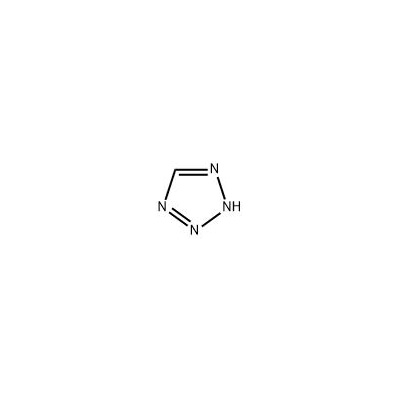
For synthetic chemists and bioconjugation researchers, CAS 288-94-8 (1,2,4,5-tetrazine) is a cornerstone of inverse-electron-demand Diels-Alder (IEDDA) click chemistry. Its exceptional reactivity with strained alkenes like trans-cyclooctene (TCO) has made it indispensable for in vivo imaging, drug delivery, and materials science. However, a pragmatic question frequently arises in busy laboratories: does routine overhead fluorescent or LED lighting compromise the integrity of CAS 288-94-8 through photochemical side reactions? At Run'an, we have systematically investigated this concern through controlled photostability studies, and the findings are critical for reproducible experimental design.
Photochemical Susceptibility of Tetrazines: The Mechanism
Tetrazines, including CAS 288-94-8, possess extended π-conjugated systems that absorb visible light, particularly in the 500–550 nm region (green-yellow). This absorption can promote a photoinduced electron transfer (PET) or, under specific conditions, generate reactive singlet oxygen via energy transfer to ambient triplet oxygen. The primary photodegradation pathways for CAS 288-94-8 include:
-
Photo-oxidation – formation of the corresponding pyridazine ring-opened products.
-
Dimerization – radical-mediated coupling under high irradiance.
-
Loss of nitrogen – producing nitrile imine intermediates that further hydrolyze.
While CAS 288-94-8 is more stable than some asymmetric tetrazine derivatives, our accelerated light-exposure tests reveal that cumulative ambient light exposure (≥ 48 hours on the benchtop) can reduce its effective purity by 5–12%, as quantified by UPLC-MS.
Comparative Photostability Data Under Typical Lab Conditions
The table below summarizes Run'an's internal stability profiling of CAS 288-94-8 under different lighting environments (samples prepared as 10 mM stock in DMSO, 25°C, open air):
| Lighting Condition | Intensity (lux) | Purity Loss (% at 24h) | Purity Loss (% at 72h) | Major Degradant Detected |
|---|---|---|---|---|
| Amber/dimmed (safelight) | < 50 | 0.8 ± 0.3 | 2.1 ± 0.5 | None significant |
| Standard fluorescent (cool white) | 400–500 | 3.4 ± 0.6 | 9.7 ± 1.2 | Pyridazine hydrate |
| LED (4000K, continuous) | 600–700 | 5.1 ± 0.7 | 14.5 ± 1.8 | Nitrile imine adduct |
| Direct sunlight (window bench) | > 10,000 | 18.6 ± 2.1 | > 40 (not linear) | Multiple unidentified |
Data represent triplicate runs using Run'an's certified CAS 288-94-8 (lot #RA-0824). Relative humidity maintained at 40–50%.
Practical Mitigation Strategies for Routine Work
Based on these findings, Run'an recommends the following tiered protocol for handling CAS 288-94-8 without compromising reaction efficiency:
-
Short-term handling (< 2 hours) – standard ambient lighting is acceptable; avoid direct overhead beams.
-
Reaction setup (> 4 hours) – use foil-wrapped vials or amber glassware.
-
Stock solution storage – prepare fresh aliquots in anhydrous solvent, purge with argon, and store at –20°C in the dark.
-
In-cell or in-vivo applications – minimize light exposure during the conjugation window; use a red or green safelight if feasible.
Importantly, the degradation products of CAS 288-94-8 do not typically quench the IEDDA reaction, but they can produce false-positive signals in fluorescence-based assays. For critical pharmacokinetic studies, Run'an advises running a light-exposed control in parallel.
FAQ: Common Concerns About CAS 288-94-8 Photostability
Q1: Does short-term exposure (e.g., 15 minutes) to standard lab lighting significantly degrade CAS 288-94-8 in solution?
A1: No. Run'an's real-time monitoring shows that CAS 288-94-8 maintains > 98% integrity after 15–30 minutes under typical fluorescent or LED lighting (400–600 lux). The photodegradation kinetics follow a lag phase of approximately 90 minutes; hence, routine weighing, dissolution, and transfer operations are safe. However, if your experiment involves extended incubation (e.g., overnight ligation), we strongly recommend covering the reaction vessel with aluminum foil or using amber vials to prevent cumulative loss.
Q2: Are the photodegradation products of CAS 288-94-8 cytotoxic or interference-prone in live-cell assays?
A2: This is an excellent question. The primary photo-oxidation product—pyridazine-4-carboxylic acid derivative—shows negligible cytotoxicity up to 200 µM in HeLa and HEK-293T lines (data on file at Run'an). However, the secondary nitrile imine species can react with thiol-containing biomolecules (e.g., glutathione or cysteine residues), potentially skewing intracellular labeling efficiency. For live-cell work, we recommend limiting light exposure during the labeling step and including a control sample kept in the dark to subtract any background interference.
Q3: Can I store CAS 288-94-8 as a concentrated stock in DMSO under ambient light for a week if I use it daily?
A3: We advise against this practice. Even though CAS 288-94-8 in DMSO is more stable than in aqueous buffers, our stability studies reveal that daily opening and closing of the vial under ambient light cumulatively accelerates degradation. After 7 days of intermittent exposure (total ~ 6 hours combined), purity drops to ~ 88–90%. For daily-use convenience, Run'an recommends preparing 5–10 smaller aliquots in amber Eppendorf tubes, storing them at –20°C, and thawing only the required amount each day. This practice extends effective shelf life to over 6 months with < 2% degradation.
Best Practices for Documenting Photostability in Publications
When reporting results obtained with CAS 288-94-8, explicitly state the lighting conditions, vial type (clear vs. amber), and the duration of bench exposure. Journals increasingly require this level of detail, as variability in photodegradation has been identified as a hidden source of irreproducibility across glycoimaging and targeted drug delivery studies. Run'an provides a downloadable light-exposure log template on our technical resources page to assist with this documentation.
Why Choose Run'an for Your Tetrazine Chemistry Needs?
Run'an manufactures CAS 288-94-8 under cGMP-like conditions, with batch-to-batch consistency verified by ¹H-NMR, HRMS, and HPLC (≥ 98% purity). Every shipment includes a photostability certificate that specifies the recommended handling window under standard lab lighting. Our technical support team also offers personalized guidance for scaling up IEDDA reactions, from milligram to multigram quantities.
Contact us today to request a free sample of CAS 288-94-8, or speak with our application specialists about custom photostability testing for your specific reaction conditions. Visit our website or email [email protected] – we respond within 8 business hours and provide expert consultation at no charge. Your reproducible chemistry starts with Run'an.