

Can Ethyl Hexanoate Be Used as a Natural Flavoring Agent in Organic Products
2026-06-22
The clean-label movement has pushed organic food manufacturers to scrutinize every ingredient, from primary crops to trace aroma compounds. One question that repeatedly surfaces in formulation labs is whether Ethyl Hexanoate—a fruity, pineapple-like ester—qualifies as a natural flavoring agent under organic certification rules. As a Fragrance solution provider with deep roots in botanical extraction, Odowell regularly helps brands navigate this exact regulatory and sensory challenge.
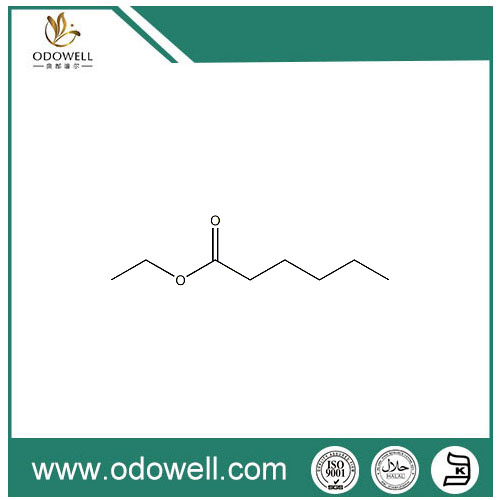
Understanding Ethyl Hexanoate in Flavor Systems
Ethyl Hexanoate (CAS 123-66-0) occurs naturally in ripe fruits such as apples, pineapples, and strawberries. It delivers a waxy, green-fruity punch at low concentrations and a sweet, cognac-like nuance at higher doses. In organic products, the source path determines eligibility, not the molecule itself.
Synthetic Ethyl Hexanoate—derived from petrochemical hexanoic acid—is banned in certified organic formulations. However, bio-based Ethyl Hexanoate produced through yeast fermentation or enzymatic esterification of natural ethanol and hexanoic acid (from coconut or palm kernel oil) fully qualifies as natural under FDA and EU flavor regulations. The critical distinction lies in the manufacturing process and feedstock traceability.
Key Criteria for Organic Compliance
| Criterion | Requirement for Ethyl Hexanoate |
|---|---|
| Source feedstock | Non-GMO, plant-based ethanol and hexanoic acid |
| Production method | Fermentation or lipase-catalyzed esterification (no petrochemical solvents) |
| Carrier solvents | Only organic-compliant carriers (e.g., sunflower oil, glycerin) |
| Residual limits | < 0.5% non-organic processing aids |
| Certification | USDA NOP, EU 2018/848, or COSMOS-approved supplier documentation |
Odowell maintains a dedicated supply chain for fermentation-derived Ethyl Hexanoate, with full chain-of-custody records that satisfy even the strictest European organic control bodies.
Technical Benefits for Organic Product Developers
Incorporating natural Ethyl Hexanoate into organic beverages, plant-based dairy, or confectionery offers three measurable advantages:
-
Flavor bridging – It harmonizes fatty and fruity notes, masking undesirable bean or grain off-notes in oat and soy bases.
-
Thermal stability – The ester withstands pasteurization (72°C for 15 seconds) with < 5% degradation, unlike many aldehydes.
-
Low use levels – Effective at 5–20 ppm, reducing total flavor-load on organic labeling statements.
Natural vs. Nature-Identical: The Sourcing Reality
Many suppliers market “natural-identical” Ethyl Hexanoate at a fraction of the cost. For organic claims, this is a trap. Nature-identical products are chemically identical but synthesized from mineral sources—they pass analytical tests but fail every organic audit. Odowell’s China fragrance ingredient sourcing platform verifies each batch through isotope-ratio mass spectrometry (IRMS), distinguishing C3-plant carbon from fossil-derived carbon. This forensic approach ensures your organic seal remains defensible.
Ethyl Hexanoate FAQ
Q: Can Ethyl Hexanoate be listed as "natural flavor" on an organic product label?
A: Yes, provided the Ethyl Hexanoate is produced via fermentation from organic-certified substrates and carries a certificate of natural origin from a recognized body (e.g., ISO 9235). The label must read “natural flavor” or “natural flavoring substance” without the ester name unless declared as a component. In the US, 21 CFR 101.22 permits this; in the EU, Regulation (EC) No 1334/2008 requires that at least 95% of the flavor’s raw materials originate from the named source. Odowell supplies full technical dossiers to support these declarations.
Q: What is the maximum usage level of Ethyl Hexanoate in organic beverages to avoid off-notes?
A: Sensory threshold studies indicate that Ethyl Hexanoate becomes soapy or excessively pungent above 30 ppm in water-based systems. For organic fruit nectars and plant milks, the practical ceiling is 15–18 ppm. At 8–12 ppm, it enhances freshness without dominating. We recommend a two-step optimization: a 5-point triangular test at 5, 10, 15, and 20 ppm, followed by a 21-day accelerated stability check. Odowell’s application lab provides this testing matrix at no charge for qualified development projects.
Q: Does Ethyl Hexanoate degrade into harmful byproducts in organic baking applications?
A: No. Thermal degradation of Ethyl Hexanoate primarily yields hexanoic acid and ethanol—both GRAS substances. At baking temperatures (180°C for 20 minutes), approximately 18–22% of the ester hydrolyzes, but the resulting acid is a natural flavor contributor in baked goods (cheese/coconut nuance). No acrolein, furans, or toxic epoxides form under standard bakery conditions. For prolonged high-heat processing (e.g., extrusion), we recommend encapsulating the ester with modified starch, a service Odowell offers through our natural extract producers network.
Comparative Supplier Landscape
The China fragrance ingredient market overview reveals a bifurcated supply: over 100 manufacturers produce synthetic esters, while fewer than 10 specialize in fermentation-grade Ethyl Hexanoate. Odowell partners exclusively with the latter, plus 5+ specialty molecule developers who continuously improve yield and purity (currently ≥ 99.2% by GC). This selectivity gives our clients a competitive edge in traceability narratives.
Why Partner with Odowell
As a dedicated Fragrance ingredient sourcing partner, Odowell does not simply ship materials. We provide:
-
Pre-shipment IRMS and chiral GC profiles for each lot.
-
Country-specific organic equivalency maps (US-EU-Japan).
-
Formulation troubleshooting for pH, heat, and shelf-life interactions.
Our monthly China Aroma Ingredient Supply Report tracks pricing, crop cycles, and regulatory shifts—free to active clients.
Contact Us
The organic flavor landscape is shifting rapidly, and Ethyl Hexanoate stands as a test case for how chemistry, botany, and certification intersect. Whether you are reformulating an organic yogurt, a cold-brew coffee, or a plant-based cheese, clarity on natural ester sourcing is non-negotiable. Odowell offers fermentation-derived Ethyl Hexanoate with full organic dossier support and same-day technical responses. Request a 100 g development sample and a custom label-review checklist—we will respond within 4 business hours. Let us de-risk your organic flavor program, one molecule at a time.