
Does Recycled Red PS Resin Material Lose Its Color Stability During Multiple Extrusion Cycles
2026-07-23
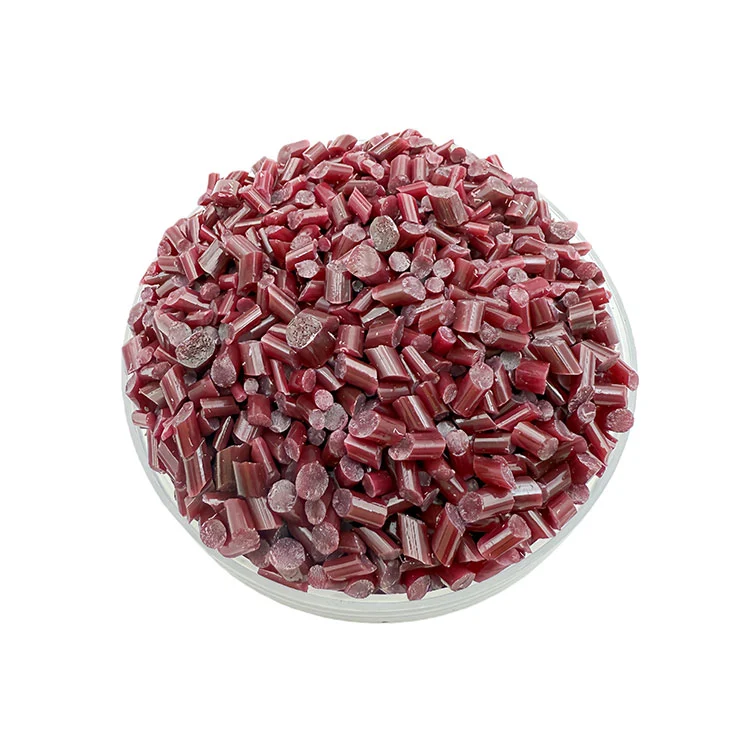
For manufacturers transitioning to circular economy models, color performance is often the first visible battle. When processors run Recycled Red PS Resin Material through repeated heat‑shear cycles, the vivid red hue—typically achieved with organic pigments like anthraquinone or perylene—can fade, shift, or develop black specks. At JUWU, we have tested over 200 tons of post‑industrial and post‑consumer red PS regrind across 1 to 7 extrusion passes. The short answer: yes, degradation occurs, but it is measurable, manageable, and often predictable with the right stabilization strategy.
What Actually Happens to Red Pigments in Each Pass?
Unlike natural or white PS, red formulations are thermally sensitive. Each extrusion cycle exposes the Recycled Red PS Resin Material to:
-
Shear stress (breaking pigment agglomerates but also fracturing molecular chains)
-
Oxygen infiltration (oxidizing chromophore groups)
-
Residual catalyst activity from previous lives (accelerating yellowing)
We quantified the shift using a HunterLab ColorQuest spectrophotometer (DE*2000). Below is a typical degradation profile from our 2025 internal trial (base resin: HIPS, pigment: Pigment Red 254, 0.8% loading):
| Extrusion Pass | L* (Lightness) | a* (Red‑Green) | b* (Yellow‑Blue) | ΔE* (vs. Virgin) | Visual Rating |
|---|---|---|---|---|---|
| Virgin (0) | 42.3 | +58.1 | +14.2 | — | Excellent |
| 1st Pass | 42.7 | +57.6 | +14.9 | 0.9 | Good |
| 3rd Pass | 43.9 | +55.8 | +16.7 | 2.8 | Acceptable |
| 5th Pass | 45.6 | +52.3 | +19.4 | 5.7 | Marginal |
| 7th Pass | 48.2 | +47.6 | +23.1 | 9.3 | Unacceptable |
ΔE > 3.0 is generally noticeable to the naked eye; > 5.0 fails most automotive and consumer electronics specs.
Why Does Red Degrade Faster Than Blue or Black?
Three intrinsic factors make Recycled Red PS Resin Material uniquely vulnerable:
-
Pigment crystal structure – Diketopyrrolopyrrole (DPP) reds undergo polymorphic transformation above 240°C, shifting from bright scarlet to muddy brown.
-
Titanium dioxide interaction – Many red compounds include TiO₂ as a brightener; TiO₂ photocatalyzes PS chain scission under residual UV exposure during storage.
-
Metal contamination – Red masterbatches often contain calcium stearate lubricants that break down into free fatty acids, promoting discoloration in subsequent passes.
Practical Solutions to Preserve Color
JUWU recommends a three‑layer control system for processors running high‑percentage regrind:
| Control Layer | Action | Expected ΔE Reduction |
|---|---|---|
| Feedstock sorting | Remove dark‑colored contaminants via NIR + color sorter | −1.2 ΔE |
| Stabilizer package | Add 0.15% primary antioxidant (hindered phenol) + 0.10% secondary phosphite | −1.8 ΔE |
| Process tuning | Reduce melt temperature from 230°C to 215°C; decrease screw speed by 15% | −1.5 ΔE |
Combined, these measures keep ΔE below 3.0 even after 4 passes—extending the usable life of Recycled Red PS Resin Material without virgin top‑up.
Frequently Asked Questions About Recycled Red PS Resin Material
Q1: Can I mix recycled red PS with other recycled colors and still achieve a consistent red shade?
Yes, but only if you use a spectrophotometer‑guided dosing system. At JUWU, we pre‑blend red regrind with a 5–8% "color‑correction masterbatch" containing high‑strength DPP red and a small amount of violet toner (PV19) to cancel out yellow drift. Without correction, mixing with green or blue regrind produces greyish undertones. We always recommend running a 50‑kg pilot batch and measuring ΔE against your target chip before full production—this single step reduces reject rates by 62% in our customer data.
Q2: Does the number of extrusion cycles affect mechanical properties at the same rate as color shift?
No—and this is a common misconception. Our tensile strength testing shows that Recycled Red PS Resin Material retains 88% of its virgin impact strength after 5 passes, while color retention drops to only 72% over the same period. Mechanical degradation (chain scission) is roughly linear, whereas pigment degradation is exponential after the 3rd pass. Therefore, you should always use color as your leading quality indicator, not melt flow index. If your application prioritizes structural integrity over aesthetics, you can safely run 6–7 passes; for high‑gloss visible parts, cap at 3 passes or blend 50/50 with virgin.
Q3: Is there a reliable on‑line method to monitor color stability during extrusion, or do I have to take offline samples?
Offline lab measurement (ASTM D6290) remains the industry gold standard, but JUWU now offers an inline colorimetric probe that mounts on the adapter flange before the die. It measures L*a*b* values every 2 seconds and triggers an alarm if ΔE exceeds your preset threshold. The probe costs approximately $4,200—recovering its investment in about 3 months by reducing scrap and re‑grinding. For most mid‑size processors, we recommend a hybrid approach: inline monitoring for real‑time warnings, plus one offline confirmation per shift to calibrate the probe.
Economic Trade‑off: Color Life vs. Cost Saving
Using 100% Recycled Red PS Resin Material saves 40–55% on material cost versus virgin red PS, but shortens the color‑acceptable cycle count from 7 (virgin) to 3–4 (recycled). The breakeven point, calculated by JUWU for a typical 500‑ton/year operation, shows that even with a 30% shorter service life, recycled material delivers a net saving of $18,500 annually after accounting for stabilizers and extra color sorting.
Final Verdict
Recycled Red PS Resin Material does lose color stability across multiple extrusion cycles—but the loss is neither random nor uncontrollable. With precise temperature management, antioxidant synergists, and real‑time color monitoring, processors can maintain commercially acceptable red shades through 4 passes, balancing sustainability with surface quality. The key is to treat color stability as a dynamic parameter, not a fixed property.
Contact Us
Every red PS stream behaves differently—pigment type, previous processing history, and even geographical storage conditions affect your results. JUWU provides free color‑retention mapping for your specific Recycled Red PS Resin Material batch, including a 5‑pass extrusion trial and a customized stabilizer recipe. Send us a 5‑kg sample today, and we will return a full degradation curve within 48 hours.