

How Can C9 Catalyst Hydrocarbon Resin Reduce Volatile Organic Compound Emissions in Industrial Coatings
2026-04-08
Industrial coatings face increasing pressure to lower volatile organic compound (VOC) emissions without sacrificing performance. C9 Catalyst Hydrocarbon Resin has emerged as a strategic solution for formulators seeking high-solid, low-VOC systems. Polykem provides advanced grades of this resin, enabling manufacturers to meet environmental regulations while maintaining adhesion, gloss, and drying speed.
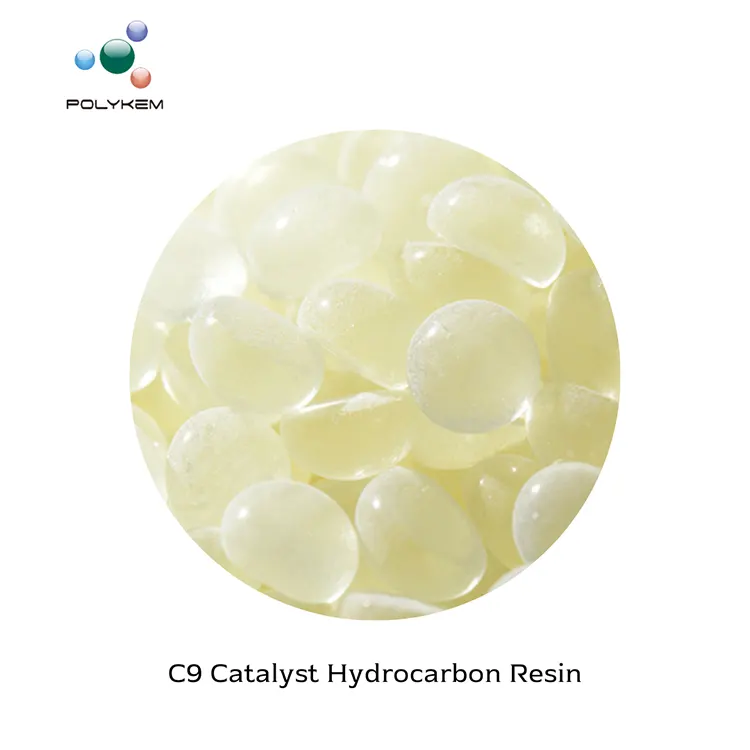
The Mechanism Behind VOC Reduction
Traditional solvent-borne coatings rely on large amounts of organic solvents to maintain low viscosity and proper film formation. C9 Catalyst Hydrocarbon Resin offers a higher molecular weight and excellent solubility in a wider range of low-VOC solvents. By replacing conventional liquid plasticizers or lower-molecular-weight resins, it reduces the need for volatile diluents.
| Parameter | Traditional Resin System | System with C9 Catalyst Hydrocarbon Resin |
|---|---|---|
| VOC content (g/L) | 450–550 | 250–350 |
| Solids content (%) | 40–55 | 65–80 |
| Solvent reduction potential | Baseline | Up to 40% less solvent required |
Practical Benefits for Coating Formulations
When integrated into industrial baking enamels or air-drying primers, C9 Catalyst Hydrocarbon Resin enhances wetting of pigments and fillers, allowing formulators to cut back on high-VOS aromatic solvents. The resin’s narrow molecular weight distribution ensures rapid solvent release, reducing total VOC load without extending drying times.
Polykem engineers its C9 Catalyst Hydrocarbon Resin grades to exhibit low odor and light color, making them suitable for interior industrial coatings where worker exposure and indoor air quality are critical.
C9 Catalyst Hydrocarbon Resin FAQ
What types of industrial coatings benefit most from C9 Catalyst Hydrocarbon Resin for VOC reduction?
C9 Catalyst Hydrocarbon Resin works best in high-solid primers, anti-corrosion coatings, and coil coatings. These applications require strong adhesion, chemical resistance, and fast hardness development. By substituting 20–30% of the traditional resin binder with C9 Catalyst Hydrocarbon Resin, formulators reduce VOC by 80–120 g/L while maintaining pencil hardness and impact resistance.
Does using C9 Catalyst Hydrocarbon Resin compromise coating durability or weatherability?
No. C9 Catalyst Hydrocarbon Resin exhibits excellent resistance to water, diluted acids, and alkalis. However, for exterior applications requiring UV stability, Polykem recommends specific hydrogenated or partially hydrogenated grades of C9 Catalyst Hydrocarbon Resin, which retain the VOC-lowering benefits while significantly improving gloss retention and chalk resistance.
How should formulators adjust solvent blends when incorporating C9 Catalyst Hydrocarbon Resin?
Since C9 Catalyst Hydrocarbon Resin dissolves readily in esters, ketones, and aromatic solvents, formulators can replace up to 30% of aromatic solvents with oxygenated solvents like butyl acetate or propylene glycol monomethyl ether acetate. This substitution directly lowers VOC content because oxygenated solvents often have lower photochemical reactivity and may be exempt from certain VOC calculations. Polykem provides full solubility charts and recommended starting formulations.
Contact Us
Ready to lower VOC emissions without compromising coating performance? Polykem offers technical datasheets, sample kits, and formulation support for C9 Catalyst Hydrocarbon Resin. Reach out to our application specialists today to optimize your industrial coating system.