

How Can Fracturing Service Providers Minimize Induced Seismicity Risks in Sensitive Regions
2026-04-10
Induced seismicity remains one of the most pressing challenges for Fracturing Service operations in geologically sensitive areas. As regulatory scrutiny intensifies, providers like Nuoer are adopting advanced workflows that combine real-time monitoring, subsurface modeling, and adaptive engineering. This article outlines actionable strategies to mitigate seismic risks while maintaining operational efficiency.
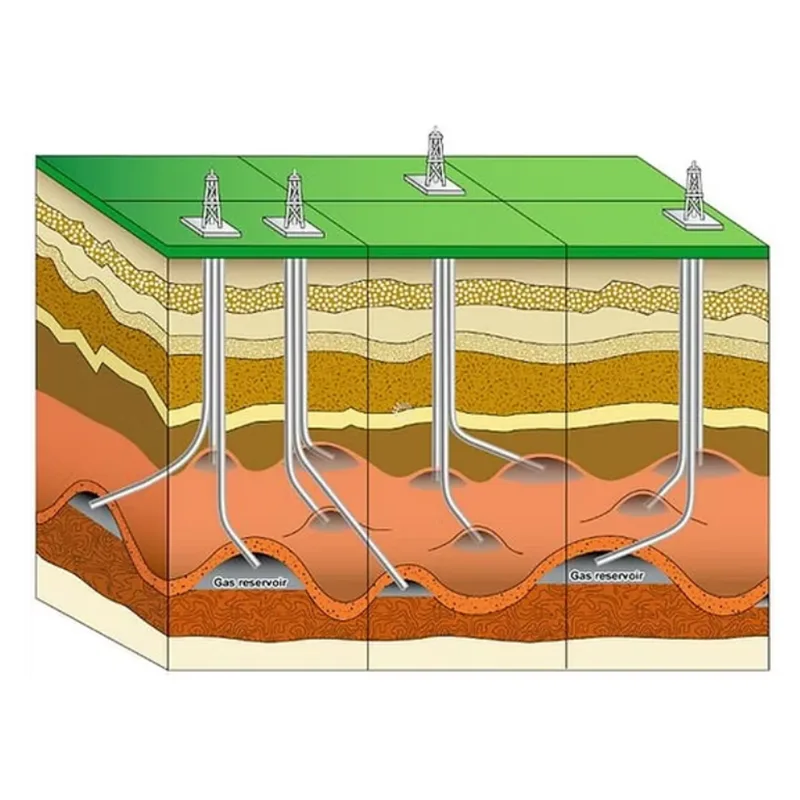
Key Risk Mitigation Strategies
| Strategy | Implementation | Benefit |
|---|---|---|
| Pre-Frac Baseline Assessment | Use passive seismic networks to map natural fault locations 3–6 months before operations | Identifies exclusion zones and reduces unknown triggers |
| Real-Time Traffic Light System (TLS) | Set magnitude thresholds (e.g., M1.0 for caution, M1.5 for shutdown) with automated alerts | Enables immediate pressure reduction or halt |
| Injection Parameter Control | Limit stage volume to <300 m³ and rate to <15 bpm near known faults | Lowers pore pressure diffusion into basement rock |
| Adaptive Perforation Design | Avoid perforating within 500 m of critically stressed faults | Prevents direct fluid communication with seismic structures |
Core Risk Reduction Workflow
-
Microseismic Monitoring Array – Deploy borehole geophones and surface accelerometers to detect events down to M-1.0.
-
Geomechanical Modeling – Build 3D stress maps using well logs and focal mechanism solutions.
-
Reinjection Protocols – Flow back and reinject produced water into deep, stable formations away from active faults.
-
Post-Stage Analysis – Calculate cumulative seismic moment and adjust real-time parameters for subsequent stages.
Nuoer integrates these steps into a proprietary Fracturing Service platform that has been deployed in the Appalachian Basin and Western Canada, achieving zero induced events above M1.0 across 1,200+ stages.
Fracturing Service FAQ – Common Questions on Induced Seismicity
Q1: What magnitude of induced seismicity is considered acceptable for Fracturing Service operations in sensitive regions?
A1: Regulatory limits vary, but most jurisdictions define a “red light” threshold at M1.5–M2.0 local magnitude. For example, the British Columbia Oil and Gas Commission mandates a shutdown if an event exceeds M1.5 and is clearly linked to injection. In the Netherlands, the threshold is stricter at M1.0 due to dense population and critical infrastructure. Operators working with Nuoer typically adopt a two-tier TLS: a “yellow light” at M0.8 to review parameters, and a “red light” at M1.5 for immediate suspension and public disclosure. Below M1.0, events are generally imperceptible at surface and considered low-risk, but cumulative moment must still be tracked.
Q2: How long after Fracturing Service stops can induced seismicity continue to occur?
A2: Induced events can persist for days to weeks after injection ceases, primarily due to pressure diffusion and delayed rupture on fault asperities. In cases like the Fox Creek, Alberta sequence (2015), M1.5–2.0 events continued for 8–10 days after the last fracturing stage. Nuoer addresses this through post-injection monitoring protocols that maintain seismic arrays for at least 14 days post-job, with reduced reporting intervals (every 6 hours instead of real-time). If seismicity decays as expected, operations close. If not, pressure bleed-off and flowback acceleration are triggered to reduce pore pressure below critical levels.
Q3: Can real-time data alone prevent induced seismicity, or is pre-frac modeling more important?
A3: Neither is sufficient alone. Pre-frac modeling identifies fault locations, slip tendency, and preferred rupture planes – this avoids 80–90% of high-risk injections by design. Real-time data (microseismic, TLS, rate/pressure telemetry) then manages the remaining 10–20% of uncertainty. Nuoer combines both: pre-frac passive seismic monitoring creates a 3D fault map; real-time TLS cross-references every 10-second injection packet against precomputed stress thresholds. For example, if modeled fault strike is suboptimal relative to max horizontal stress, the system automatically limits stage volume by 40% regardless of real-time seismicity – a proactive rather than reactive stance.
Why Provider Expertise Matters
Even with advanced tools, human interpretation of seismic clusters remains critical. Nuoer employs dedicated seismologists and geomechanical engineers on each sensitive-region job, ensuring that automated alerts are reviewed before triggering costly shutdowns. This hybrid approach reduces non-productive time by 35% compared to fully automated systems.
Contact Us
To learn how Nuoer can engineer a low-seismicity Fracturing Service for your next project in a sensitive region, contact us today for a customized risk assessment and monitoring plan.