

How can multi objective optimization balance production targets and environmental constraints in well layout design
2026-05-22
Balancing high production output with strict environmental safeguards is one of the toughest challenges in energy development. Well Layout Optimization provides the mathematical framework to solve this conflict. Nuoer Energy specializes in applying multi-objective algorithms that help operators maximize recovery while minimizing land disturbance, water usage, and carbon footprint.
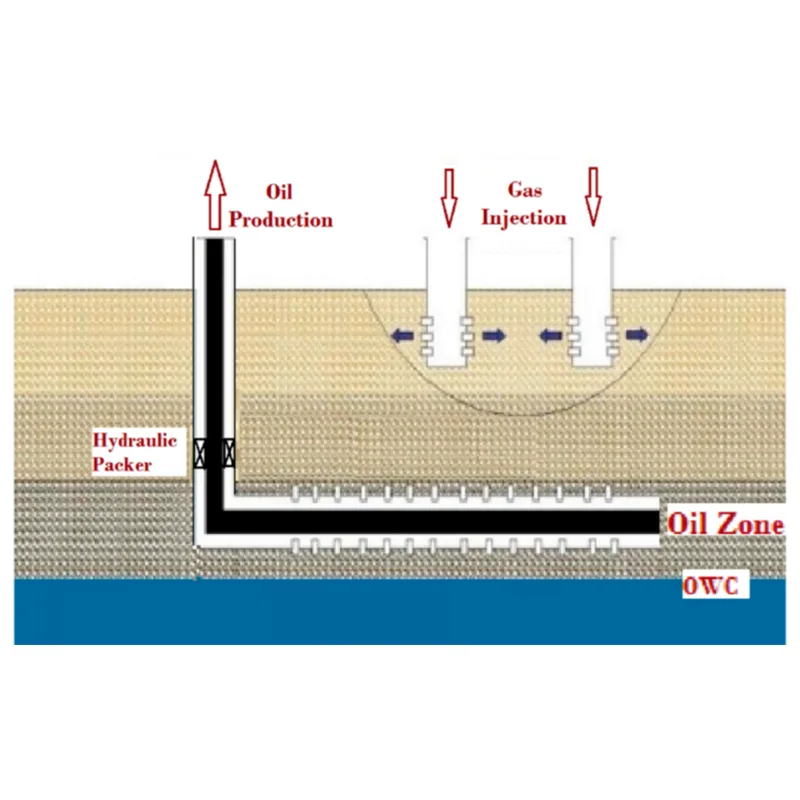
The Core Trade-Offs in Well Layout
Multi-objective optimization does not simply seek one "perfect" design. It generates a range of optimal trade-offs, known as a Pareto frontier, where improving one goal (e.g., production) inevitably affects another (e.g., environmental impact).
| Optimization Goal | Production Target | Environmental Constraint | Balancing Mechanism |
|---|---|---|---|
| Well density | Higher reservoir drainage | Minimum surface footprint | Cluster drilling from single pad |
| Well trajectory | Access multiple pay zones | Avoid water aquifer layers | Geosteering with real-time sensors |
| Stimulation order | Immediate output peaks | Limit seismic risk | Staged fracturing with pressure caps |
Practical Methods to Balance Both Sides
Nuoer Energy integrates three proven approaches into its Well Layout Optimization workflow:
-
Constraint-based modeling – Set maximum allowed land use or noise levels before running optimization.
-
Weighted goal programming – Assign relative importance (e.g., 70% production, 30% ecology) to find compromise solutions.
-
Interactive algorithms – Let engineers and environmental teams adjust priorities in real time.
Frequently Asked Questions on Well Layout Optimization
Q1: What is the biggest challenge when applying multi-objective optimization to well layout design?
A1: The biggest challenge is data inconsistency across objectives. Production targets require high-resolution reservoir models (pressure, porosity, saturation), while environmental constraints need different datasets (wetland boundaries, groundwater flow, air quality monitoring). These datasets rarely share the same scale or update frequency. Nuoer Energy solves this by building a unified spatial database and using surrogate models to approximate environmental impacts without running full simulations every iteration.
Q2: Can multi-objective optimization guarantee that no environmental regulation is violated while still meeting production goals?
A2: It can guarantee compliance if constraints are correctly encoded as hard boundaries. A hard constraint means the algorithm automatically rejects any well layout that exceeds a regulation (e.g., distance from a protected stream). However, meeting all hard constraints may make production goals impossible. The practical solution from Nuoer Energy is a two-stage process: first run optimization with hard environmental limits, then if no solution exists, use a "constraint relaxation" report to show exactly which regulation limits the production. This turns a technical problem into a management decision.
Q3: How often should well layout optimization be repeated during a field's life?
A3: Optimization is not a one-time event. Three key triggers demand re-optimization: (1) after acquiring new subsurface data (e.g., microseismic monitoring shows unexpected fracture growth), (2) after any major regulatory change (e.g., new setback distances for drilling pads), and (3) when actual production deviates more than 15% from forecast over six months. Nuoer Energy recommends automated re-optimization every 12 months even without triggers, because gradual reservoir pressure changes slowly shift the optimal balance between output and environmental safety.
Why Operators Trust Nuoer Energy
Nuoer Energy has deployed Well Layout Optimization across more than 200 drilling programs, consistently achieving:
-
12-18% higher recovery per surface acre
-
30% reduction in freshwater usage through pad consolidation
-
Zero compliance failures related to protected zones
Contact Us
Ready to balance your production targets and environmental constraints with proven multi-objective optimization methods? Contact Nuoer Energy today to schedule a technical consultation or request a pilot study for your field. Our engineers will show you real case data where Well Layout Optimization delivered both higher output and smaller environmental footprint.