

How Carbon-in-Leach Gold Recovery Works for Efficient Gold Extraction
2026-06-24
Carbon-in-Leach Gold Recovery is one of the most widely used hydrometallurgical processes in modern gold extraction plants. It integrates leaching and activated carbon adsorption into a single step, significantly improving gold recovery efficiency while reducing operational costs. In today's mining industry, where ore grades are declining and processing complexity is increasing, this technology has become a critical solution for maximizing economic returns. Companies like Wimica (Hebei) Industrial Co., Ltd. play an important role in supplying reliable equipment and industrial solutions that support efficient gold processing systems worldwide.
Unlike traditional methods where leaching and adsorption occur separately, Carbon-in-Leach (CIL) allows gold dissolution and adsorption to happen simultaneously in the same tank. This reduces equipment requirements, shortens processing time, and minimizes gold losses in solution. As a result, it is highly favored in large-scale gold mining operations.
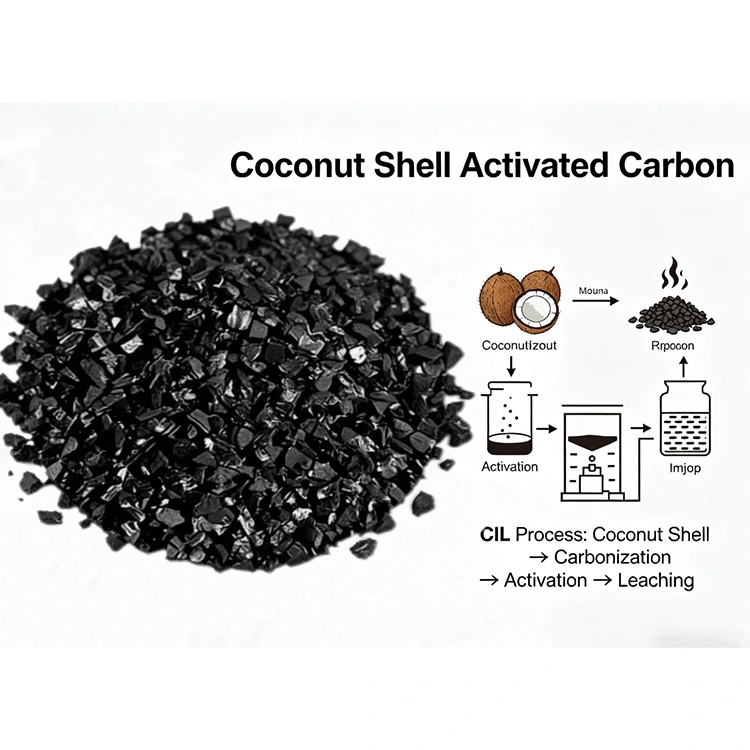
What Is Carbon-in-Leach Gold Recovery?
Carbon-in-Leach Gold Recovery is a process that uses cyanide solution to dissolve gold from crushed ore, while activated carbon directly absorbs the dissolved gold in the same tank. This dual-action system eliminates the need for separate adsorption tanks and improves overall recovery efficiency.
Key principle:
- Gold is dissolved using cyanide (leaching stage)
- Activated carbon captures dissolved gold (adsorption stage)
- Both processes occur simultaneously in one system
Why Carbon-in-Leach Is Widely Used
The popularity of Carbon-in-Leach Gold Recovery comes from its operational efficiency and cost-effectiveness. Mining companies choose this method because:
- Higher gold recovery rates compared to conventional CIP systems
- Reduced capital investment due to fewer tanks
- Lower operating costs and simpler plant design
- Improved processing of fine-grained gold ores
- Faster production cycle
This combination makes CIL particularly suitable for medium to high-grade gold ores that require efficient and continuous processing.
Carbon-in-Leach vs Carbon-in-Pulp (CIP)
Understanding the difference between CIL and CIP is important for selecting the right system.
| Feature | Carbon-in-Leach (CIL) | Carbon-in-Pulp (CIP) |
|---|---|---|
| Process Integration | Leaching + adsorption together | Separate leaching and adsorption |
| Processing Time | Faster | Slower |
| Equipment Requirement | Fewer tanks | More tanks |
| Gold Recovery Efficiency | Higher | Moderate |
| Operational Complexity | Lower | Higher |
CIL is generally preferred in modern plants due to its simplified structure and improved recovery performance.
Main Stages of Carbon-in-Leach Process
The Carbon-in-Leach Gold Recovery system typically includes the following steps:
-
Ore Preparation
Crushing and grinding the ore into fine particles to expose gold minerals. -
Leaching and Adsorption
Cyanide solution is added, dissolving gold while activated carbon absorbs it simultaneously. -
Carbon Separation
Loaded carbon is separated from slurry for further processing. -
Desorption and Electro-winning
Gold is stripped from carbon and recovered through electro-winning or smelting. -
Carbon Regeneration
Activated carbon is reactivated for reuse in the system.
Advantages of Carbon-in-Leach Gold Recovery
The system offers multiple technical and economic benefits:
- High recovery efficiency for fine gold particles
- Reduced cyanide consumption per ton of ore
- Compact plant design with lower footprint
- Improved automation and control capability
- Suitable for both oxidized and free-milling ores
These advantages make it a preferred solution for modern mining operations aiming to maximize productivity.
Operational Considerations
To ensure optimal performance of Carbon-in-Leach Gold Recovery systems, operators must carefully manage:
- Cyanide concentration levels
- Oxygen supply in leaching tanks
- Carbon activity and regeneration cycles
- Particle size distribution of ore feed
- pH control for stable reactions
Proper monitoring ensures maximum gold recovery and system stability.
Applications in the Mining Industry
Carbon-in-Leach Gold Recovery is widely applied in:
- Large-scale gold mines
- Low to medium-grade ore processing plants
- Refractory gold ore beneficiation (with pretreatment)
- Modern modular gold recovery plants
Its adaptability makes it suitable for both new installations and upgrades of existing systems.
Role of Industrial Equipment Providers
Reliable equipment is essential for achieving high recovery efficiency in CIL systems. Engineering companies like Wimica (Hebei) Industrial Co., Ltd. provide support in system design, equipment supply, and technical integration, helping mining operators build efficient and durable gold recovery plants.
Their contribution includes:
- Tank system fabrication
- Agitation and mixing equipment
- Carbon handling systems
- Process optimization support
Conclusion
Carbon-in-Leach Gold Recovery represents a highly efficient and cost-effective solution for modern gold extraction. By combining leaching and adsorption in a single system, it simplifies plant design, improves recovery rates, and reduces operational complexity. As global demand for gold continues to grow, mining companies increasingly rely on advanced CIL systems to maintain competitiveness and profitability.
With strong industrial support from suppliers such as Wimica (Hebei) Industrial Co., Ltd., businesses can build more reliable and efficient gold recovery systems tailored to their operational needs.
If you are looking for professional guidance, equipment solutions, or customized system design for Carbon-in-Leach Gold Recovery projects, feel free to contact us for more technical support and cooperation opportunities.