

How Do Different Chemical Structures Influence Pharmaceutical Intermediates Applications?
2026-11-17
The molecular structure of Pharmaceutical Intermediates determines how a compound behaves during synthesis, purification, storage and subsequent conversion into an active pharmaceutical ingredient. Functional groups, ring systems, stereochemistry, molecular size and electronic distribution all influence reactivity. For process chemists and sourcing teams, understanding these features helps explain why one intermediate is suitable for a particular synthetic route while another may require different reaction conditions or controls. This is a central consideration when comparing Pharmaceutical Intermediates for route development.
A functional group often provides the main reaction site. Hydroxyl, amino, carbonyl, carboxyl and halogen groups can participate in oxidation, reduction, substitution, esterification, amidation or other transformations. Their position within a molecule matters as much as their presence. A hydroxyl group attached to an aromatic ring does not necessarily behave like one on an aliphatic chain. Nearby electron-withdrawing or electron-donating groups can also change reaction rate, selectivity and the formation of by-products.
Ring systems introduce additional structural effects. Saturated rings can restrict molecular movement and create a defined three-dimensional shape, while aromatic rings provide conjugated electron systems that influence stability and substitution patterns. Fused and bridged ring structures may create steric constraints that affect reagent access. In a multi-step synthesis, these characteristics can determine whether a reaction proceeds cleanly or produces impurities that are difficult to remove at a later stage.
Stereochemistry is another important consideration. Molecules with the same molecular formula and connectivity may have different spatial arrangements. Enantiomers and diastereomers can show different biological activity, so a route intended for a specific stereoisomer may need controlled starting materials, catalysts or resolution steps. Buyers should therefore review whether a product specification addresses stereochemical identity where it is relevant to the intended process.
At Henan Purui Pharmaceutical Co., Ltd., the intermediate portfolio includes compounds used in anticholinergic and emergency-care related manufacturing routes. The company's product information identifies examples such as tropine, tropinone and tropic acid. These structures illustrate why molecular architecture is not merely a chemical description: it affects the transformations available to a manufacturer and the controls needed to achieve consistent downstream quality.
How Do Different Structural Families Support Specific Applications?
Different structural families are selected according to the chemistry required by the target molecule. Tropane-related compounds, for example, contain a bicyclic nitrogen-containing framework. This compact, three-dimensional scaffold is relevant to the synthesis of certain anticholinergic compounds. Tropine provides both a hydroxyl functionality and a defined bicyclic framework, while tropinone contains a carbonyl group that can be used in subsequent transformations. The choice between them depends on the route design and the desired changes to the molecular structure. In practice, Pharmaceutical Intermediates are selected for the transformations their structures can support, not simply because they share a broad therapeutic category.
Tropic acid represents a different type of building block. Its aromatic ring and carboxylic acid functionality provide distinct options for forming derivatives and connecting structural fragments. The combination of an aromatic system with a reactive acid group can be useful in routes where both molecular recognition features and chemical coupling are required. The exact role depends on the target compound, reaction sequence and process validation data rather than on the name of the intermediate alone.
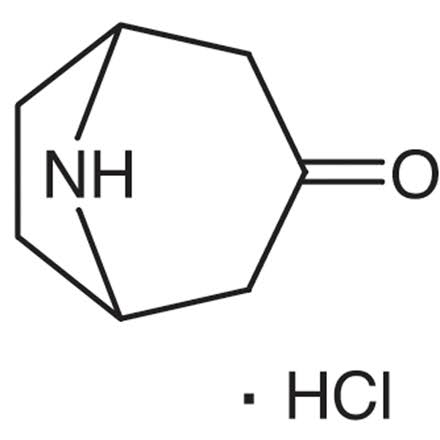
Other structures in the company's published range serve different synthetic purposes. Nortropinone hydrochloride is a nitrogen-containing bicyclic compound identified as an N-demethylated tropane intermediate. Methyl 4-hydroxy-2-methyl-1, listed with CAS number 35511-15-0 on the product page, is described in connection with a benzothiazine ring intermediate associated with piroxicam and meloxicam API routes. These examples show how heterocyclic systems and specific substitution patterns can provide a framework for constructing more complex pharmaceutical molecules.
| Compound or product family | Structural feature stated in product information | Application context described by the supplier | Identifier or available detail |
| Tropine | Nitrogen-containing bicyclic tropane framework with hydroxyl functionality | Anticholinergic-related synthesis routes | Named product; numeric assay limits are not published on the overview page |
| Tropinone | Bicyclic tropane framework containing a carbonyl group | Anticholinergic-related synthesis routes | Named product; route-specific specifications should be confirmed |
| Tropic Acid | Aromatic ring and carboxylic acid functionality | Pharmaceutical intermediate building block | CAS 529-64-6 |
| Nortropinone Hydrochloride | N-demethylated nitrogen-containing bicyclic structure | Anticholinergic and CNS-related synthesis | CAS 25602-68-0 |
| Methyl 4-hydroxy-2-methyl-1 | Benzothiazine ring-related structure | Associated with piroxicam and meloxicam API routes | CAS 35511-15-0; product name is shown in shortened form on the page |
For procurement, a structural family should be treated as a starting point for technical assessment, not as a substitute for a full specification. The buyer should establish the exact chemical name, CAS number, molecular formula, grade, assay method and impurity profile required by the manufacturing route. Our quality team should confirm that these details match the approved material record. Where stereochemistry, water content, residual solvents or particle characteristics affect processing, those attributes should be stated in the purchase specification and verified against the relevant certificate of analysis.
Which Chemical Parameters Should Buyers Evaluate Before Qualification?
Structure influences the tests that matter, but a reliable purchasing decision also depends on measurable quality attributes. Identity testing confirms that the supplied material matches the intended molecule. Assay indicates the content of the target compound under the stated method. Related-substance testing helps identify process-related impurities and degradation products. Depending on the molecule and its intended use, buyers may also need limits for water, residual solvents, inorganic residues, elemental impurities or specific isomers.
CAS numbers are useful for distinguishing compounds, but they should not be the only identifier used in a contract. For Pharmaceutical Intermediates, the full chemical form and specification version should be part of the purchasing record. A complete material description should include the chemical name, salt form where applicable, grade, specification version and analytical methods. This is especially important for hydrochloride salts and other forms in which the counterion, hydration state or solid form may affect handling and analytical results. If a supplier's public listing does not state a numerical limit, the buyer should request an approved specification rather than assume a customary value.
| Parameter | Why it matters | What buyers should request |
| Identity | Confirms the molecular structure and chemical form | Validated identification method and acceptance criteria |
| Assay | Measures the content of the intended compound | Defined test method, reporting basis and limit |
| Related substances | Tracks synthesis impurities and potential degradation products | Specified individual and total impurity limits, where applicable |
| Water content | Can affect stability, weighing and reaction performance | Method and limit appropriate to the material |
| Residual solvents | Supports control of solvents used during manufacture or purification | Solvent-specific results and applicable limits |
| Physical properties | May influence sampling, dissolution, transfer and process handling | Relevant appearance, particle-size or solid-form requirements |
Henan Purui Pharmaceutical Co., Ltd. describes a quality system that includes testing at production stages and GMP-oriented manufacturing controls. Its published information also identifies a manufacturing site of approximately 120,000 square metres and an integrated API, intermediate and formulation production layout. These details provide useful supplier background, but qualification still requires review of current site documentation, product-specific specifications, batch records where appropriate and the quality agreement applicable to the intended supply relationship.
For each candidate material, our technical review should connect the molecular structure with the intended reaction sequence. We should confirm which functional groups must remain intact, which impurities could interfere with the next step and whether the material's salt form or stereochemical profile is controlled. Our factory's publicly listed product overview does not provide numerical assay, impurity, residual-solvent or water limits for every item, so those values should be obtained from the current product specification and batch-specific COA before approval.
How Can Structural Knowledge Improve Supply Chain Reliability?
Structural knowledge supports supply continuity because it helps manufacturers identify the quality attributes that are critical to their process. If a reaction depends on a particular functional group, an impurity that modifies or blocks that group may reduce yield or create a difficult purification step. If a downstream reaction is stereoselective, variation in isomer composition can affect the final product profile. Defining these risks early makes supplier qualification more meaningful and reduces the chance of discovering a material mismatch after production has started.
Change control is particularly important when a supplier changes a synthetic route, raw material source, purification method, manufacturing site or analytical procedure. Even when the chemical name and CAS number remain unchanged, a process change may alter the impurity pattern or physical properties. Buyers should agree in advance which changes require notification, supporting data or requalification. A robust quality agreement should also define deviation reporting, out-of-specification investigation, retained samples, traceability and complaint handling.
An established supplier with experience across related stages may offer useful technical context, although the actual suitability of a source must be established product by product. Its product categories and manufacturing scope should be checked against the specific material being qualified. Our sourcing process should assess manufacturing capability, quality oversight, documentation, capacity planning and communication rather than relying on a broad portfolio description alone.
Before placing a commercial order, our procurement and quality teams should align on the approved specification, sampling plan, packaging requirements, storage conditions, retest or expiry dating, shipping controls and documentation package. Our factory can be evaluated through a structured supplier questionnaire and, where risk warrants, an audit. We should also agree how forecast changes, unexpected demand and production interruptions will be communicated. These measures help convert chemical compatibility into dependable material availability. Consistent qualification of Pharmaceutical Intermediates also makes it easier to compare batches and investigate unexpected process variation.
A practical qualification sequence is to identify the required structure, confirm the material's identity and grade, assess the critical quality attributes, review the supplier's quality system, evaluate representative batch data and approve a controlled specification. Our team should then monitor incoming results and supplier performance over time. This approach is more reliable than selecting a material solely by its catalogue description or lowest quoted price.
What Should Manufacturers Confirm Before Selecting a Supplier?
Manufacturers should begin with the route-specific requirements rather than a generic request for a chemical intermediate. The inquiry should state the target application, required chemical form, expected annual demand, preferred batch size and any critical impurity or stereochemical limits. Where a material is being evaluated for a new route, process development teams should identify which structural features are essential and which attributes can be controlled through downstream processing.
Henan Purui Pharmaceutical Co., Ltd. lists a range of pharmaceutical-related intermediates, including tropane derivatives, tropic acid and other compounds used in different synthesis contexts. Buyers can use this portfolio information to identify potentially relevant materials, then request current technical documents for the specific item. Our evaluation should include the latest specification, representative COA, available analytical methods, manufacturing and quality information, packaging details and confirmation of the commercial supply terms.
Do not infer unlisted product parameters from a general category description. The public product overview does not establish a universal purity percentage, batch capacity, delivery lead time or packaging format for every intermediate. Those details should be confirmed in writing for the exact product and order. A clear technical exchange at the quotation stage can prevent mismatched expectations and provide a sound basis for long-term supply planning.
In summary, chemical structure determines much of an intermediate's reactivity, selectivity, stability and suitability for a particular synthesis route. Functional groups, ring systems, stereochemistry and salt forms each create different technical requirements, while analytical specifications and supplier controls determine whether those requirements can be met consistently. Contact our team to discuss the target compound, required specification and intended manufacturing application. We can then review the relevant product information and clarify which technical documents are available for qualification.
What Do Buyers Commonly Ask About Chemical Structure and Intermediate Selection?
How does a functional group affect the choice of a pharmaceutical intermediate?
A functional group determines which chemical transformations a molecule can undergo and how it may respond to reaction conditions. Hydroxyl, amino, carbonyl and carboxyl groups can provide reaction sites for different synthesis steps, while their position and neighbouring groups influence selectivity and by-product formation. Buyers should therefore compare the functional groups in the proposed intermediate with the requirements of the planned route and verify that critical groups and impurity limits are controlled in the material specification.
Why are ring systems and stereochemistry important in pharmaceutical synthesis?
Ring systems influence molecular shape, conformational flexibility and access to reactive sites. Aromatic, saturated, fused and bridged rings can behave differently under the same reaction conditions. Stereochemistry adds another layer because molecules with the same connectivity may have different three-dimensional arrangements and biological properties. When a route requires a specific isomer or a defined three-dimensional scaffold, the specification should include appropriate identity and stereochemical tests rather than relying only on a general assay result.
What documents should a buyer request when qualifying an intermediate supplier?
At minimum, buyers should request the current product specification, a representative or batch-specific certificate of analysis, chemical identity information, relevant impurity and residual-solvent data, and details of the applicable quality system. Depending on the material and intended use, additional information may include stability or retest data, packaging and storage conditions, change-control procedures, traceability records and audit documentation. The required package should be agreed with the supplier's quality unit and documented before routine purchasing begins. Our purchasing team should retain the approved version for subsequent orders.