
How Do Optical Brighteners (BA) Transform Material Appearance?
2025-12-09
Optical Brighteners (BA), also known as fluorescent whitening agents, are specialized chemical additives engineered to absorb invisible ultraviolet (UV) light and re-emit it as visible blue light. This emission reduces yellowing and enhances perceived whiteness and brightness across textiles, plastics, detergents, papers, and coatings. As industries raise expectations for cleaner aesthetics, long-lasting brilliance, and better color stability, Optical Brighteners (BA) have evolved into crucial performance enhancers rather than optional finishing components.
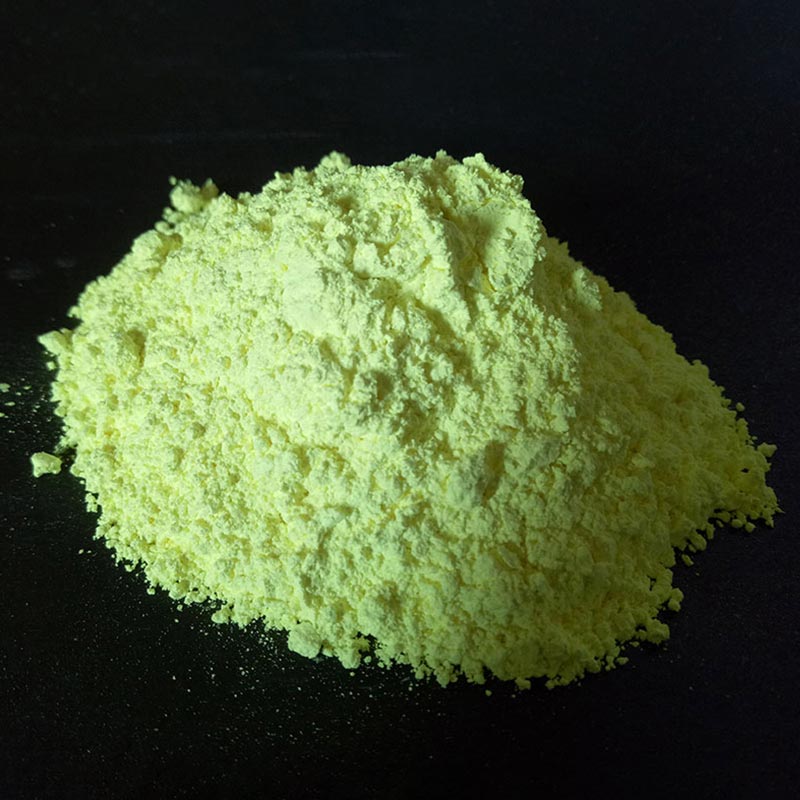
Below is a summary of core parameters often associated with high-grade Optical Brighteners (BA), presented in one professional table:
| Parameter | Description |
|---|---|
| Chemical Family | Stilbene-based or coumarin-based fluorescent whitening agents |
| Appearance | Light yellow crystalline powder |
| Purity | ≥ 99% (depending on grade) |
| Melting Point | 200–205°C typical range |
| Solubility | Soluble in organic solvents; varies for water-soluble grades |
| Recommended Dosage | 0.01–0.1% depending on substrate and process |
| Lightfastness | High resistance to UV degradation and yellowing |
| Compatibility | Compatible with most polymers, detergents, coatings, and textile auxiliaries |
| Applications | Plastics, fibers, detergents, inks, coatings, paper, film packaging |
| Stability | Strong thermal and chemical stability during processing |
With these attributes, Optical Brighteners (BA) serve as multifunctional additives capable of improving color clarity, whiteness index, product visibility, and consumer appeal across a wide spectrum of industrial materials.
How Do Optical Brighteners (BA) Improve Performance Across Textiles, Plastics, Detergents, and Coatings?
The functional value of Optical Brighteners (BA) extends far beyond visual enhancement. Their mechanism of UV absorption and blue-light re-emission enables them to modify how light interacts with a surface, providing benefits that increase the functional lifespan and appearance quality of finished products.
Textile Applications
In fabrics, BA molecules bond with fibers to improve whiteness, brightness, and color depth. They compensate for natural fiber yellowing, making garments look fresher and new for longer periods. Textile processors also depend on BA to enhance dye uniformity, reduce optical shadows, and improve fabric hand-feel perception.
Plastics and Polymer Applications
For polymers such as PE, PP, PVC, PS, ABS, and PET, Optical Brighteners (BA) increase visual clarity and enhance color brilliance. They are essential in transparent or translucent plastics where yellowing from heat or oxidation is common. In injection-molded components, BA improves aesthetics without altering structural integrity.
Detergent Applications
BA is widely used in domestic and industrial detergents to enhance brightness during laundering. When fabrics appear dull after repeated washing, BA binds to fibers during rinsing, restoring a clean optical effect by offsetting yellow tones. Their stability ensures they remain active across various washing conditions.
Coatings and Ink Applications
Paints, inks, and coatings utilize BA to create a higher gloss finish while reducing discoloration from UV exposure. This is essential for packaging, automotive finishes, and decorative paints where long-term brightness is a quality expectation.
Together, these performance benefits explain why Optical Brighteners (BA) have become indispensable for industries that prioritize aesthetic consistency, brand presentation, and product shelf appeal.
How Do BA Products Compare to Traditional Whitening Methods and What Trends Are Shaping Their Future?
Traditional whitening agents mainly mask discoloration, but Optical Brighteners (BA) actively transform how materials reflect and emit light. This fundamental difference results in increased brightness without excessive pigment loading or structural alteration. The comparison below highlights why BA solutions are favored:
-
Whitening pigments (e.g., TiO₂): Improve opacity but do not neutralize yellowing.
-
Chemical bleaches: Remove stains but do not create optical brightness.
-
Optical Brighteners (BA): Deliver a blue-emission effect that increases visual whiteness.
As global markets shift toward higher performance standards, several important trends are shaping the future trajectory of BA products:
Eco-Friendly and Low-Residue Formulas
Environmental regulations continue to encourage BA formulations with higher biodegradability, lower toxicity, and reduced chemical residue. Manufacturers are adopting green synthesis routes and optimizing molecular efficiency for lower dosing.
High-Temperature Resistant BA for Engineering Plastics
With plastics processing temperatures increasing, future BA formulas are being optimized for superior thermal and photo-stability, maintaining brightness in harsh conditions.
Smart Optical Brightening for Digital Printing and Packaging
Digital printing technologies require stable, high-purity BA to ensure color accuracy and crisp imaging. Packaging industries demand formulas resistant to UV degradation and long-term display exposure.
Integration with AI-Driven Color Control Systems
Industries are adopting precision color-matching systems that rely on BA for consistent optical outputs, ensuring more uniform and predictable material appearance across batches.
These trends indicate that Optical Brighteners (BA) will continue to integrate more deeply with advanced manufacturing, material science, and sustainability requirements.
How to Select the Right Optical Brightener (BA) and What Are the Most Common Questions Asked About Its Use?
Selecting the correct BA requires evaluating its compatibility with the substrate, processing temperature, desired whitening effect, and environmental requirements. Factors such as molecular structure, solubility, thermal resistance, and industry-specific certifications determine how effectively the product performs.
Below are two common questions users frequently ask about Optical Brighteners (BA):
Q1: How does Optical Brightener (BA) maintain brightness under UV exposure or long-term use?
A1: BA absorbs ultraviolet light and re-emits it as visible blue light, creating a compensatory effect that neutralizes yellowing. High-grade BA products are synthesized with enhanced stability in their conjugated molecular structures, allowing them to resist UV breakdown, thermal degradation, and chemical oxidation. This ensures the brightness effect remains consistent even after multiple washing cycles, extended sunlight exposure, or long-term material aging.
Q2: How much Optical Brightener (BA) should be added to achieve optimal whitening without over-fluorescence?
A2: In most applications, the recommended dosage ranges from 0.01% to 0.1%, depending on substrate type and processing conditions. Excessive dosing may create an unnatural bluish appearance or uneven optical results. Therefore, industrial users typically conduct laboratory pre-tests to determine the ideal concentration based on melt-flow characteristics, coating viscosity, detergent formulation, or fiber absorption rate. Proper dispersion and mixing techniques are essential to ensure uniform brightness.
Optical Brighteners (BA) play an essential role in modern manufacturing by improving brightness, color clarity, surface quality, and consumer perception across a wide range of industries. Their performance advantage emerges from advanced molecular design that transforms UV energy into visible blue light, enabling them to counteract yellowing and enhance material aesthetics. As industries pursue greater sustainability, more stable formulas, and improved visual performance, Optical Brighteners (BA) will continue to evolve through innovation and upgraded production technologies.
For companies seeking reliable supply, consistent quality, and application-oriented technical solutions, HANGZHOU TONGGE ENERGY TECHNOLOGY CO. LTD provides professional support, high-grade BA products, and tailored recommendations for industrial use. For detailed specifications, custom formulations, or purchasing inquiries, contact us to obtain guidance and technical assistance.