
How Do Recycled Resins Support Green Manufacturing?
2026-10-14
A procurement manager at a consumer electronics factory receives a directive: reduce material cost by 15 percent and improve the sustainability score of the product line. The engineering team proposes using recycled Resin Material for the internal brackets and the outer housing. The procurement manager has concerns. Will the recycled material meet the mechanical specifications? Will the color be consistent? Will the supplier be able to deliver the same grade every month? These are the questions that determine whether a green manufacturing initiative succeeds or fails. This guide explains how recycled resins support green manufacturing and what to check before switching.
1. What Are the Different Types of Recycled Resin Material?
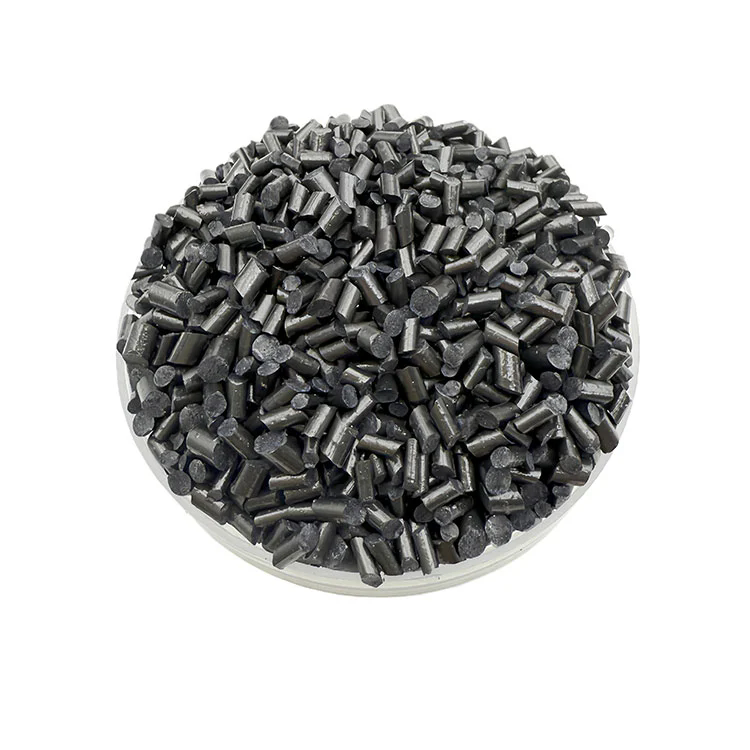
Recycled Resin Material comes from two main sources: post-industrial recycling (PIR) and post-consumer recycling (PCR). PIR material is scrap from the manufacturing process. It is clean, sorted, and has a known history. PCR material comes from products that have been used and discarded. It requires collection, sorting, washing, and reprocessing. PIR material is generally higher quality and more consistent than PCR. PCR material has a larger environmental benefit because it diverts waste from landfill. The table below compares the two types.
| Property | Post-industrial recycled (PIR) | Post-consumer recycled (PCR) |
| Source | Factory scrap, sprues, rejects | Used products, packaging |
| Contamination level | Low | Moderate to high |
| Color consistency | Good | Variable (requires sorting) |
| Mechanical property retention | 90 – 95% of virgin | 80 – 90% of virgin |
| Cost saving vs. virgin | 15 – 25% | 20 – 40% |
| Environmental benefit | Moderate | High |
In our factory, we supply both PIR and PCR Resin Material. We recommend PIR for applications that require tight tolerances and consistent color. We recommend PCR for non-visible parts and for applications where the sustainability benefit is the primary driver. JUWU has been supplying recycled resins for over 10 years.
2. How Do Recycled Resins Compare to Virgin Resins in Performance?
The performance of recycled Resin Material depends on the polymer type, the number of reprocessing cycles, and the contamination level. Each time a thermoplastic is heated and molded, the polymer chains shorten, and the mechanical properties degrade. The table below shows the property retention for common polymers after multiple recycling cycles.
| Polymer | Tensile strength retention (1 cycle) | Tensile strength retention (3 cycles) | Impact strength retention (3 cycles) | Typical application |
| PP | 95% | 85% | 70% | Automotive parts, containers |
| PE | 97% | 90% | 80% | Bottles, films, pipes |
| ABS | 92% | 78% | 60% | Electronics housings |
| PC | 90% | 75% | 55% | Optical parts, safety equipment |
| PA66 | 88% | 70% | 50% | Under-hood auto parts |
For applications that require high impact strength, the recycled Resin Material may need to be blended with virgin resin or with impact modifiers. In our factory, we provide compounded recycled resins that are formulated to meet specific mechanical specifications. We also provide test data for each batch so that the customer can verify the properties before production. Ningbo JUWU International Trading Co., Ltd. works with qualified recyclers to ensure that the feedstock is clean and consistent.
3. What Are the Cost and Sustainability Benefits of Recycled Resins?
The cost benefit of recycled Resin Material comes from the lower raw material price. The sustainability benefit comes from the reduced carbon footprint. Producing recycled resin requires less energy than producing virgin resin. For every kilogram of recycled PP used instead of virgin PP, the carbon footprint is reduced by 1.5 to 2.0 kilograms of CO₂ equivalent. The table below shows the cost and carbon savings for common polymers.
| Polymer | Virgin resin price (USD/kg) | Recycled resin price (USD/kg) | Cost saving | CO₂ saving (kg CO₂/kg) |
| PP | 1.20 | 0.85 | 29% | 1.8 |
| PE | 1.15 | 0.80 | 30% | 1.6 |
| ABS | 1.80 | 1.30 | 28% | 2.5 |
| PC | 2.50 | 1.80 | 28% | 3.2 |
| PA66 | 3.20 | 2.40 | 25% | 4.0 |
Procurement tip: When calculating the total cost saving, include the cost of qualifying the recycled material, the cost of any property adjustments, and the cost of additional quality control. For a typical injection molding application, the net saving is 15 to 25 percent. For a large volume application, this can be hundreds of thousands of dollars per year. The carbon saving can be used to support the company's sustainability reporting and to meet customer requirements for green manufacturing.
4. What Should You Check Before Switching to Recycled Resin Material?
Before switching to recycled Resin Material, the procurement manager should verify five things. The first is the material specification. The recycled resin must meet the same mechanical, thermal, and electrical specifications as the virgin resin. The second is the color consistency. The recycled resin must match the color standard, or the parts must be painted or pigmented. The third is the supply stability. The supplier must be able to deliver the same grade every month. The fourth is the regulatory compliance. The recycled resin must meet the same regulatory requirements as the virgin resin, including RoHS, REACH, and food contact if applicable. The fifth is the processing window. The recycled resin may require different molding temperatures and pressures. The table below shows the checkpoints and the acceptance criteria.
| Checkpoint | Acceptance criteria | Verification method |
| Mechanical properties | Within 10% of virgin specification | Tensile and impact testing |
| Color consistency | Delta E < 1.5 vs. standard | Spectrophotometer |
| Supply stability | Same grade for 12 months | Supplier audit and contract |
| Regulatory compliance | RoHS, REACH, FDA (if needed) | Certificate of analysis |
| Processing window | Within 20°C of virgin settings | Trial run and DOE |
In our factory, we provide a qualification kit for each recycled Resin Material grade. The kit includes a sample of the material, the test data, and the recommended processing parameters. We also provide on-site support for the trial run. Ningbo JUWU International Trading Co., Ltd. has helped over 200 manufacturers switch to recycled resins without compromising quality.
Frequently Asked Questions About Recycled Resins in Green Manufacturing
Summary for Procurement Managers and Sustainability Officers
Recycled Resin Material supports green manufacturing by reducing raw material cost, lowering carbon footprint, and diverting waste from landfill. The key to a successful switch is to match the recycled material to the application, verify the mechanical properties, and ensure supply stability. PIR material is suitable for visible parts and tight tolerances. PCR material is suitable for non-visible parts and sustainability-driven applications. With the right qualification process, recycled resins can meet the same specifications as virgin resins at a lower cost. Ningbo JUWU International Trading Co., Ltd. has been supplying recycled resins for over 10 years and provides full qualification support for our customers.
Ningbo JUWU International Trading Co., Ltd. supplies recycled Resin Material in PP, PE, ABS, PC, and PA66, with property retention data and processing guidelines. We provide qualification kits, test reports, and on-site trial support.