
How Does Anionic Polyacrylamide Improve Industrial Water Treatment?
2026-09-24
In modern industrial water management, efficient separation of suspended solids is essential for reducing turbidity, improving clarification, and supporting water reuse. Anionic Polyacrylamide (APAM) is a high-molecular-weight polymer widely used as a flocculant because its long molecular chains can adsorb onto particle surfaces and promote aggregation through bridging and charge-related interactions. Research has demonstrated its effectiveness in wastewater and mineral-processing applications, although the appropriate molecular weight, charge density, dosage, pH, and process conditions must be selected according to the characteristics of the treated water.
For industrial buyers, selecting a suitable APAM supplier is therefore not simply about purchasing a chemical product. Consistent quality, application-specific technical support, supply stability, and compatibility with existing treatment processes are equally important. Nuoer Energy Solutions Trading Co., Ltd. provides chemical solutions for customers seeking reliable Anionic Polyacrylamide for industrial water treatment and solid-liquid separation applications.
What Is Anionic Polyacrylamide?
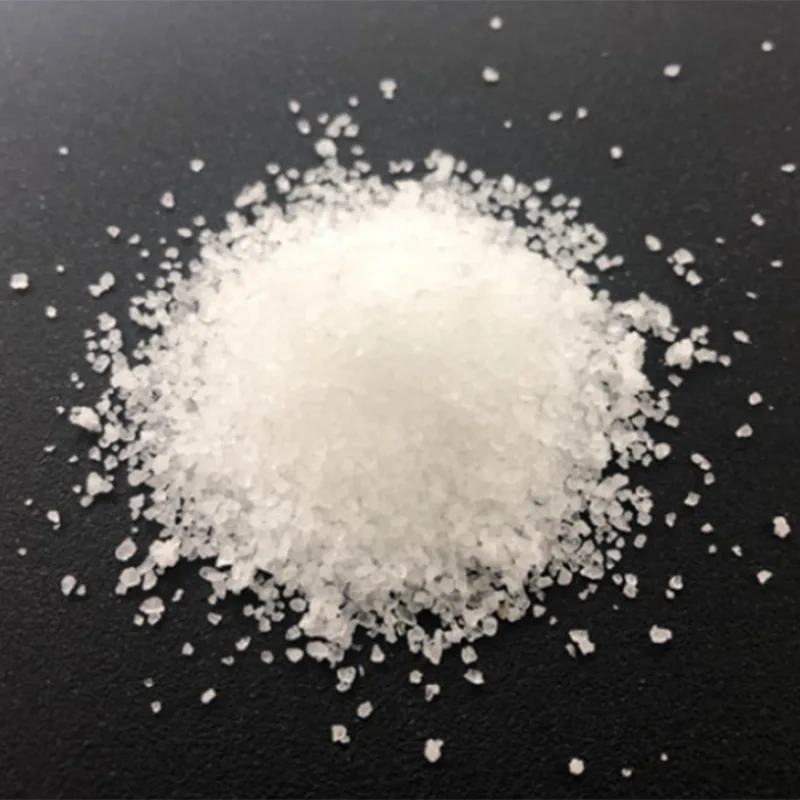
Anionic Polyacrylamide is a water-soluble polymer generally produced by copolymerizing acrylamide with anionic monomers. Its molecular chain contains negatively charged functional groups, allowing it to interact with certain positively charged particles, metal hydroxide species, and other components in suspension.
The most important feature of APAM is its ability to promote flocculation. Instead of allowing fine particles to remain independently dispersed in water, polymer chains can attach to multiple particles and form larger aggregates. These flocs can then settle or be separated more efficiently.
The actual performance depends strongly on polymer characteristics and water chemistry. Molecular weight and charge density, for example, can influence chain extension, adsorption, bridging, settling behavior, and final floc structure.
Why Is Anionic Polyacrylamide Important?
Industrial wastewater frequently contains fine particles that are difficult to remove through ordinary gravity settling. Mining wastewater, mineral-processing water, paper-mill wastewater, and other industrial streams can contain colloids, suspended solids, and fine mineral particles.
APAM can help transform these dispersed particles into larger flocs, improving solid-liquid separation.
Key functions include:
- Flocculation: Connects fine particles to form larger aggregates.
- Bridging: Long polymer chains can attach to multiple particles simultaneously.
- Suspended-solid removal: Promotes faster separation of particulate matter.
- Turbidity reduction: Larger flocs can settle more readily than individual fine particles.
- Clarification support: Helps improve the performance of sedimentation and clarification units.
- Process-water recovery: Better solid-liquid separation can support industrial water recycling.
Studies on hematite wastewater have shown that APAM can improve charge neutralization and bridging adsorption, while specially structured polymers can produce larger and more compact flocs.
How Does Anionic Polyacrylamide Work?
The flocculation mechanism can be understood through several interconnected stages.
1. Polymer Dispersion
APAM is first prepared in water at an appropriate concentration. Proper dissolution is important because insufficient hydration can reduce the availability of polymer chains for particle interaction.
2. Particle Interaction
When introduced into wastewater, polymer chains encounter suspended particles. Depending on particle characteristics and water chemistry, adsorption may occur through electrostatic interactions and other surface-related mechanisms.
3. Polymer Bridging
A single polymer chain can interact with more than one particle. This bridging effect brings particles together and gradually creates larger aggregates.
4. Floc Growth
With appropriate mixing conditions, small aggregates collide and combine into larger flocs. These flocs can then be separated through sedimentation, filtration, flotation, or related processes.
5. Solid-Liquid Separation
Once sufficiently large and stable flocs have formed, the solid phase becomes easier to separate from the water phase.
This mechanism explains why APAM is often considered a process aid rather than simply a chemical additive. Its effectiveness depends on how well its molecular properties match the characteristics of the wastewater.
Where Can Anionic Polyacrylamide Be Used?
The versatility of APAM makes it relevant to numerous industrial scenarios.
| Application | Main Treatment Objective | Potential APAM Function |
|---|---|---|
| Mining wastewater | Remove mineral particles | Flocculation and settling |
| Mineral processing | Improve solid-liquid separation | Particle bridging |
| Coal tailings water | Accelerate solids separation | Floc formation |
| Paper industry | Reduce suspended solids | Clarification support |
| Industrial wastewater | Improve water clarification | Particle aggregation |
| Sludge-related processes | Improve separation performance | Floc structure formation |
Research has investigated APAM in mineral wastewater, hematite treatment, pulp and paper wastewater, and flotation-related processes, demonstrating that polymer selection needs to be adapted to the specific process rather than treated as a universal formula.
What Determines APAM Performance?
Choosing Anionic Polyacrylamide solely according to the product name is not sufficient. Several technical parameters can influence treatment results.
Molecular Weight
Higher molecular weight can provide longer polymer chains and stronger bridging potential. However, the highest molecular weight is not automatically the most appropriate option for every wastewater stream.
Anionic Charge Density
Charge density influences how the polymer interacts with suspended particles and other components in the water. Different wastewater compositions may require different charge characteristics.
Dosage
Too little polymer may produce insufficient flocculation, while excessive dosage can sometimes cause undesirable stabilization or inefficient chemical consumption. Jar testing and process trials are therefore valuable for determining an appropriate operating range.
pH and Water Chemistry
Particle surface charge, ionic strength, dissolved substances, and pH can influence polymer adsorption and flocculation behavior. Research on mineral particles has demonstrated that APAM adsorption can vary with pH.
Mixing Conditions
Rapid mixing helps distribute the polymer, while controlled slower mixing can encourage floc growth without excessively breaking the formed aggregates.
What Benefits Can Industrial Users Expect?
When appropriately selected and applied, Anionic Polyacrylamide can contribute to a more efficient separation process.
Operational benefits may include:
- Faster settling of suspended solids
- Improved water clarification
- More effective removal of fine particles
- Better utilization of downstream separation equipment
- Support for industrial water recycling
- Potential reduction in treatment complexity
In one recent study involving hematite wastewater, a specially structured APAM achieved turbidity removal of up to 98.22% under the tested conditions. This result illustrates the importance of polymer structure and application conditions, rather than suggesting that the same removal rate applies universally.
How Can Buyers Select the Right Product?
For industrial procurement teams, several questions should be considered before placing a bulk order:
- What type of wastewater will be treated?
- What are the main suspended particles?
- What are the approximate pH and solids concentration?
- Is the process focused on clarification, settling, or dewatering?
- What molecular weight and charge density are appropriate?
- What dosing equipment is currently available?
- Has laboratory or pilot-scale testing been conducted?
- Can the supplier provide consistent batch quality and technical support?
A professional supplier should be able to discuss these parameters rather than simply recommend a generic polymer grade.
Nuoer Energy Solutions Trading Co., Ltd. for Anionic Polyacrylamide Supply
For international buyers, Nuoer Energy Solutions Trading Co., Ltd. focuses on providing practical chemical solutions for industrial applications. For customers sourcing Anionic Polyacrylamide, product selection can be approached from both a purchasing and application perspective.
Reliable supply is particularly important for wastewater-treatment operations because fluctuations in polymer quality can affect dosing requirements, floc formation, settling performance, and overall process stability.
By considering application conditions, required performance, packaging requirements, and procurement volumes together, buyers can develop a more suitable sourcing strategy for their specific industrial process.
The Role of APAM in More Efficient Water Management
As industries place greater emphasis on water conservation, wastewater reduction, and process-water reuse, efficient solid-liquid separation is becoming increasingly important. Anionic Polyacrylamide can play a valuable role in this process by helping fine suspended particles aggregate into larger flocs that are easier to separate.
However, APAM performance is application-dependent. The right molecular weight, charge density, dosage, mixing conditions, and water chemistry should be considered together. For industrial users, the most practical approach is to evaluate the polymer against actual wastewater characteristics and operating requirements.
For reliable Anionic Polyacrylamide sourcing and application-oriented chemical solutions, Nuoer Energy Solutions Trading Co., Ltd. can support buyers in evaluating suitable options for their industrial requirements. If you are looking for a suitable APAM solution, bulk supply, or application-specific product information, contact us to discuss your requirements and explore the right solution for your process.