

Summary: Antimony Trioxide (Sb2O3) is a widely used flame retardant additive that significantly improves the fire resistance of polymers and textiles. This article explores its applications, properties, advantages, and specifications, helping industries select the right solution for their fire safety needs. Shandong Taixing specializes in providing premium Antimony Trioxide for diverse applications.
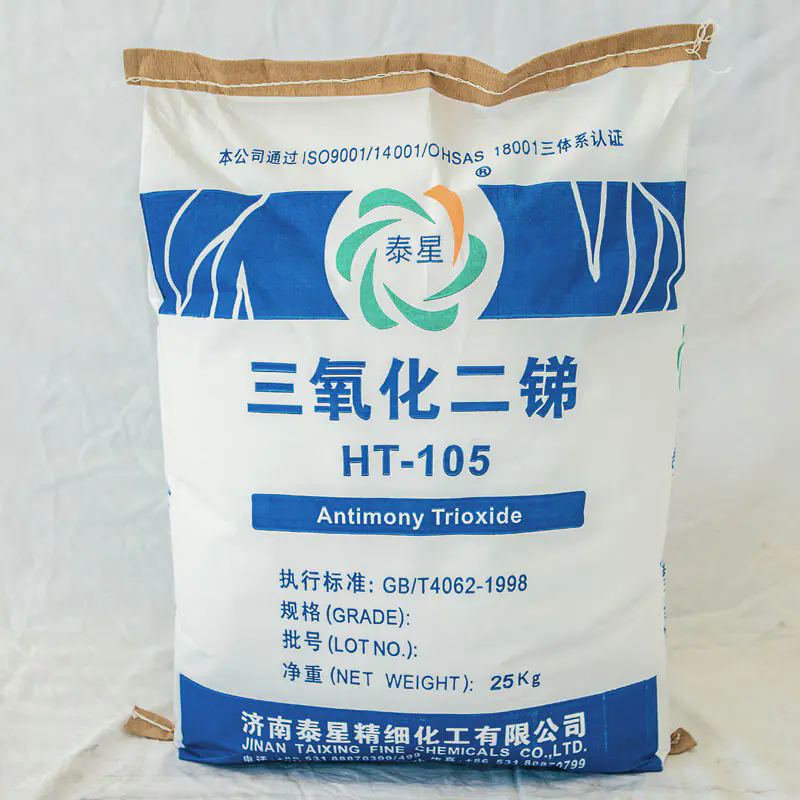
Table of Contents
Overview of Antimony Trioxide
Antimony Trioxide is an inorganic compound commonly used as a synergist with halogenated flame retardants. Its chemical formula is Sb2O3, and it exists as a white powder with high stability. By acting in combination with halogenated compounds, it enhances the flame-retardant performance of plastics, rubbers, textiles, and coatings.
Key Applications
Industries leverage Antimony Trioxide for various applications due to its effectiveness and cost efficiency:
- Polymer Industry: Used in PVC, polyethylene, and polypropylene to improve fire resistance.
- Textile Industry: Enhances flame retardancy in fabrics, curtains, and protective clothing.
- Electronics: Provides fire safety for cables, wires, and electronic housings.
- Coatings and Paints: Integrated into coatings for fire-protective surfaces.
- Rubber Products: Used in silicone and other rubber materials for enhanced fire safety.
Physical and Chemical Properties
| Property | Value |
|---|---|
| Chemical Formula | Sb2O3 |
| Appearance | White powder |
| Density | 5.2 g/cm³ |
| Melting Point | 656 °C |
| Boiling Point | 1550 °C |
| Solubility | Insoluble in water, soluble in concentrated acids |
| Particle Size | 0.5–5 μm (typical for high-grade products) |
Benefits of Using Antimony Trioxide
- Enhanced Fire Safety: Significantly reduces flammability of materials.
- Thermal Stability: Remains stable at high processing temperatures.
- Compatibility: Works well with halogenated flame retardants for synergistic effect.
- Cost-Effective: Offers high efficiency at relatively low concentrations.
- Wide Industrial Use: Suitable for polymers, textiles, electronics, coatings, and rubber.
Product Specifications
| Parameter | Typical Value | Unit |
|---|---|---|
| Purity | 99.8 | % |
| Loss on Ignition | 0.2 | % |
| Moisture Content | 0.1 | % |
| Particle Size D50 | 2.0 | μm |
| Bulk Density | 0.9–1.1 | g/cm³ |
Frequently Asked Questions
Q1: Is Antimony Trioxide safe for industrial use?
A1: Yes, when handled according to safety guidelines, it is widely used in plastics, textiles, and electronics with proper protective measures.
Q2: Can it be used alone as a flame retardant?
A2: Antimony Trioxide is most effective when combined with halogenated compounds; it acts as a synergist rather than a standalone flame retardant.
Q3: How should it be stored?
A3: Store in a cool, dry place in sealed containers to prevent contamination and moisture absorption.
Contact Information
Shandong Taixing provides premium Antimony Trioxide with consistent quality for industrial applications. For inquiries, detailed specifications, or bulk orders, contact us today to secure your supply and ensure superior fire safety performance.