

How Does Antimony Trioxide Improve Flame Retardancy in Modern Materials?
2026-03-10
Article Summary
Antimony Trioxide is one of the most widely used flame-retardant synergists in industrial materials. Manufacturers in plastics, textiles, coatings, electronics, and rubber often rely on this compound to enhance fire resistance and improve product safety. However, many buyers and product engineers still face questions regarding its function, compatibility, and optimal application methods.
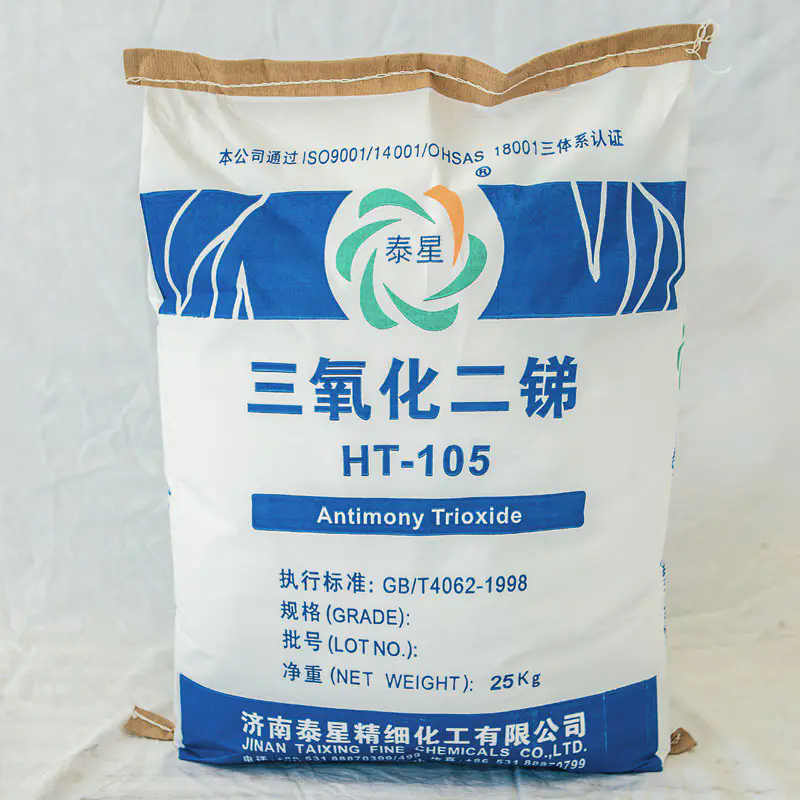
Table of Contents
- 1. Introduction to Antimony Trioxide
- 2. How Antimony Trioxide Works in Flame Retardant Systems
- 3. Key Properties and Technical Parameters
- 4. Major Industrial Applications
- 5. Advantages for Manufacturers
- 6. How to Choose the Right Antimony Trioxide Supplier
- 7. Frequently Asked Questions
- 8. Conclusion
Outline
- Understanding the role of Antimony Trioxide
- Flame-retardant mechanism in polymer systems
- Technical specifications and quality indicators
- Industrial applications and market demand
- Supplier selection and purchasing considerations
Introduction to Antimony Trioxide
Antimony Trioxide is an inorganic compound widely used as a flame-retardant synergist in a variety of industrial materials. While it does not function as a standalone flame retardant in most systems, it significantly enhances the effectiveness of halogenated flame retardants when used together. This property makes it essential for manufacturers seeking reliable fire protection solutions.
Industries such as plastics manufacturing, electronics, construction materials, rubber processing, and textiles depend on flame-resistant materials to comply with safety regulations and prevent fire hazards. Antimony Trioxide plays a crucial role in helping these industries achieve higher fire safety standards without compromising product performance.
In modern manufacturing environments, product safety and material performance must coexist. The use of advanced flame-retardant systems, including Antimony Trioxide, helps manufacturers maintain both efficiency and compliance with safety requirements.
How Antimony Trioxide Works in Flame Retardant Systems
The effectiveness of Antimony Trioxide comes from its ability to act as a synergist in halogen-based flame-retardant systems. When materials containing halogenated flame retardants are exposed to heat or flame, a chemical reaction occurs between the halogen compound and Antimony Trioxide.
This reaction produces antimony halides in the vapor phase, which interfere with the combustion process. The antimony halides reduce flame propagation by capturing high-energy radicals generated during burning.
Main flame-retardant mechanisms include:
- Interrupting the combustion chain reaction
- Reducing heat release during burning
- Promoting formation of protective char layers
- Suppressing smoke generation in certain formulations
Because of this synergistic behavior, only a relatively small amount of Antimony Trioxide is required to significantly increase the performance of flame-retardant systems. This efficiency makes it highly cost-effective for large-scale manufacturing.
Key Properties and Technical Parameters
When selecting Antimony Trioxide for industrial applications, manufacturers typically evaluate several important parameters that influence its performance and compatibility with production processes.
| Parameter | Description |
|---|---|
| Chemical Formula | Sb₂O₃ |
| Appearance | Fine white crystalline powder |
| Purity | Typically ≥ 99.5% |
| Average Particle Size | 0.8 – 2.0 μm depending on grade |
| Melting Point | Approximately 655°C |
| Density | About 5.2 g/cm³ |
| Solubility | Insoluble in water |
High-purity grades are particularly important for electronics, engineering plastics, and coatings where consistent dispersion and stable thermal behavior are required.
Major Industrial Applications
Antimony Trioxide is widely used across multiple industries where flame-retardant performance is essential. Its compatibility with many polymers and materials makes it one of the most versatile additives available.
Common applications include:
- Flame-retardant plastics such as PVC, ABS, and polystyrene
- Rubber products and conveyor belts
- Electrical cable insulation materials
- Textiles and upholstery fabrics
- Paints, coatings, and adhesives
- Engineering plastics used in electronics
In electrical equipment manufacturing, flame-retardant plastics are critical for preventing fire hazards caused by overheating components. Similarly, construction materials often require flame-retardant additives to meet building safety regulations.
Because of these requirements, global demand for Antimony Trioxide continues to grow across various industrial sectors.
Advantages for Manufacturers
Manufacturers choose Antimony Trioxide because it offers several technical and economic advantages compared with many alternative additives.
- High efficiency in halogen flame-retardant systems
- Low dosage required for strong performance
- Excellent thermal stability
- Good compatibility with polymer matrices
- Reliable dispersion in plastics and rubber
- Cost-effective for large-scale production
These benefits allow manufacturers to produce materials that meet strict fire safety standards while maintaining durability, flexibility, and mechanical strength.
For industries facing increasing safety regulations, selecting the right flame-retardant system has become a strategic decision. Antimony Trioxide remains a key component in achieving optimal fire protection performance.
How to Choose the Right Antimony Trioxide Supplier
Selecting a reliable supplier is just as important as selecting the correct material grade. Product quality, production stability, and technical support can all affect manufacturing results.
Important factors to consider include:
- Consistency of particle size and purity
- Stable production capacity
- Quality control systems
- Technical support for industrial applications
- Reliable international logistics
A professional supplier can help manufacturers optimize formulations and ensure the flame-retardant system performs as expected. Companies such as Taixing focus on providing stable quality Antimony Trioxide products for global customers in plastics, rubber, coatings, and electronics industries.
Working with an experienced manufacturer also ensures that product specifications remain consistent across large orders, which is critical for industrial production.
Frequently Asked Questions
Q1: Is Antimony Trioxide a flame retardant by itself?
Antimony Trioxide usually works as a synergist rather than a standalone flame retardant. It significantly improves the effectiveness of halogen-based flame retardants by enhancing their ability to suppress combustion.
Q2: What industries commonly use Antimony Trioxide?
It is widely used in plastics, rubber, textiles, coatings, electronic components, and cable insulation materials where flame-retardant performance is required.
Q3: Does particle size affect performance?
Yes. Smaller particle sizes generally provide better dispersion in polymer systems, which can improve flame-retardant efficiency and surface quality of finished products.
Q4: Can Antimony Trioxide be used in engineering plastics?
Yes. High-purity grades are commonly used in engineering plastics and electronic components because they offer stable thermal properties and reliable performance during processing.
Conclusion
Antimony Trioxide plays an essential role in modern flame-retardant systems. By enhancing the performance of halogen-based additives, it helps manufacturers produce safer materials used in construction, electronics, transportation, and consumer products. Its high efficiency, stability, and compatibility with many polymers make it a preferred solution for industrial flame-retardant applications.
For companies seeking reliable flame-retardant solutions, working with an experienced supplier is critical. Taixing provides high-quality Antimony Trioxide products designed to meet the demanding requirements of global industries.
If you are looking for stable supply, technical support, and customized solutions for flame-retardant materials, please visit our website or contact us today to learn more about how our Antimony Trioxide products can support your manufacturing needs.