

How Does ATO Dispersion Improve the Performance of Solar Panels
2025-12-19
In the relentless pursuit of higher solar panel efficiency, every component matters. A key advancement lies in the transparent conductive coatings that cover the panel surface, and that’s where high-quality ATO Dispersion plays a transformative role. At SAT NANO, we specialize in engineered nano-solutions that directly address the core challenges of solar energy harvesting. Our Antimony Tin Oxide (ATO) dispersions are formulated to enhance light management and electrical performance, leading to more powerful and durable photovoltaic modules.
The primary function of an ATO Dispersion in solar panels is to serve as a transparent conductive oxide (TCO) layer. Unlike conventional materials, ATO nanoparticles provide a superior combination of transparency and electrical conductivity. Our dispersions at SAT NANO are engineered to form uniform, thin films that maximize light transmission to the photovoltaic cell while minimizing electrical resistance for efficient current collection.
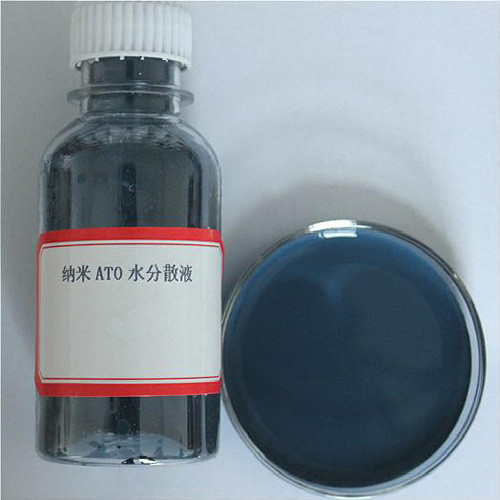
Key Product Parameters of SAT NANO ATO Dispersion for Solar Applications:
-
Solid Content: 20-40% (Customizable for coating viscosity requirements)
-
Particle Size (D50): < 50 nm (Ensures excellent film uniformity and transparency)
-
Base Medium: Water-based or solvent-based (Tailored for different deposition processes)
-
Surface Resistivity: Can achieve films with 10³ - 10⁵ Ω/sq, balancing conductivity and clarity.
-
Key Functionality: Provides outstanding anti-static, infrared (IR) reflection, and UV absorption properties.
Performance Advantages Table:
| Feature | Benefit for Solar Panels |
|---|---|
| High Optical Transparency | Allows maximum sunlight (~90%+ transmittance) to reach the active silicon layer, boosting photon absorption. |
| Excellent Electrical Conductivity | Creates an efficient current-collecting surface, reducing power loss and improving Fill Factor (FF). |
| Effective IR Reflection/UV Absorption | SAT NANO's ATO Dispersion helps manage panel temperature by reflecting heat, reducing thermal degradation and efficiency drop. |
| Superior Dispersion Stability | Ensures consistent coating quality, prevents nozzle clogging in production, and guarantees long-term film performance. |
| Strong Adhesion & Durability | Forms a hard, abrasion-resistant film that protects the panel from environmental weathering. |
ATO Dispersion FAQ
Q: Why is particle size so critical in ATO Dispersions for solar panels?
A: Nanoparticle size, ideally below 50nm, is crucial because it directly impacts film clarity and surface roughness. Larger particles scatter visible light, reducing transparency, and can create a uneven surface that impedes electrical flow. SAT NANO's precise control over particle size ensures optimal light transmission and smooth conductive pathways.
Q: Can ATO Dispersion be used on flexible solar modules?
A: Absolutely. One of the significant advantages of SAT NANO ATO Dispersion is its applicability in next-generation photovoltaics. It can be coated onto flexible substrates like PET to create lightweight, bendable TCO films, making it a promising material for flexible and building-integrated photovoltaics (BIPV).
Q: How does ATO compare to ITO (Indium Tin Oxide) in solar applications?
A: While ITO has been a standard, ATO offers compelling advantages: it is more cost-effective due to lower raw material prices, exhibits better stability under harsh environmental conditions, and provides superior infrared reflection for better thermal management. ATO Dispersion from SAT NANO is a high-performance, sustainable alternative.
Ready to Illuminate Your Solar Innovation?
Optimizing your solar panel’s efficiency requires cutting-edge materials. SAT NANO's advanced ATO Dispersion is proven to enhance light capture, improve conductivity, and extend panel lifespan. Let our technical experts help you integrate our nano-solutions into your manufacturing process.
Contact us today for a detailed datasheet, a free sample tailored to your specifications, and to discuss how we can power your next breakthrough in solar technology.