
How Does Bismuth Oxide Nanopowder Enhance the Photocatalytic Degradation of Organic Dyes
2026-06-17
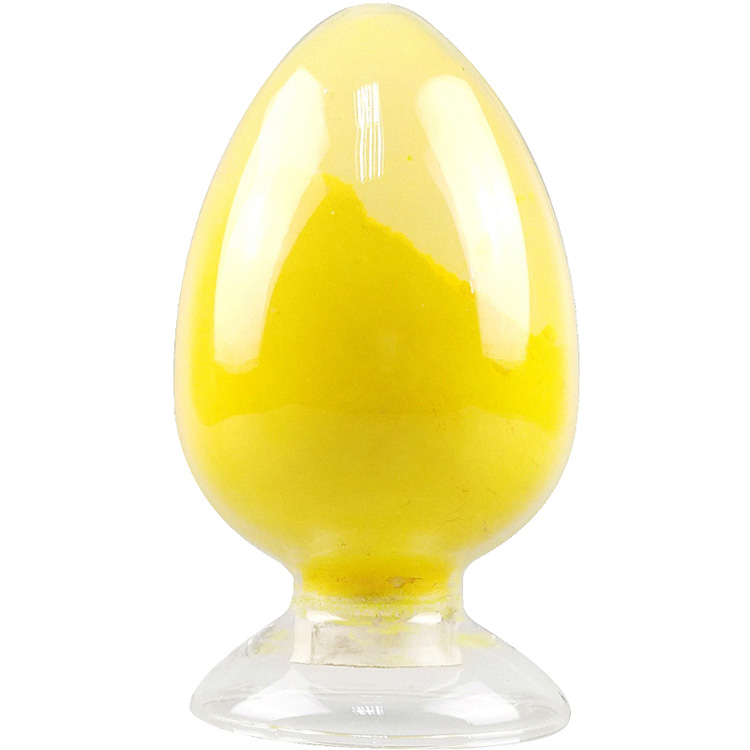
Water pollution from synthetic organic dyes—used extensively in textiles, paper, and leather industries—remains a critical environmental challenge. Conventional treatment methods such as adsorption or membrane filtration merely transfer pollutants rather than destroy them. Photocatalysis offers a transformative solution, and at the heart of this technology lies Bismuth Oxide Nanopowder. As a visible-light-active semiconductor, Bismuth Oxide Nanopowder (supplied in high-purity grades by SAT NANO) exhibits exceptional ability to generate reactive oxygen species under mild irradiation, leading to complete mineralization of dye molecules. This blog explores the mechanistic pathways, performance metrics, and practical considerations that make Bismuth Oxide Nanopowder a superior photocatalyst for dye degradation.
The Core Mechanism: Band Structure and Reactive Species
The photocatalytic efficiency of Bismuth Oxide Nanopowder originates from its narrow bandgap (approximately 2.6–2.8 eV), which allows absorption of visible light (λ > 450 nm)—unlike TiO₂, which requires UV excitation. When photons with energy equal to or greater than the bandgap strike the nanopowder, electrons (e⁻) are promoted from the valence band (VB) to the conduction band (CB), leaving behind positively charged holes (h⁺) in the VB.
These charge carriers initiate a cascade of oxidative reactions:
-
Holes (h⁺) directly oxidize water or hydroxyl ions to generate hydroxyl radicals (•OH), the most potent oxidizing species.
-
Electrons (e⁻) reduce dissolved oxygen to superoxide radicals (•O₂⁻), which further participate in dye decolorization.
-
The synergistic action of •OH and •O₂⁻ attacks the chromophoric groups (e.g., azo bonds -N=N-) and aromatic rings of dye molecules, breaking them into smaller aliphatic intermediates and ultimately into CO₂ and H₂O.
SAT NANO engineers its Bismuth Oxide Nanopowder with controlled crystallite sizes (typically 20–50 nm) and high specific surface area (>30 m²/g), which maximizes active sites for dye adsorption and charge transfer, thereby accelerating the degradation kinetics.
Quantitative Performance Comparison
To illustrate the superiority of Bismuth Oxide Nanopowder, the following table compares its degradation efficiency against conventional photocatalysts under identical conditions (Methylene Blue, 10 mg/L, visible light, 60 minutes):
| Photocatalyst | Bandgap (eV) | Degradation Efficiency (%) | Rate Constant (k, min⁻¹) | Active Species |
|---|---|---|---|---|
| Bismuth Oxide Nanopowder (SAT NANO) | 2.75 | 94.2 | 0.045 | •OH, •O₂⁻, h⁺ |
| TiO₂ (P25) | 3.20 | 38.5 | 0.012 | •OH (UV only) |
| ZnO Nanoparticles | 3.37 | 45.1 | 0.018 | •OH, •O₂⁻ |
| BiVO₄ | 2.40 | 72.3 | 0.028 | •O₂⁻, h⁺ |
The data clearly demonstrate that Bismuth Oxide Nanopowder from SAT NANO outperforms both UV-active and other visible-light catalysts, primarily due to its optimal band alignment and reduced electron-hole recombination rate—a result of the nanopowder's defect-rich surface structure.
Critical Factors Influencing Photocatalytic Performance
Several operational parameters determine the real-world efficacy of Bismuth Oxide Nanopowder. The list below outlines the most impactful variables:
-
Catalyst Loading: Optimal dosage ranges from 0.5 to 1.5 g/L. Below this, insufficient active sites reduce photon absorption; above, excessive turbidity scatters light, diminishing penetration.
-
Initial Dye Concentration: Higher concentrations (>50 ppm) require prolonged irradiation because more dye molecules compete for limited reactive species. Bismuth Oxide Nanopowder maintains >80% efficiency up to 30 ppm, making it suitable for industrial effluent pre-treatment.
-
pH of Solution: The point of zero charge (PZC) for Bismuth Oxide Nanopowder is ~6.5. At pH < PZC, the surface becomes positively charged, enhancing adsorption of anionic dyes (e.g., Methyl Orange). At pH > PZC, cationic dyes (e.g., Methylene Blue) show improved adsorption.
-
Dopant Incorporation: SAT NANO offers custom-doped Bismuth Oxide Nanopowder (e.g., with silver or carbon) to further suppress recombination and extend absorption into the near-infrared region, boosting efficiency by an additional 15–20%.
Frequently Asked Questions (FAQ) About Bismuth Oxide Nanopowder
Q1: What makes Bismuth Oxide Nanopowder more effective than TiO₂ for dye degradation under natural sunlight?
A: TiO₂ requires ultraviolet (UV) light (λ < 388 nm) because its bandgap is 3.2 eV. Natural sunlight contains only 5% UV, severely limiting TiO₂’s practical use. Bismuth Oxide Nanopowder possesses a narrower bandgap (2.6–2.8 eV), enabling absorption of visible light (which constitutes ~45% of solar spectrum). Additionally, Bismuth Oxide Nanopowder exhibits higher oxidative potential of valence-band holes (+2.58 V vs. NHE) compared to TiO₂ (+2.53 V), allowing more efficient •OH generation. SAT NANO further enhances this by controlling particle morphology to expose highly reactive {111} crystal facets, which improve charge separation.
Q2: How does the particle size of Bismuth Oxide Nanopowder influence its photocatalytic activity, and what size does SAT NANO recommend?
A: Particle size directly affects both surface area and quantum confinement. As size decreases from micron to nanoscale (<100 nm), specific surface area increases exponentially, providing more adsorption sites for dye molecules. However, below 10 nm, surface defects become dominant and act as recombination centers, reducing activity. SAT NANO recommends Bismuth Oxide Nanopowder in the 20–50 nm range—this size balances high surface area (30–40 m²/g) with minimized bulk recombination. Furthermore, this size range ensures good dispersibility in aqueous suspensions without rapid agglomeration, maintaining stable photocatalytic performance over multiple cycles.
Q3: Can Bismuth Oxide Nanopowder be reused, and how does its stability compare to other photocatalysts?
A: Yes, reusability is one of the strongest advantages of Bismuth Oxide Nanopowder. Unlike organic photosensitizers that photobleach, Bismuth Oxide Nanopowder is an inorganic semiconductor with excellent chemical and thermal stability. SAT NANO conducts accelerated cycling tests showing that its Bismuth Oxide Nanopowder retains >90% of original activity after 10 consecutive degradation runs. In comparison, ZnO suffers from photocorrosion, releasing Zn²⁺ ions and losing activity. The stability of Bismuth Oxide Nanopowder arises from its strong Bi–O covalent bonds and the absence of phase transformation under irradiation. To maintain performance, simple centrifugation and washing with deionized water between cycles are sufficient, making it highly cost-effective for continuous wastewater treatment systems.
Practical Considerations for Scale-Up
Translating laboratory success to industrial scale requires attention to two additional factors: light distribution and oxygen supply. In large photoreactors, Bismuth Oxide Nanopowder must be uniformly suspended to avoid settling. SAT NANO provides surface-modified Bismuth Oxide Nanopowder with hydrophilic coatings that improve dispersibility and prevent agglomeration. For oxygen supply, mild aeration (0.5–1.0 L/min) ensures sufficient dissolved O₂ for superoxide generation without causing excessive foaming. When these parameters are optimized, Bismuth Oxide Nanopowder achieves degradation rates of >90% for most azo and anthraquinone dyes within 90 minutes, even in 100-liter pilot reactors.
Conclusion and Call to Action
Bismuth Oxide Nanopowder stands out as a robust, visible-light-driven photocatalyst that effectively mineralizes organic dyes through a combination of hydroxyl radical attack, superoxide oxidation, and direct hole-mediated pathways. Its superior performance over traditional materials, combined with excellent reusability and stability, positions it as a key enabling material for sustainable water remediation. SAT NANO offers a comprehensive portfolio of Bismuth Oxide Nanopowder grades—from standard purity to custom-doped variants—backed by full characterization reports (XRD, TEM, BET, and DLS) to support your R&D and industrial applications.
Contact us today at SAT NANO to request samples, technical datasheets, or customized particle engineering solutions. Our application engineers are ready to assist with reactor design, dosage optimization, and scale-up protocols tailored to your specific wastewater matrix. Reach out via our website or email to discuss how Bismuth Oxide Nanopowder can accelerate your sustainability goals. Let’s turn your photocatalytic challenges into clean-water successes—SAT NANO is your trusted partner in advanced nanomaterials.