

How Does Carbon-in-Pulp Gold Extraction Improve Gold Recovery Efficiency?
2026-07-14
Gold mining has continuously evolved with the development of advanced mineral processing technologies. Among various gold recovery methods, Carbon-in-Pulp Gold Extraction has become one of the most widely adopted techniques due to its high recovery rate, strong adaptability, and efficient operation. This technology uses activated carbon to adsorb dissolved gold from cyanide leach solutions, allowing mining companies to recover valuable gold more effectively while reducing processing losses. With increasing demand for efficient and sustainable gold extraction solutions, understanding the advantages, working principles, and applications of Carbon-in-Pulp Gold Extraction is essential for modern mining operations. Wimica (Hebei) Industrial Co., Ltd. provides professional solutions and equipment support to help customers achieve reliable gold processing performance.
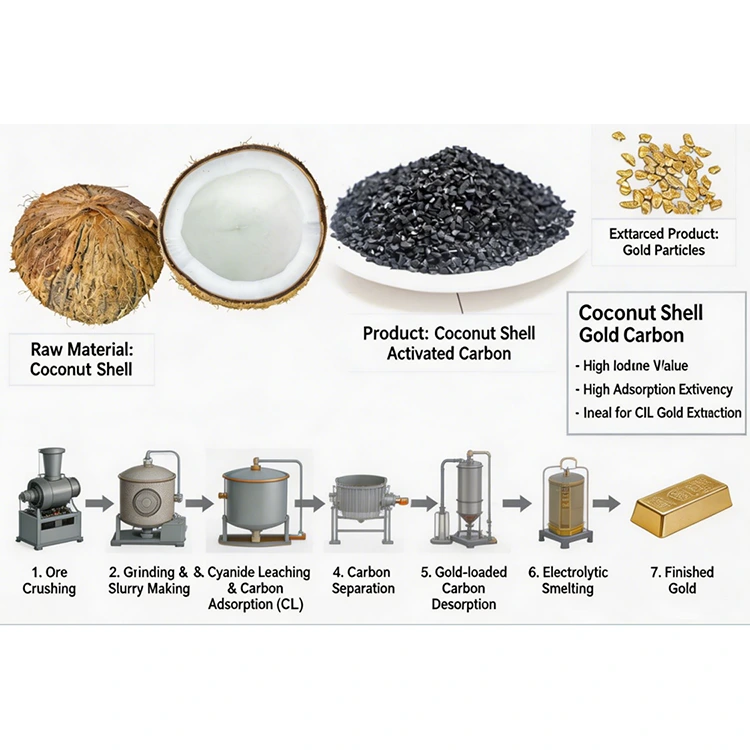
What Is Carbon-in-Pulp Gold Extraction?
Carbon-in-Pulp Gold Extraction is a gold recovery process that combines cyanide leaching and activated carbon adsorption technology. During this process, gold-containing ore is first crushed and ground into fine particles. The ore then undergoes cyanide leaching, where gold is dissolved into a liquid solution. Activated carbon is introduced into the pulp to capture the dissolved gold, separating it from other minerals.
Compared with traditional gold recovery methods, this technology offers better gold adsorption efficiency and can process large volumes of ore continuously. It is especially suitable for medium and large-scale gold mining projects where stable production and high recovery rates are required.
The basic process includes:
| Processing Stage | Main Function |
|---|---|
| Ore Crushing | Reduce ore size and improve mineral liberation |
| Grinding | Increase contact area between minerals and chemicals |
| Cyanide Leaching | Dissolve gold into solution |
| Carbon Adsorption | Capture dissolved gold using activated carbon |
| Gold Desorption | Remove gold from loaded carbon |
| Refining | Produce high-purity gold products |
How Does Carbon-in-Pulp Gold Extraction Work?
The effectiveness of Carbon-in-Pulp Gold Extraction depends on the interaction between gold-bearing solutions and activated carbon. The process usually involves several important steps.
1. Ore Preparation
The raw gold ore is crushed and ground to release gold particles from surrounding minerals. Proper grinding ensures that cyanide solution can effectively contact gold particles during the leaching stage.
2. Cyanide Leaching Process
After preparation, the ground ore is mixed with cyanide solution. The chemical reaction allows gold to dissolve and form a gold-cyanide complex. This solution becomes ready for adsorption.
3. Activated Carbon Adsorption
Activated carbon has a highly porous structure and strong adsorption ability. When added into the pulp, it selectively captures gold from the solution. This step significantly improves gold recovery efficiency compared with conventional separation methods.
4. Carbon Separation and Gold Recovery
The gold-loaded carbon is separated from the pulp and processed through desorption and electrowinning systems. Finally, recovered gold is refined into a high-value product.
Why Is Carbon-in-Pulp Gold Extraction Important?
The importance of Carbon-in-Pulp Gold Extraction lies in its ability to maximize gold recovery while improving operational efficiency. Modern mining companies require technologies that can increase profitability, reduce waste, and maintain stable production.
High Gold Recovery Rate
One of the biggest advantages of this technology is its excellent recovery performance. Activated carbon can efficiently collect dissolved gold, reducing the amount of gold lost during processing.
Suitable for Large-Scale Mining
Carbon-in-Pulp Gold Extraction is designed for continuous operation. It can handle large quantities of ore, making it ideal for industrial gold processing plants.
Better Process Control
Compared with older extraction methods, CIP technology allows operators to monitor and adjust parameters such as carbon concentration, leaching time, and solution flow. This improves consistency and production stability.
Reduced Environmental Impact
Although cyanide management remains an important consideration in gold processing, modern CIP systems are designed with improved control measures. Efficient gold recovery means less waste generation and better resource utilization.
What Are the Main Advantages of Carbon-in-Pulp Gold Extraction?
The popularity of this method comes from its combination of efficiency, reliability, and economic benefits.
| Advantage | Description |
|---|---|
| High Recovery Efficiency | Improves gold extraction rate from low-grade ores |
| Strong Adaptability | Suitable for different types of gold-bearing materials |
| Continuous Operation | Supports large-scale industrial production |
| Lower Gold Loss | Reduces valuable metal remaining in tailings |
| Easy Management | Allows automated monitoring and process adjustment |
Carbon-in-Pulp vs Carbon-in-Leach: Which Method Is More Suitable?
Carbon-in-Pulp (CIP) and Carbon-in-Leach (CIL) are two common gold recovery technologies. Although both use activated carbon, their processing sequences are different.
| Comparison | Carbon-in-Pulp (CIP) | Carbon-in-Leach (CIL) |
|---|---|---|
| Leaching Process | Gold leaching occurs before carbon adsorption | Leaching and adsorption happen simultaneously |
| Application | Suitable for ores with good leaching characteristics | Suitable for ores requiring stronger adsorption conditions |
| Process Control | Easier separation management | More integrated processing system |
| Common Usage | Large-scale gold recovery plants | Complex gold ore treatment |
Choosing between CIP and CIL depends on ore characteristics, processing requirements, and production goals. Professional evaluation is necessary to determine the most suitable solution.
What Factors Affect Carbon-in-Pulp Gold Extraction Performance?
Although Carbon-in-Pulp Gold Extraction is highly efficient, several factors influence its final recovery results.
Ore Characteristics
Different ores contain different mineral compositions. The presence of impurities, sulfides, or other metals may affect gold dissolution and adsorption.
Activated Carbon Quality
The performance of activated carbon directly influences gold recovery. High-quality carbon provides better adsorption capacity and longer service life.
Chemical Conditions
Parameters such as cyanide concentration, oxygen level, pH value, and temperature must be carefully controlled to achieve optimal results.
Equipment Design
Reliable tanks, pumps, screening systems, and carbon handling equipment are essential for maintaining stable operation.
Applications of Carbon-in-Pulp Gold Extraction
Carbon-in-Pulp Gold Extraction is widely used in various gold mining projects, including:
- Large-scale gold processing plants
- Medium-sized mining operations
- Low-grade gold ore recovery projects
- Mineral processing facilities requiring high recovery efficiency
- New gold extraction plants seeking modern technology solutions
Wimica (Hebei) Industrial Co., Ltd. focuses on providing professional industrial solutions for mining and mineral processing applications. With industry experience and technical expertise, the company supports customers in selecting suitable equipment and improving gold recovery processes.
How Can Wimica (Hebei) Industrial Co., Ltd. Support Gold Extraction Projects?
Successful gold extraction requires not only advanced technology but also reliable equipment and professional service. Wimica (Hebei) Industrial Co., Ltd. understands the challenges faced by mining companies, including recovery efficiency, operational stability, and long-term production requirements.
The company is committed to delivering practical solutions that help customers optimize their processing systems. From equipment selection to technical support, Wimica works with clients to develop efficient and reliable gold extraction solutions.
Professional advantages include:
- Advanced industrial technology solutions
- Customized support for different mining conditions
- Focus on stable and efficient production
- Professional experience in mineral processing applications
Conclusion
Carbon-in-Pulp Gold Extraction has become a key technology in modern gold mining because of its high recovery efficiency, reliable operation, and strong adaptability. By combining cyanide leaching with activated carbon adsorption, this method helps mining companies recover more gold while improving production efficiency.
As gold resources become more challenging to process, selecting the right extraction technology and equipment is increasingly important. Wimica (Hebei) Industrial Co., Ltd. provides professional solutions designed to meet the needs of modern mining operations. For efficient gold extraction systems and customized industrial support, contact us today to discuss your project requirements and discover the right solution for your gold processing needs.