

How Does Decabromodiphenyl Ethane Improve Flame Retardancy in Industrial Materials?
2026-03-11
Article Summary
Decabromodiphenyl Ethane is widely used in modern manufacturing as a high-performance flame retardant additive. Many industries such as plastics, electronics, wire and cable, and construction rely on this compound to reduce fire risks and improve material safety. This article explains how Decabromodiphenyl Ethane works, its chemical characteristics, application advantages, typical specifications, and how manufacturers can select the right grade for industrial production. The goal is to help buyers and engineers better understand its performance and practical value.
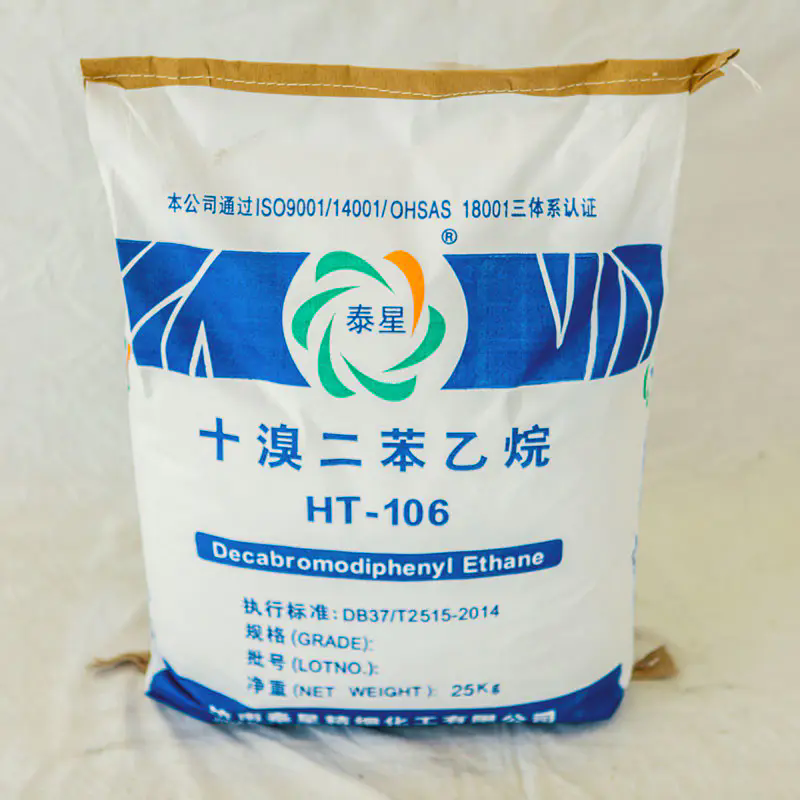
Table of Contents
- 1. Introduction to Decabromodiphenyl Ethane
- 2. How Decabromodiphenyl Ethane Works as a Flame Retardant
- 3. Key Technical Properties and Specifications
- 4. Major Industrial Applications
- 5. Advantages Compared with Traditional Flame Retardants
- 6. How to Select High-Quality Decabromodiphenyl Ethane
- 7. Frequently Asked Questions
- 8. Conclusion
Outline
- Overview of the chemical compound
- Flame retardant mechanism
- Technical parameters and product characteristics
- Industrial applications
- Advantages and performance benefits
- Purchasing considerations
- FAQs and final summary
1. Introduction to Decabromodiphenyl Ethane
Decabromodiphenyl Ethane (commonly abbreviated as DBDPE) is a brominated organic compound widely used as an additive flame retardant in many industrial materials. The chemical formula of this compound is C14H4Br10 and it contains a very high bromine content of around 82%, which contributes significantly to its strong flame-retardant performance. :contentReference[oaicite:0]{index=0}
The compound typically appears as a white or light-yellow powder with excellent thermal stability and high resistance to ultraviolet radiation. Because of these properties, it has become a preferred choice for manufacturers seeking reliable fire-resistant additives in high-temperature polymer systems. :contentReference[oaicite:1]{index=1}
Modern industries increasingly demand materials that provide both performance and safety. Plastics, synthetic fibers, electrical insulation, and construction materials can be highly flammable without proper additives. Decabromodiphenyl Ethane addresses this challenge by significantly reducing ignition and slowing flame propagation in many polymer systems.
2. How Decabromodiphenyl Ethane Works as a Flame Retardant
Understanding the working principle of Decabromodiphenyl Ethane helps manufacturers optimize its use in different material formulations.
When materials containing DBDPE are exposed to high temperatures or open flames, the compound begins to thermally decompose. During this process, bromine radicals are released into the combustion environment. These radicals interact with highly reactive free radicals generated during combustion and interrupt the chain reactions that sustain the fire. :contentReference[oaicite:2]{index=2}
This mechanism provides several protective effects:
- Suppresses flame propagation
- Reduces heat release during combustion
- Slows ignition and burning rate
- Improves overall fire resistance of the material
Because of this radical-capture mechanism, relatively small amounts of Decabromodiphenyl Ethane can significantly enhance fire resistance in plastics and composite materials.
3. Key Technical Properties and Specifications
Manufacturers evaluate flame retardants using several technical indicators. The following table presents typical parameters for industrial-grade Decabromodiphenyl Ethane products.
| Parameter | Typical Value |
|---|---|
| Chemical Formula | C14H4Br10 |
| CAS Number | 84852-53-9 |
| Bromine Content | Approximately 81–82% |
| Appearance | White or Light Yellow Powder |
| Melting Point | Above 340°C |
| Average Particle Size | 3–7 μm |
| Thermal Stability | Excellent |
High bromine concentration plays a crucial role in flame suppression efficiency, while excellent thermal stability allows the compound to perform well during polymer processing, including extrusion and injection molding.
4. Major Industrial Applications
Due to its versatility and stability, Decabromodiphenyl Ethane is widely used across several industrial sectors.
Common applications include:
- Engineering plastics such as ABS, HIPS, and polypropylene
- Wire and cable insulation materials
- Electronic device housings
- Building and construction materials
- Textile coatings and back coatings
- Automotive components
In polymer applications, the compound is typically blended directly into the resin during compounding. The flame-retardant-modified plastic can then be processed into finished products through injection molding, extrusion, or other manufacturing techniques. :contentReference[oaicite:3]{index=3}
These applications are especially important in industries where fire safety standards are strict, such as electrical appliances and communication equipment.
5. Advantages Compared with Traditional Flame Retardants
Decabromodiphenyl Ethane has gained popularity partly because it addresses several limitations found in earlier flame retardant technologies.
Key advantages include:
- High bromine content for strong flame suppression
- Excellent thermal stability suitable for high-temperature processing
- Strong UV resistance for outdoor applications
- Low volatility and minimal migration in polymers
- Good compatibility with various engineering plastics
In addition, the molecular structure of DBDPE does not contain ether bonds, which reduces the formation of harmful byproducts during high-temperature processing compared with some earlier flame retardant systems. :contentReference[oaicite:4]{index=4}
These characteristics make it an attractive solution for manufacturers looking to improve fire resistance without compromising product durability or processing efficiency.
6. How to Select High-Quality Decabromodiphenyl Ethane
When purchasing flame retardant materials, buyers should evaluate multiple technical and supply factors.
Important selection criteria include:
- Bromine content and purity level
- Particle size distribution
- Thermal stability during processing
- Color and whiteness
- Consistency of supply
- Compliance with international safety standards
Reliable suppliers often provide detailed technical documentation, including product specifications, safety data sheets, and application guidance. These resources help manufacturers integrate the material efficiently into their production systems.
For example, professional manufacturers such as Taixing provide specialized flame retardant solutions designed for industrial polymer applications. Their Decabromodiphenyl Ethane products are developed to deliver stable performance, consistent quality, and compatibility with a wide range of engineering materials.
7. Frequently Asked Questions
Q1: What industries commonly use Decabromodiphenyl Ethane?
This compound is widely used in plastics manufacturing, electronics, wire and cable insulation, construction materials, and textiles. It is particularly important in industries that require strict fire safety standards.
Q2: Is Decabromodiphenyl Ethane suitable for high-temperature processing?
Yes. The compound has excellent thermal stability with a melting point above 340°C, allowing it to withstand high processing temperatures during polymer manufacturing.
Q3: What makes DBDPE effective as a flame retardant?
Its high bromine content enables it to release bromine radicals when exposed to heat, which interrupt combustion chain reactions and slow flame propagation.
Q4: Can Decabromodiphenyl Ethane replace older flame retardants?
In many cases, yes. It is often used as an alternative to earlier brominated flame retardants due to improved stability and lower environmental persistence.
8. Conclusion
Decabromodiphenyl Ethane plays an important role in modern industrial safety by improving the flame resistance of polymers and composite materials. Its high bromine content, excellent thermal stability, and strong compatibility with engineering plastics make it a reliable solution for manufacturers seeking efficient fire protection additives.
As industries continue to prioritize safety and performance, advanced flame retardant materials will remain essential in electronics, construction, transportation, and consumer products.
Taixing focuses on providing high-quality Decabromodiphenyl Ethane products designed for industrial applications, helping manufacturers achieve reliable flame-retardant performance and stable production processes.
For product specifications, customization options, or bulk purchasing information, contact us today. Our technical team will respond quickly and help you select the most suitable flame retardant solution for your application.