

How Does General-Purpose Polystyrene Resin Perform in Injection Molding Applications?
2026-11-19
Why Is GPPS Used for Injection Moulded Plastic Products?
General-Purpose Polystyrene Resin is used in injection moulding because it offers a combination of rigidity, dimensional stability and attractive surface appearance for suitable plastic applications. For manufacturers producing rigid components, decorative parts and consumer products, material selection affects more than whether the resin can fill a mould. It also influences the finished part's appearance, dimensional accuracy, production consistency and overall manufacturing cost. Recycled GPPS pellets can be considered for applications where their verified material properties meet the requirements of the finished product.
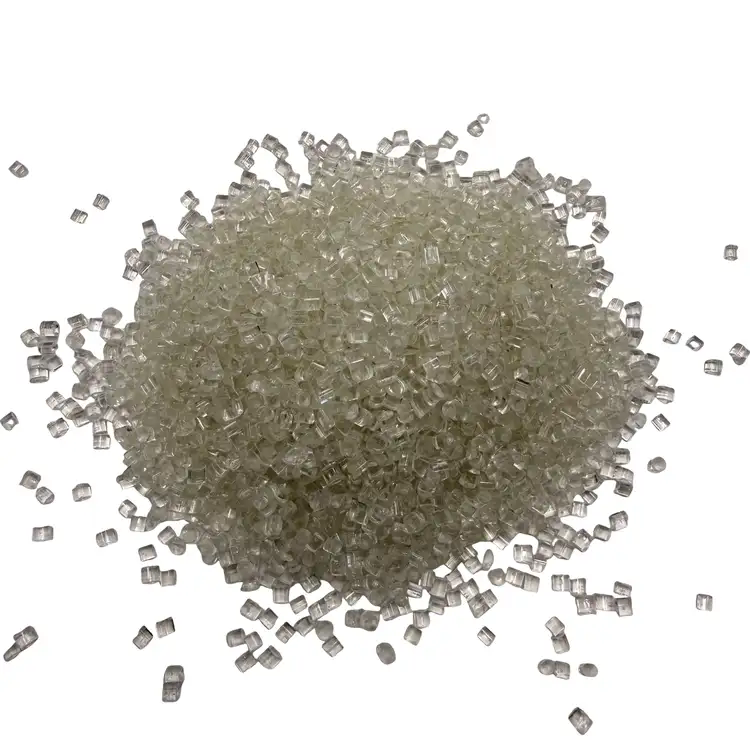
Injection moulding is a process in which plastic pellets are heated until they become molten, injected into a mould cavity and cooled to form a finished component. The process is widely used for producing parts with repeatable shapes and defined dimensions. JUWU supplies recycled GPPS pellets in transparent, high-transparency, white, black, brown and red options. With more than 20 years of experience in recycled polystyrene processing, Ningbo JUWU International Trading Co., Ltd. serves manufacturers looking for colour options and bulk material supply for different plastic processing applications.
What Material Characteristics Matter During Injection Moulding?
Successful injection moulding depends on the relationship between resin properties, machine settings, mould design and the intended part geometry. GPPS is an amorphous thermoplastic, which means it does not behave like a semi-crystalline polymer during cooling. Its rigidity and potential for a smooth surface make it relevant to certain moulded products, while its relatively brittle behaviour compared with impact-modified polystyrene needs to be considered during product design.
For processors, several material characteristics deserve attention before a production run begins.
- Melt flow behaviour: Melt flow affects how readily molten resin travels through the barrel, nozzle, runner and gate before entering the mould cavity. The appropriate flow characteristics depend on the part dimensions, wall thickness, gate arrangement and machine capacity.
- Rigidity: GPPS is commonly selected for rigid components where stiffness is important. The finished part still needs to be assessed for impact loads, handling conditions and possible stress concentration.
- Surface appearance: Suitable GPPS grades can produce a bright surface finish. For visible components, colour consistency, contamination and mould surface condition all influence the final appearance.
- Dimensional behaviour: Cooling and mould shrinkage affect finished dimensions. Mould design and process settings must be developed around the selected material grade rather than relying on a generic shrinkage assumption.
- Thermal behaviour: Barrel temperature, residence time and mould temperature influence material flow and part formation. Excessive heat exposure or unsuitable processing conditions can contribute to degradation or appearance defects.
Recycled material requires particular attention to batch consistency. Two batches described as the same colour may not necessarily have identical melt flow, stiffness or other technical properties unless these characteristics are controlled and verified. This is why buyers should request the relevant technical information for the actual product grade and assess a representative sample before approving it for continuous production.
Our material selection process considers the intended application, required colour and processing method. For example, a decorative moulded component may place greater emphasis on surface appearance, while an internal rigid component may have different priorities. Our product range includes transparent, high-transparency, white, black, brown and red recycled pellets, allowing buyers to evaluate different appearance requirements before selecting a suitable material.
How Should Injection Moulding Parameters Be Evaluated?
Injection moulding performance is determined by several interacting parameters rather than one universal temperature or pressure setting. The correct processing window depends on the specific GPPS grade, machine, mould design, part thickness and production environment. A setting that works for one supplier's virgin GPPS grade should not automatically be transferred to a recycled grade from another source.
The main process variables include the following.
- Barrel and melt temperature: The resin needs sufficient heat to achieve the flow required for mould filling. Temperatures that are too low may result in incomplete filling, while excessive heat or prolonged residence time can affect material quality and finished-part appearance.
- Injection speed: Injection speed influences how quickly the cavity fills. The appropriate setting depends on gate size, flow length, wall thickness and the risk of defects such as trapped air or visible flow marks.
- Injection pressure: Pressure must be sufficient to fill the cavity and overcome flow resistance. The machine's pressure setting should be developed through mould trials rather than copied from an unrelated material specification.
- Holding pressure and time: These settings help maintain pressure during the early cooling stage. Their suitability depends on the gate, part geometry and the point at which the gate freezes.
- Mould temperature: Mould temperature influences cooling behaviour, surface replication and cycle time. Both excessively low and excessively high settings can create processing difficulties.
- Cooling time: The part needs enough time to become sufficiently stable for ejection. Insufficient cooling can contribute to distortion, while unnecessarily long cooling increases cycle time.
The following table provides a practical framework for reviewing injection moulding parameters. It is a process evaluation guide, not a JUWU grade-specific processing specification.
| Process parameter | What should be evaluated? | Potential effect on the finished part |
| Melt temperature | Material flow, thermal stability and residence time | Incomplete filling, degradation or surface defects |
| Injection speed | Filling behaviour and cavity venting | Flow marks, trapped air or inconsistent filling |
| Injection pressure | Flow resistance and cavity filling requirements | Short shots, excessive stress or flash |
| Holding pressure | Gate freeze behaviour and part geometry | Sink marks, dimensional variation or residual stress |
| Mould temperature | Cooling rate and surface replication | Surface appearance and dimensional stability |
| Cooling time | Part thickness and ejection stability | Warping, deformation or longer cycle time |
Published virgin GPPS technical data sheets illustrate why processing values must be grade-specific. For example, different commercial grades provide different melt flow values and processing recommendations. Some published injection moulding references specify barrel temperatures within approximately 180 to 240 degrees Celsius, but that range is not a confirmed setting for every GPPS product and must not be treated as a JUWU specification. The actual operating window should be established using the selected material's technical data and controlled machine trials.
Before production, processors should also check whether the resin requires pre-drying or other preparation under the supplier's instructions. Although polystyrene generally absorbs less moisture than some engineering plastics, moisture on pellet surfaces or unsuitable storage conditions can still contribute to appearance problems during processing. Material handling, hopper cleanliness and storage practices should therefore be included in production preparation.
Which Injection Moulding Defects Should Manufacturers Watch For?
Even when the selected resin is suitable for an application, poor mould design or unstable processing conditions can affect the finished product. Defect analysis should begin by identifying where the problem occurs, whether it appears consistently and whether it changes when machine settings or material batches are adjusted. This helps distinguish a material-related issue from a tooling, machine or process problem.
Short shots occur when molten material does not completely fill the mould cavity. Possible causes include insufficient filling pressure, unsuitable melt temperature, restricted gates, poor venting or flow resistance caused by the part design. When this defect appears, processors should examine the complete filling system instead of increasing pressure without checking the mould and material conditions.
Flash is excess material that escapes through the parting line or other clearances in the mould. Excessive injection or holding pressure, insufficient clamping force, mould wear and poor mould alignment can contribute to this problem. Adjustments should be based on the actual cause because simply reducing pressure may create incomplete filling elsewhere.
Sink marks and dimensional variation can occur when different sections of a moulded part cool unevenly or when the holding stage is not properly matched to the gate and part geometry. Wall thickness transitions, rib design and local material accumulation should be reviewed. A more uniform part design can make cooling behaviour easier to control.
Silver streaks, black spots and other visual defects require careful investigation. Surface moisture, contamination, material degradation, poor purging and excessive residence time may all contribute to visible defects. For recycled material, incoming pellet inspection and batch identification are also important. A processor should not assume that every black spot or streak is caused by the resin itself without checking the machine, hopper, screw and handling process.
Warpage and brittle failure can be related to uneven cooling, residual stress, part geometry or the material's mechanical properties. GPPS is generally more brittle than impact-modified polystyrene, so product designers should evaluate whether the application involves drops, repeated impacts, snap-fit assembly or other demanding mechanical conditions. Where impact resistance is a critical requirement, HIPS or another suitable material may be more appropriate.
A structured troubleshooting routine can help production teams narrow down the cause:
- Record the material batch and confirm that the correct grade has been loaded.
- Inspect the pellets for obvious contamination, colour variation and unsuitable storage conditions.
- Check the barrel, nozzle, hopper and mould for residue or blockages.
- Review melt temperature, injection speed, pressure and cooling settings.
- Inspect the gate, runner, venting and part geometry.
- Compare defective parts with samples produced under previously approved conditions.
This method is more reliable than changing several process settings at once. Keeping a record of each adjustment helps the moulding team understand which variable has influenced the result and makes it easier to repeat a stable production process.
How Can Buyers Select the Right GPPS Pellets for Injection Moulding?
Material purchasing should begin with the finished part rather than the colour or price of the pellets alone. A transparent display component, a white decorative fitting and a black industrial part may all use GPPS, but their appearance and technical requirements can be quite different. Buyers need to establish which properties are essential and which are flexible before comparing suppliers.
JUWU supplies recycled GPPS pellets in several colour options for different manufacturing requirements. The following product information is confirmed by the supplied product range.
| Product category | Available colour | Described applications |
| Transparent grade | Transparent | Transparent sheets, translucent products, containers and injection-moulded products |
| High-transparency grade | High-transparency | Applications with higher visual appearance requirements |
| White sheet grade | White | Thermal insulation panels, picture frames, decorative profiles and sheet products |
| Coloured recycled GPPS | Black, brown and red | Extruded profiles, decorative products, picture frames, wood-plastic composites and wood-look furniture components |
These are the available colour and application categories, not separate verified injection moulding grades with identical processing properties. Buyers should confirm whether a selected colour is suitable for their particular moulded component and request a sample for production evaluation.
Before placing a bulk order, manufacturers should request or confirm the following technical information where relevant:
- Melt flow rate: The test value and method, including the temperature and load used for measurement.
- Density: The measured value and test method for the supplied grade.
- Mechanical properties: Tensile strength, flexural performance and impact behaviour where required by the finished part.
- Thermal properties: Relevant softening or heat resistance data for the intended service conditions.
- Colour and appearance: An approved sample or reference for the required shade, transparency and visible defect limits.
- Batch information: Lot identification and the available inspection or quality documentation.
- Processing suitability: Confirmation that the material has been evaluated for the intended injection moulding application.
Some of these parameters have not been provided as fixed specifications for JUWU's current product range. They should therefore be confirmed through the applicable product data sheet, test report or agreed sample evaluation. This is particularly important when a moulded part has strict dimensional, impact or optical requirements.
JUWU was established in 2001 and has more than 20 years of experience in recycled PS processing. Our factory in Ningbo, Zhejiang, covers approximately 5,000 square metres and operates three production lines, with a stated monthly production capacity of approximately 2,400 metric tons. These figures describe the company's manufacturing scale and supply capacity, rather than a guaranteed production volume for every individual colour or grade.
Our supply arrangements also include SDS/MSDS documentation and transportation-related hazard assessment reports for applicable products. Buyers should confirm which documents apply to the selected material and destination market. Ningbo JUWU International Trading Co., Ltd. can review the requested colour, intended application and order quantity to help clarify product availability and the information needed before purchase.
Conclusion
Injection moulding performance depends on the relationship between material properties, machine settings, mould design and the requirements of the finished part. Recycled GPPS can be considered for rigid moulded products where its verified flow, appearance and mechanical properties meet the application requirements. A reliable selection process should include sample trials, technical data review, batch inspection and a controlled production window rather than relying on colour descriptions or general processing recommendations alone.
Ningbo JUWU International Trading Co., Ltd. supplies recycled GPPS pellets in transparent, high-transparency, white, black, brown and red options, supported by more than 20 years of recycled PS processing experience. Our team can discuss your injection moulding application, required colour, technical specifications and bulk purchasing needs. Contact us with your part requirements and expected order volume to request product information, sample evaluation and a quotation for your next production project.
Frequently Asked Questions
1. Is recycled GPPS suitable for injection moulding?
Recycled GPPS can be suitable for injection moulding when its melt flow, mechanical properties, colour and contamination level meet the requirements of the finished part. Manufacturers should review the actual grade's technical data and conduct a moulding trial before approving it for production. Suitability depends on the component's geometry, appearance requirements, mechanical loads and processing conditions.
2. What injection moulding parameters should be checked when processing GPPS pellets?
The main parameters include melt temperature, injection speed, injection pressure, holding pressure, mould temperature and cooling time. Their settings depend on the selected grade, machine, mould and part design. Processors should use the supplier's grade-specific recommendations as a starting point, then validate the operating window through controlled trials and finished-part inspection.
3. What should buyers confirm before purchasing GPPS for injection moulded products?
Buyers should confirm the required colour, melt flow rate, density, mechanical properties, thermal requirements, batch consistency and intended processing application. They should also request a representative sample and relevant technical documentation. For demanding products, a production trial using the actual mould is important because pellet appearance alone cannot establish whether the material will meet the finished component's dimensional and performance requirements.