

How Does Magnesium Hydroxide Improve Industrial Safety and Environmental Protection?
2026-01-14
Article Summary: Magnesium hydroxide is widely used as a flame retardant, pH regulator, and environmental safety material. This article explores its key properties, industrial applications, handling precautions, and answers common questions, providing a practical guide for manufacturers, environmental engineers, and safety managers.
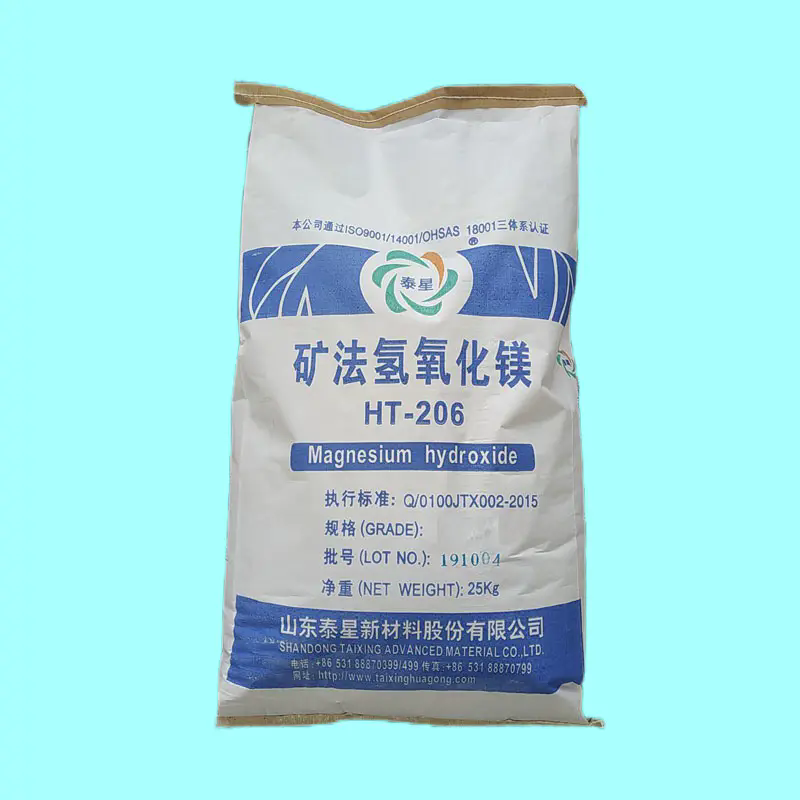
Table of Contents
- Introduction to Magnesium Hydroxide
- Key Properties
- Industrial Applications
- Handling and Safety Guidelines
- Frequently Asked Questions
- Contact Us
Introduction to Magnesium Hydroxide
Magnesium hydroxide (Mg(OH)2) is a versatile chemical compound extensively utilized in industries ranging from plastics and rubber to environmental protection and pharmaceuticals. Its effectiveness as a flame retardant and neutralizing agent makes it a preferred material in both manufacturing and safety-critical applications. Companies like Shandong Taixing supply high-quality magnesium hydroxide tailored for industrial needs.
Key Properties of Magnesium Hydroxide
Understanding the properties of magnesium hydroxide is essential for selecting the right grade and ensuring optimal performance.
| Property | Description |
|---|---|
| Chemical Formula | Mg(OH)2 |
| Appearance | White powder or granules |
| Purity | Typically 95–99% |
| Particle Size | 0.5–5 µm (depending on application) |
| Density | 2.39 g/cm³ |
| Solubility | Insoluble in water, soluble in acids |
| Decomposition Temperature | Approximately 332°C (releasing water and forming MgO) |
- Flame Retardant: Releases water when heated, cooling materials and slowing combustion.
- pH Regulator: Neutralizes acidic compounds in wastewater treatment and chemical processes.
- Environmentally Friendly: Non-toxic and safe for long-term applications in consumer and industrial products.
Industrial Applications
Magnesium hydroxide’s multifunctional properties make it suitable for a wide range of applications:
- Flame Retardant in Plastics and Rubber: Integrated into polymer materials to meet fire safety standards without generating toxic gases.
- Environmental Protection: Neutralizes acidic waste in industrial effluents, preventing environmental contamination.
- Construction Materials: Used in cement, concrete, and insulation to improve fire resistance and durability.
- Pharmaceuticals and Food: Acts as an antacid and laxative in controlled formulations.
- Electronics and Coatings: Provides thermal stability and fire safety in electronic components and protective coatings.
Manufacturers like Shandong Taixing provide customized magnesium hydroxide grades, including ultrafine powders for flame retardant polymers and larger particles for wastewater treatment.
Handling and Safety Guidelines
While magnesium hydroxide is generally safe, proper handling ensures worker safety and product performance.
- Store in a cool, dry environment away from strong acids.
- Wear protective gloves and masks when handling powders to prevent inhalation or skin irritation.
- Follow recommended dosages in industrial formulations to avoid unwanted chemical reactions.
- Dispose of waste responsibly according to local regulations.
Frequently Asked Questions
Q1: How is magnesium hydroxide used as a flame retardant?
A1: Magnesium hydroxide decomposes when exposed to heat, releasing water and forming magnesium oxide. This reaction cools the material and inhibits fire propagation without producing toxic gases.
Q2: Can magnesium hydroxide neutralize acidic wastewater?
A2: Yes, it acts as an effective pH regulator, neutralizing acids and reducing environmental impact from industrial discharge.
Q3: What industries benefit most from magnesium hydroxide?
A3: Industries including plastics, rubber, construction, environmental protection, pharmaceuticals, and electronics benefit from its flame retardant, pH neutralizing, and thermal stabilization properties.
Q4: Are there different grades of magnesium hydroxide available?
A4: Yes, suppliers like Shandong Taixing offer various particle sizes and purity levels, tailored for specific industrial applications.
Contact Us
For high-quality magnesium hydroxide suitable for flame retardant, environmental, or industrial applications, Shandong Taixing provides professional guidance and reliable supply. Contact us today to discuss your requirements and request a quotation.