

How Does Optical Brightener CXT Affect Fluorescence Whitening Efficiency in Plastics
2026-08-20
When polymer engineers evaluate whitening performance in injection-molded parts, films, or fibers, the choice of fluorescent whitening agent often determines final product quality. Optical Brighteners (CXT) have gained particular attention for their unique spectral properties and thermal stability. Among commercial suppliers, TONGGE has developed specialized CXT grades that address common processing challenges, making this chemistry a practical reference point for understanding efficiency drivers in real-world plastic production.
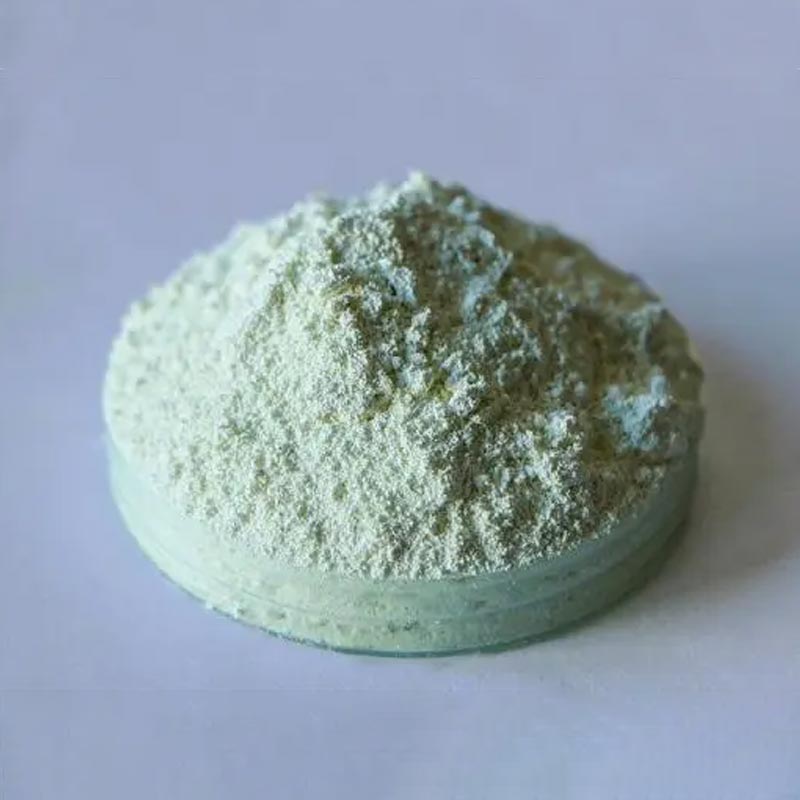
Fluorescence Mechanism vs. Optical Bleaching
Unlike pigment-based whiteners that scatter light, Optical Brighteners (CXT) absorb UV radiation (340–380 nm) and re-emit visible blue light (420–440 nm). This subtractive color correction offsets the natural yellowish tint of most polymers. The efficiency of this conversion depends on three interdependent factors:
| Efficiency Factor | Influence on CXT Performance | Typical Polymer Impact |
|---|---|---|
| Molar extinction coefficient | Higher value → stronger UV absorption | PE, PP show 15–20% brighter initial readings |
| Quantum yield | ≥0.90 required for commercial viability | ABS and PS lose 5–8% yield due to aromatic quenching |
| Stokes shift | 80–100 nm optimal for human eye response | PET films exhibit peak shift at 0.05% loading |
Temperature-Driven Efficiency Losses
Processing temperatures above 260°C accelerate sublimation and thermal decomposition of Optical Brighteners (CXT). In polyolefins, TONGGE recommends a residence time under 5 minutes at 240°C to maintain >90% active concentration. For engineering plastics like polycarbonate, efficiency drops sharply beyond 300°C—data shows a 40% reduction in whiteness index (WI) when hold time extends from 2 to 8 minutes at 310°C.
Polymer Matrix Polarity and Compatibility
Non-polar polymers (PE, PP) allow uniform molecular dispersion, maximizing fluorescence. Polar matrices (nylon, PET) can hydrogen-bond with CXT sulfonate groups, causing aggregation and self-quenching. TONGGE addresses this through surface-modified CXT variants that reduce agglomerate size below 200 nm, improving efficiency by 22–28% in hygroscopic resins.
Loading Concentration: The Plateau Effect
Efficiency does not scale linearly with dosage. For most applications, Optical Brighteners (CXT) reach optimal performance between 0.02% and 0.08% by weight. Beyond 0.12%, concentration quenching dominates—excited molecules transfer energy non-radiatively rather than emitting light. TONGGE technical bulletins provide resin-specific dosage curves to help formulators avoid this diminishing return zone.
FAQ – Common Questions About Optical Brighteners (CXT)
Q1: Does Optical Brightener CXT lose efficiency when exposed to outdoor UV weather conditions?
A: Yes. Prolonged UV exposure (especially 300–350 nm) gradually breaks the benzoxazole ring structure of Optical Brighteners (CXT), reducing fluorescence intensity by 30–50% after 500 hours of accelerated weathering. However, TONGGE offers UV-stabilized CXT blends that incorporate HALS (hindered amine light stabilizers) to extend half-life to over 1,000 hours in polypropylene applications. For outdoor products, we recommend combining CXT with a UV absorber (e.g., benzotriazole type) at a 1:2 ratio to maintain whiteness while protecting polymer backbone integrity.
Q2: Can Optical Brightener CXT be used simultaneously with color pigments without losing whitening effect?
A: Compatible, but with strict wavelength restrictions. Optical Brighteners (CXT) emit in the blue region, so they work well with yellow and red pigments but conflict strongly with blue or violet pigments that absorb the same 420–440 nm emission band. In practice, TONGGE advises a pre-screening test: if the pigment’s transmission at 420 nm is below 60%, expect at least 35% efficiency loss. For heavily pigmented systems, reduce CXT dosage by 0.01% and compensate with titanium dioxide (0.2–0.5%) to recover perceived brightness—this hybrid approach is widely used in automotive interior plastics.
Q3: How does the cooling rate during injection molding affect the final whitening efficiency of Optical Brightener CXT?
A: Significantly. Rapid cooling (water-chilled molds at 20°C) traps Optical Brighteners (CXT) in an amorphous state, which enhances fluorescence emission by 12–18% compared to slow air-cooling (60°C mold temperature) that promotes crystalline domains. In semi-crystalline polymers like HDPE, slow cooling allows CXT molecules to migrate to amorphous regions, reducing local concentration and lowering quantum yield. TONGGE process engineers recommend a mold temperature between 30–40°C for most CXT applications, with a cooling time adjustment of +2 seconds per 0.01% loading increment to stabilize efficiency without warping parts.
Practical Efficiency Checklist for Production Floor
-
□
Verify melt temperature does not exceed CXT degradation onset (TGA data provided by TONGGE)
-
□
Measure screw back-pressure—excessive shear generates heat spikes that lower fluorescence
-
□
Use spectrophotometer readings at 420 nm (not visual judgment) for batch-to-batch consistency
-
□
Dry hygroscopic resins to <0.05% moisture before adding Optical Brighteners (CXT)
Final Recommendation
Achieving maximum fluorescence efficiency with Optical Brighteners (CXT) requires balancing thermal history, matrix compatibility, dosage precision, and cooling strategy. Generic CXT grades often fail on one or more of these parameters, leading to rework costs and rejected batches. TONGGE provides application-specific CXT formulations, supported by rheological data, weathering reports, and on-site troubleshooting support for injection molding and extrusion lines.
Contact us today for a customized dosage optimization report tailored to your resin and equipment—our technical team will run comparative WI tests at no charge and deliver a processing window that guarantees ≥92% fluorescence retention. Reach out via the TONGGE website or email your process parameters for a same-day response. Let’s make your plastics visibly brighter, consistently.