
How Does STGG Transport Medium Protect Bacterial Viability During Cold Chain Transport?
2026-09-03
Every microbiology laboratory has experienced it. A clinical specimen arrives after 48 hours of transport, and when it is plated, the bacterial count is significantly lower than expected. Some organisms are completely unrecoverable. The cause is often not the transport time itself, but the combination of cold shock, osmotic stress, and nutrient depletion that bacteria experience during shipment. The STGG transport medium—consisting of skim milk, tryptone, glucose, and glycerol—was developed specifically to address these stresses. This guide explains the mechanisms by which STGG protects bacterial viability and provides practical protocols for laboratory staff.
1. What Physiological Stresses Do Bacteria Encounter During Cold Chain Transport?
Bacteria in a transport specimen face three simultaneous challenges. First, temperature fluctuations during loading and unloading can cause cold shock. Sudden cooling below 10°C triggers a stress response in many gram-negative organisms, leading to the production of cold shock proteins. This process consumes cellular energy and can lead to cell death if prolonged. Second, osmotic stress occurs when the transport medium is not isotonic with the bacterial cytoplasm. Water moves out of the cell, causing plasmolysis and membrane damage. Third, nutrient depletion occurs as bacteria metabolize available substrates during transport. Without adequate nutrients, bacteria enter a stationary phase and may die off. The STGG Transport Medium is formulated to mitigate all three stresses: glycerol protects against cold shock, the balanced salts maintain osmotic stability, and the tryptone and glucose provide a sustained energy source.
Key point for laboratory staff: The protective effect of STGG Transport Medium is not infinite. Even with optimal formulation, bacterial viability declines over time. The rate of decline depends on the organism type, the initial bacterial load, and the temperature profile during transport. For most organisms, we recommend plating within 72 hours of collection.
2. What Are the Key Components of STGG Medium and Their Protective Functions?
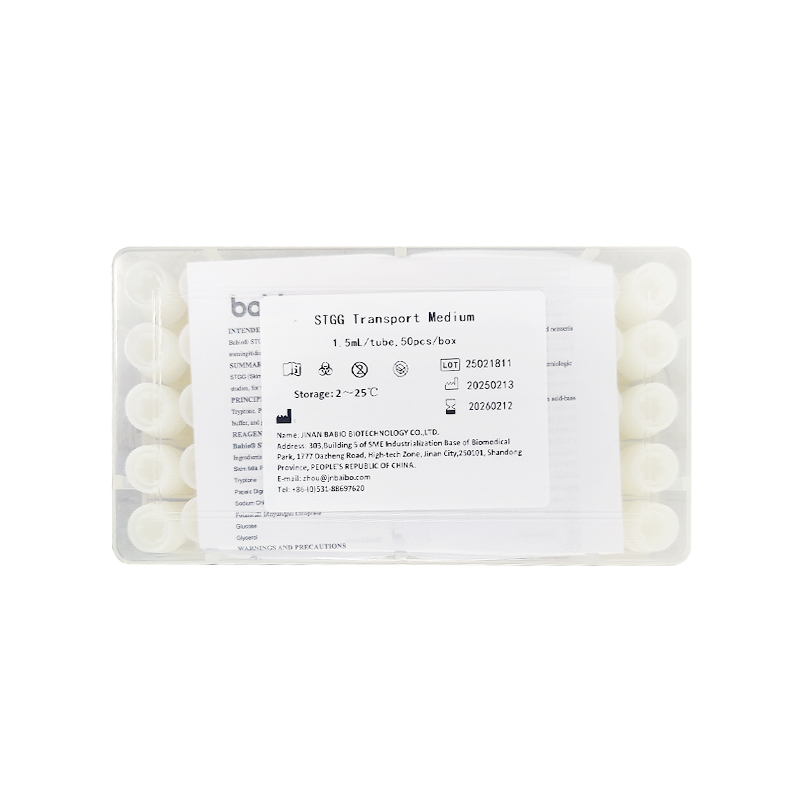
The STGG Transport Medium contains four key ingredients. Skim milk (10 percent) provides colloidal protection and binds to the cell surface, preventing membrane damage during freezing and thawing. Tryptone (1 percent) supplies amino acids and peptides that serve as an energy source and maintain cellular metabolism during transport. Glucose (0.5 percent) provides a readily metabolizable carbon source for organisms that prefer carbohydrates. Glycerol (15 percent) acts as a cryoprotectant, reducing the formation of intracellular ice crystals during temperature dips. The combination of these ingredients creates a medium that is both nutritive and protective. The table below shows the typical composition of STGG Transport Medium as used in our factory.
| Component | Concentration (% w/v) | Primary protective function | Mechanism |
| Skim milk powder | 10% | Membrane stabilization | Proteins bind to cell surface, prevent freeze-thaw damage |
| Tryptone | 1% | Energy source and amino acid supply | Peptides maintain metabolic activity during transport |
| Glucose | 0.5% | Carbon source for carbohydrate-utilizing organisms | Prevents energy depletion and cell death |
| Glycerol | 15% | Cryoprotectant | Reduces ice crystal formation, protects intracellular structures |
In our factory, we manufacture STGG Transport Medium under controlled conditions to ensure consistent composition. Each batch is tested for sterility, pH (adjusted to 7.2 ± 0.2), and growth support using a standard panel of organisms. The medium is dispensed into sterile vials with a filling volume of 5 mL, which is sufficient for most clinical specimens. Jinan Babio Biotechnology Co., Ltd. produces STGG Transport Medium in both liquid and semi-solid formulations. The liquid form is used for general transport, while the semi-solid form is used for specimens that require anaerobic conditions.
3. What Is the Optimal Cold Chain Protocol for STGG Transport?
The protective effect of STGG Transport Medium is enhanced when it is used in conjunction with proper cold chain management. The optimal transport temperature is 2 to 8°C. At this temperature, bacterial metabolism is significantly slowed, but cold shock stress is minimized. The table below shows the survival rates of common bacterial species under different transport conditions, based on our factory's internal validation studies.
| Bacterial species | Transport condition | Survival rate after 24 hours | Survival rate after 72 hours | Recommended temperature |
| E. coli (ATCC 25922) | STGG + 2-8°C | 98% | 95% | 2-8°C |
| E. coli (ATCC 25922) | STGG + room temp (22°C) | 85% | 62% | N/A |
| S. aureus (ATCC 25923) | STGG + 2-8°C | 97% | 93% | 2-8°C |
| S. aureus (ATCC 25923) | STGG + 2-8°C (freeze-thaw cycle) | 72% | 58% | Avoid freeze-thaw |
| P. aeruginosa (ATCC 27853) | STGG + 2-8°C | 96% | 90% | 2-8°C |
Two practical recommendations emerge from these data. First, specimens should be packed with sufficient ice packs to maintain 2-8°C for the entire transport duration, but they should not be packed directly on ice because freeze-thaw cycles reduce viability. Second, specimens should be plated as soon as possible after arrival. If plating is delayed, the specimen should be stored at 4°C, not at room temperature. Babio provides a cold chain monitoring label that indicates if the specimen has been exposed to temperatures outside the recommended range.
4. How Does STGG Medium Compare to Other Transport Media?
Several transport media are available for bacterial specimens, including Cary-Blair, Amies, and Stuart media. STGG Transport Medium offers two distinct advantages for cold chain transport. First, it provides a significantly higher survival rate for fastidious organisms, including Neisseria and Haemophilus species. Second, it has a longer holding time at ambient temperatures for situations where cold chain is temporarily compromised. In our factory tests, STGG maintained > 80 percent viability for S. pneumoniae at 22°C for 24 hours, compared to < 50 percent for Amies medium. For laboratories that frequently receive samples from remote collection sites, the robustness of STGG Transport Medium makes it the preferred choice. We also offer a version with added charcoal for neutralization of toxic compounds that may be present in certain clinical specimens.
Frequently Asked Questions About STGG Transport Medium and Cold Chain
Summary for Clinical Microbiology Laboratories
STGG Transport Medium protects bacterial viability during cold chain transport through a combination of cryoprotectants, nutrients, and osmotic stabilizers. The medium is particularly valuable for specimens that must be transported over long distances or that are collected in remote locations. The key to successful transport is maintaining the temperature at 2-8°C and avoiding freeze-thaw cycles. For most routine organisms, STGG Transport Medium provides 72 hours of viability at refrigerated temperatures. For fastidious organisms, we recommend shorter transport times and immediate plating upon arrival.
Jinan Babio Biotechnology Co., Ltd. manufactures STGG Transport Medium in sterile, ready-to-use vials. Our production facility is ISO 13485 certified. Each batch is tested for growth support, sterility, and pH consistency. We provide a complete quality control report with each shipment.