

How Is Custom-Color PS Extrusion Compound Made Through Compounding and Pelletizing?
2026-11-05
A sheet extruder receives two batches of custom-color PS Extrusion Compound with the same color code. The first batch extrudes into a sheet with uniform color and no visible specks. The second batch produces a sheet with faint streaks and a few dark specks that are visible under the inspection light. The color code is the same, and the base resin is the same. The difference is the compounding and pelletizing process. The first batch was compounded with a high-shear screw and a filtration screen. The second batch was compounded with a lower-shear screw and no screen. The pigment was not fully dispersed, and the undispersed particles caused the streaks and specks. This guide explains how custom-color PS Extrusion Compound is made and what controls the final quality.
1. Why Does the Color Masterbatch Alone Not Guarantee a Uniform Final Color?
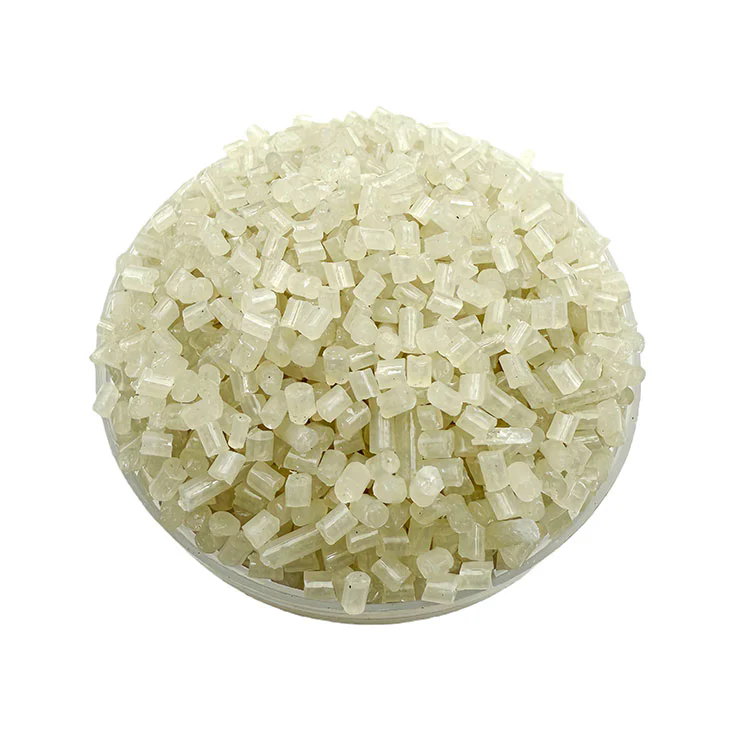
A color masterbatch is a concentrated mixture of pigment and carrier resin. When it is added to the base resin at the extrusion line, the color intensity depends on how well the pigment particles are dispersed. If the pigment particles remain as agglomerates, the color appears uneven and the mechanical properties are affected. The compounding and pelletizing process is what breaks down the agglomerates and distributes the pigment evenly through the base resin. In our factory, we produce custom-color PS Extrusion Compound by melt blending the base resin, the color masterbatch, and any additives in a twin-screw extruder, followed by underwater pelletizing. Ningbo JUWU International Trading Co., Ltd. has been supplying custom-color compounds for over 10 years.
The buyer who specifies only the color code, without specifying the dispersion requirement, may receive a compound that meets the color match on a molded plaque but fails on a thin extruded sheet. The thin sheet magnifies the effect of any undispersed particle, and the streaks become visible. The specification must include the dispersion standard, not just the color standard.
2. What Happens to the Pigment Inside the Twin-Screw Compounder?
The twin-screw compounder performs three functions: conveying, melting, and dispersing. The conveying zone moves the resin and the masterbatch forward. The melting zone uses the shear energy of the screws to melt the resin and to break down the masterbatch pellets. The dispersing zone uses high-shear mixing elements to break down the pigment agglomerates and to wet each pigment particle with the resin. The screw configuration determines the shear intensity. A screw with more kneading blocks and a tighter flight pitch produces higher shear and better dispersion, but it also generates more heat and can degrade the polystyrene. The table below shows the screw configuration and the resulting dispersion quality.
| Screw configuration | Shear intensity | Dispersion quality | Heat generation | Typical application |
| Standard conveying screw | Low | Poor (visible agglomerates) | Low | Natural compound, no color |
| Screw with 2 kneading blocks | Medium | Good (small agglomerates) | Medium | Standard color compound |
| Screw with 4 kneading blocks + flighted mixing | High | Excellent (no visible specks) | High | Thin sheet, high transparency |
| Screw with 4 kneading blocks + melt filter | Very high | Excellent (filtered) | Very high | Optical grade, critical color |
In our factory, we use a screw configuration with four kneading blocks and a melt filter for the custom-color PS Extrusion Compound that is intended for thin sheet or for optical applications. The melt filter removes any agglomerate larger than 20 micrometers. The screw speed and the barrel temperature are set to achieve the dispersion without degrading the polymer. JUWU records the screw configuration and the process parameters for each production lot.
3. How Does the Pelletizing Step Affect the Final Pellet Quality?
The pelletizing step converts the molten compound into solid pellets. The most common method is underwater pelletizing. The melt is extruded through a die plate, and the rotating blades cut the pellets as they emerge into a water stream. The water cools the pellets and conveys them to a centrifuge. The pellet quality depends on four parameters: the die hole diameter, the cutting speed, the water temperature, and the cooling length. The table below shows the effect of these parameters on the pellet quality.
| Parameter | Effect on pellet quality | Typical setting for PS |
| Die hole diameter | Determines the pellet diameter | 2.0 – 3.0 mm |
| Cutting speed | Determines the pellet length | 1,500 – 2,500 RPM |
| Water temperature | Determines the cooling rate and the pellet shape | 30 – 45°C |
| Cooling length | Determines the solidification before the centrifuge | 3 – 6 meters |
| Water flow | Determines the pellet transport and the cooling uniformity | 15 – 25 m³/hour |
Compound engineer's note: The water temperature is the most critical parameter for polystyrene. If the water is too cold, the pellets develop internal voids and surface cracks. If the water is too warm, the pellets stick together during storage. In our factory, we control the water temperature to 35 to 40 degrees Celsius for PS and we check the pellet shape under a microscope. Ningbo JUWU International Trading Co., Ltd. provides the pellet size distribution and the bulk density with each shipment.
4. Why Does the Color Verification Happen at Both the Compounding and the Extrusion Stage?
The color of the final extruded sheet depends on the color of the pellet and on the extrusion conditions. The pellet color is verified at the compounding stage by pressing a small plaque and measuring it with a spectrophotometer. The measurement is compared with the master color standard, and the color difference is expressed as Delta E. A Delta E below 1.0 is acceptable for most applications. A Delta E below 0.5 is required for color-critical applications. In our factory, we measure the color of every lot and we keep the color measurement record for traceability. We also measure the color of the extruded sheet at the customer's site if the customer reports a color problem. Ningbo JUWU International Trading Co., Ltd. provides a color measurement report with each shipment.
The extrusion conditions can shift the color. A higher melt temperature can cause the color to shift toward yellow. A longer residence time can cause the color to darken. The customer should verify the color of the extruded sheet under the actual production conditions, not just the color of the pellet. We recommend that the customer run a trial with a small quantity before the full production order.
5. How Should Buyers Specify and Verify Custom-Color PS Extrusion Compound?
The specification should include six items. The first is the base resin grade and the melt flow index. The second is the color standard, including the light source and the observer angle. The third is the dispersion requirement, expressed as the maximum visible speck count or the filter screen size. The fourth is the additive package, such as UV stabilizer or antistatic agent. The fifth is the pellet size and the bulk density. The sixth is the packaging and the shelf life. The verification should include four checks. The first is the color measurement on a pressed plaque. The second is the dispersion check on a thin film. The third is the melt flow index measurement. The fourth is the pellet size distribution. In our factory, we perform these checks on every lot and provide the test report with the shipment. Ningbo JUWU International Trading Co., Ltd. also offers a pre-production sample for the customer to run a trial.
We recommend that the buyer specify the dispersion requirement in terms of the application. A compound for a thick opaque sheet can tolerate a larger agglomerate than a compound for a thin translucent sheet. The specification should state the sheet thickness and the inspection light condition. The compound supplier can then select the screw configuration and the filtration screen to meet the requirement.
Frequently Asked Questions About Custom-Color PS Extrusion Compound
Summary for Compound Buyers and Extruder Operators
Custom-color PS Extrusion Compound is made by melt blending the base resin, the color masterbatch, and any additives in a twin-screw compounder, followed by underwater pelletizing. The dispersion of the pigment is controlled by the screw configuration and the melt filter. The pellet quality is controlled by the die hole, the cutting speed, the water temperature, and the cooling length. The color is verified at both the compounding and the extrusion stage. The specification should include the base resin, the color standard, the dispersion requirement, the additive package, and the pellet size. The verification should include the color measurement, the dispersion check, the melt flow index, and the pellet size distribution. Ningbo JUWU International Trading Co., Ltd. has been supplying custom-color compounds for over 10 years and provides full process and quality support for our customers.