
How Is Polypropylene Homopolymer Transforming Industrial Material Performance?
2026-07-01
Article Abstract:
Polypropylene Homopolymer (PPH) is one of the most widely used thermoplastic polymers in modern manufacturing due to its excellent mechanical strength, chemical resistance, and processing flexibility. This article explores its structure, properties, production process, key applications, and selection considerations. It also addresses common user pain points such as material brittleness, processing instability, and application mismatch, while introducing practical guidance from industrial supplier Aosen.
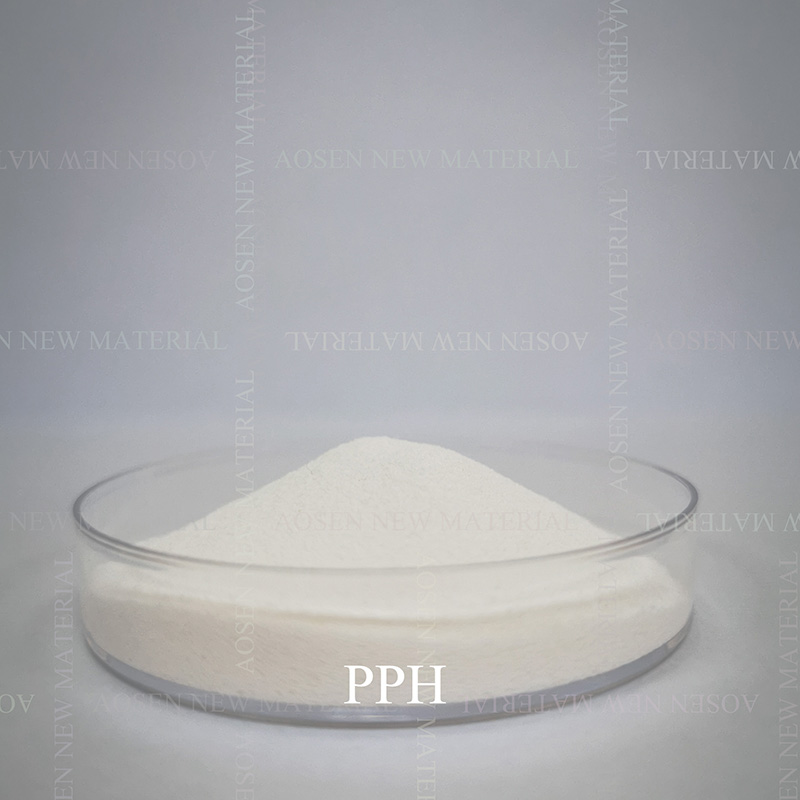
Table of Contents
- 1. Overview of Polypropylene Homopolymer
- 2. Molecular Structure and Key Properties
- 3. How Polypropylene Homopolymer Is Produced
- 4. Industrial Applications and Use Cases
- 5. How to Select the Right Grade
- 6. Common Challenges and Pain Points
- 7. Property Comparison Table
- 8. Frequently Asked Questions
- 9. Conclusion and Industrial Insight
1. Overview of Polypropylene Homopolymer
Polypropylene Homopolymer is a thermoplastic polymer derived from propylene monomers. It is characterized by high stiffness, low density, and excellent resistance to chemical solvents. Compared with copolymer variants, homopolymer polypropylene offers superior rigidity and tensile strength, making it suitable for structural and load-bearing applications.
Industrial supplier Aosen provides high-quality Polypropylene Homopolymer designed for stable processing performance and consistent mechanical properties across different manufacturing environments.
2. Molecular Structure and Key Properties
The molecular structure of Polypropylene Homopolymer consists of repeating propylene units arranged in a highly crystalline form. This structure directly influences its mechanical and thermal behavior.
- High stiffness: Suitable for rigid product manufacturing
- Low density: Lightweight material for cost efficiency
- Chemical resistance: Resistant to acids, alkalis, and organic solvents
- Heat resistance: Performs well under moderate thermal conditions
- Good processability: Compatible with injection molding, extrusion, and thermoforming
However, one common industry concern is brittleness at low temperatures. This limitation must be considered during material selection and application design.
3. How Polypropylene Homopolymer Is Produced
Polypropylene Homopolymer is produced through the polymerization of propylene gas using catalytic systems such as Ziegler-Natta or metallocene catalysts. The process involves controlling temperature, pressure, and catalyst composition to ensure consistent molecular weight distribution.
- Step 1: Propylene purification
- Step 2: Catalytic polymerization reaction
- Step 3: Polymer powder formation
- Step 4: Pellet extrusion and drying
- Step 5: Quality inspection and packaging
Manufacturers like Aosen emphasize process stability and impurity control to ensure final material performance meets industrial standards.
4. Industrial Applications and Use Cases
Polypropylene Homopolymer is widely used across multiple industries due to its balance of mechanical strength and processing flexibility.
- Packaging industry: Containers, caps, rigid packaging
- Automotive industry: Interior components, trims, housings
- Textile industry: Fibers and nonwoven fabrics
- Household goods: Storage boxes, kitchenware
- Industrial components: Pipes, fittings, and mechanical parts
A growing trend is its use in sustainable lightweight design, where manufacturers aim to reduce overall material consumption without sacrificing performance.
5. How to Select the Right Grade
Choosing the correct Polypropylene Homopolymer grade is critical for product performance and production efficiency. Key selection criteria include melt flow index, impact resistance, and thermal stability.
- Melt Flow Index (MFI): Determines flow behavior during processing
- Stiffness requirement: High stiffness for structural parts
- Transparency needs: Some applications require clarity
- Additive compatibility: UV stabilizers, antioxidants
Aosen provides customized grade recommendations to help manufacturers optimize processing conditions and reduce production waste.
6. Common Challenges and Pain Points
Despite its advantages, Polypropylene Homopolymer presents several challenges that users must manage effectively.
- Brittleness at low temperature: May lead to cracking in cold environments
- Limited impact resistance: Compared to copolymer PP
- Processing shrinkage: Requires mold design compensation
- UV degradation: Needs stabilizers for outdoor use
To address these issues, blending with additives or selecting modified grades from suppliers like Aosen can significantly improve performance stability.
7. Property Comparison Table
| Property | Polypropylene Homopolymer | PP Copolymer |
|---|---|---|
| Stiffness | High | Medium |
| Impact Resistance | Lower | Higher |
| Transparency | Lower | Higher |
| Chemical Resistance | Excellent | Excellent |
| Cost Efficiency | High | Moderate |
8. Frequently Asked Questions
Q1: What is Polypropylene Homopolymer mainly used for?
It is used in packaging, automotive parts, textiles, and industrial components requiring rigidity and chemical resistance.
Q2: Is Polypropylene Homopolymer suitable for outdoor applications?
Yes, but it requires UV stabilizers to prevent degradation under sunlight exposure.
Q3: What is the main limitation of this material?
Its main limitation is reduced impact strength at low temperatures compared to copolymers.
Q4: How does Aosen ensure material quality?
Aosen implements strict raw material selection, controlled polymerization processes, and final quality inspection to ensure consistent performance.
Q5: Can it be customized for specific industrial needs?
Yes, modified grades with additives can be provided to meet specific mechanical or processing requirements.
9. Conclusion and Industrial Insight
Polypropylene Homopolymer continues to play a vital role in modern manufacturing due to its balance of performance, cost efficiency, and versatility. While it has limitations such as brittleness in extreme conditions, these can be mitigated through proper grade selection and material modification.
With strong technical support and consistent product quality, Aosen stands as a reliable partner for industries seeking stable Polypropylene Homopolymer solutions tailored to evolving production demands.
For detailed product specifications, customized solutions, and bulk supply options, contact Aosen today — contact us.