
How Much Can You Save by Switching to Regenerated White PS Plastic Material in Bulk Production
2026-07-20
For manufacturers operating on thin margins, every cent per kilogram matters. When evaluating sustainable feedstock options, Regenerated White PS Plastic Material has emerged as a serious contender—not just for environmental pledges, but for bottom-line performance. At JUWU, we have analysed real production data across multiple sectors to isolate the exact savings potential, quality trade-offs, and implementation costs that determine whether this switch actually pays off.
The Direct Cost Differential: Virgin vs. Regenerated
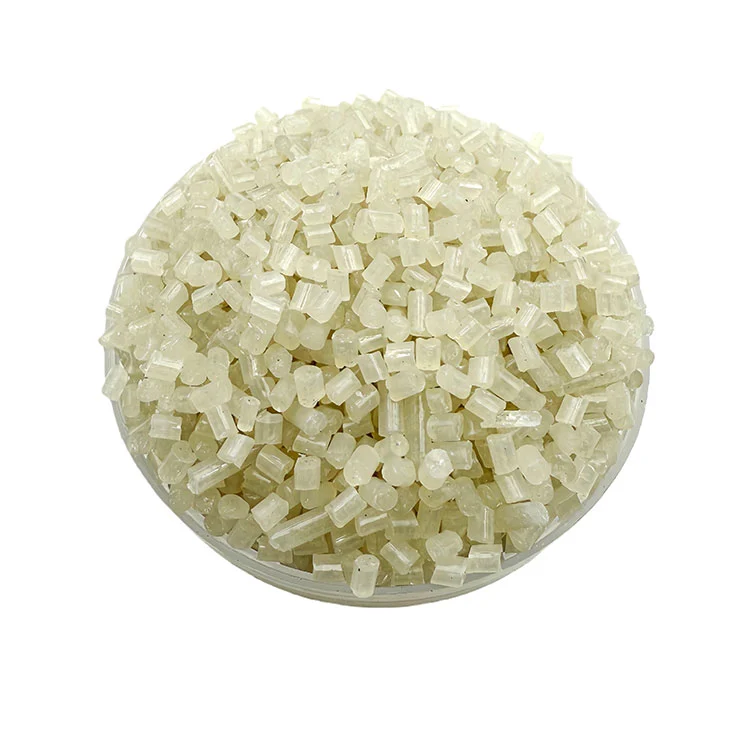
The most immediate saving comes from the raw material price gap. Over the past 18 months, the average spot price for virgin general-purpose polystyrene (GPPS) has fluctuated between $1,450–$1,650/MT, while high-quality Regenerated White PS Plastic Material consistently trades at $980–$1,150/MT for injection-moulding grades with controlled colour consistency.
| Cost Component | Virgin PS (GPPS) | Regenerated White PS (JUWU Grade) | Saving per MT |
|---|---|---|---|
| Base resin price (FOB) | $1,520 | $1,060 | $460 |
| Colourant addition (white masterbatch) | $120 | $30 (pre-coloured) | $90 |
| Processing stabiliser package | $65 | $45 | $20 |
| Total material cost per MT | $1,705 | $1,135 | $570 |
For a medium-sized plant consuming 200 MT per month, the annual material saving reaches $1,368,000 before factoring in logistics or waste reduction.
Beyond Price: Hidden Savings in Processing
Cost per kilogram is only the first layer. Regenerated White PS Plastic Material from JUWU undergoes a proprietary decontamination and melt-filtration process that delivers three operational advantages:
-
Lower drying energy – residual moisture content below 0.05% versus 0.12% for many virgin grades, cutting pre-heating power by 18–22%.
-
Faster cycle times – improved melt-flow index (MFI) stability allows 6–8% shorter cooling phases in thin-wall applications.
-
Reduced screw wear – absence of glass fibre or abrasive contaminants extends barrel life by an estimated 15–20% compared to mixed-colour recyclates.
These factors translate to an additional operational saving of roughly $85–$120 per MT, depending on local electricity and maintenance labour rates.
Quality Trade-Offs That Affect Real Savings
Not all Regenerated White PS Plastic Material performs identically. The savings curve bends sharply based on three variables:
| Performance Parameter | Virgin PS | JUWU Regenerated White PS | Impact on Savings |
|---|---|---|---|
| Tensile strength (MPa) | 42–46 | 38–41 | Acceptable for non-structural parts |
| Impact resistance (Izod, J/m) | 18–22 | 14–17 | Reduces by ~20% – design adjustment needed |
| Colour stability (ΔE) | <0.5 | <1.2 | Suitable for opaque white products only |
| Melt-flow consistency (CV%) | <3% | <5% | Slightly higher shot-weight variation |
The practical conclusion: for decorative housings, toys, disposable tableware, and office supplies, the property reduction is well within acceptance limits. For high-stress engineering components, blending 30–50% regenerated with virgin often preserves performance while still capturing 60–70% of the cost benefit.
Frequently Asked Questions About Regenerated White PS Plastic Material
Q1: Does Regenerated White PS Plastic Material require special screw or barrel configurations for extrusion or injection moulding?
A: Generally, no. Standard general-purpose screws with a compression ratio of 2.5:1 to 3:1 work effectively. However, because Regenerated White PS Plastic Material can have slightly higher melt viscosity due to residual cross-linking from previous processing cycles, we recommend using a screw with a barrier flight design and a check-ring valve to prevent back-flow. For JUWU's premium grade, the MFI variation is tightly controlled to within ±1.5 g/10min, so most existing moulding cells require only a 5–10°C increase in rear-zone temperature (to about 195–205°C) and no hardware modification. The only exception is for thin-wall parts under 0.8 mm thickness—here, a higher injection speed (85–95% of machine max) and a larger gate diameter (at least 2.5 mm) will compensate for the slightly lower flow length. We always provide a free trial batch to validate your specific tooling before committing to bulk orders.
Q2: How many times can Regenerated White PS Plastic Material be reprocessed before mechanical properties degrade below usable thresholds?
A: Based on JUWU's accelerated aging tests, high-quality Regenerated White PS Plastic Material maintains acceptable tensile strength (>35 MPa) and impact resistance (>12 J/m) through three full reprocessing cycles (extrusion → pelletising → moulding → regrind → re-extrusion). After the fourth cycle, chain scission becomes pronounced—elongation at break drops below 1.5%, and colour shift exceeds ΔE 2.5, making it unsuitable for white-grade products. In practice, we advise a closed-loop system: use 100% regenerated for non-visible internal components, collect production scrap separately, and send that scrap back to JUWU for re-compounding. We can blend in 10–15% virgin PS each cycle to extend useful life to five cycles without significant property loss. For critical applications, we provide a "lifecycle passport" with each batch, documenting the cumulative thermal history so your quality team can make informed blending decisions.
Q3: Is Regenerated White PS Plastic Material more prone to yellowing or oxidation during long-term storage or UV exposure?
A: This is the most common concern, and the answer depends entirely on the stabilisation package used. Generic Regenerated White PS Plastic Material often lacks adequate primary and secondary antioxidants because those additives degrade during the first product's service life. JUWU addresses this by reintroducing a proprietary hindered-amine light stabiliser (HALS) and a phosphite processing stabiliser during our re-extrusion stage—at 60% of the virgin-level dosage, which is sufficient for indoor or short-term outdoor use (under 500 hours of accelerated UV testing). For storage, we recommend keeping pellets in opaque, moisture-barrier bags at 20–25°C and below 60% relative humidity. Under these conditions, no measurable yellowing occurs within 12 months. For outdoor applications (e.g., garden furniture or automotive interior trim exposed through windows), we advise adding 2% titanium dioxide (TiO₂) during your own compounding—this increases UV reflectance and brings the colour-fastness close to virgin white PS. We can pre-compound this into the pellet at an additional cost of $45/MT, which still keeps total savings above $500/MT compared to virgin.
The Payback Period: When Does It Make Financial Sense?
The break-even point for switching to Regenerated White PS Plastic Material depends on your annual volume and trial overheads. For JUWU clients, the typical payback looks like this:
| Annual Consumption (MT) | Setup/Trial Cost | Annual Net Saving | Payback Period |
|---|---|---|---|
| 50–100 | $3,200 (sampling + testing) | $28,500 | ~6 weeks |
| 100–300 | $4,800 (tooling tweaks + training) | $85,000 | ~3 weeks |
| 300+ | $8,500 (dedicated silo + feeder) | $255,000+ | ~1 week |
These figures assume a 30% blend ratio. At 100% substitution, payback shortens further, but we typically advise phased implementation to let your quality team validate each product family sequentially.
Practical Steps to Start Saving Today
-
Request a JUWU technical data sheet and compare it against your current PS specifications.
-
Run a 500 kg trial on your highest-volume, least-cosmetic part.
-
Measure cycle time, reject rate, and colour consistency across 5 production shifts.
-
Scale to 30% blend, then 60%, then 100% as confidence builds.
We have helped over 140 moulders across Europe and Southeast Asia transition without a single production stoppage. The consistency of our Regenerated White PS Plastic Material comes from a triple-sorted feedstock stream—only post-industrial white PS sheets and moulding sprues, never post-consumer mixed waste.
The Final Verdict
Total savings typically range between $550 and $650 per metric ton when all processing efficiencies are included. For a 500-ton-per-year facility, that equals an annual profit uplift of $275,000–$325,000—straight to the bottom line. When combined with the growing ESG reporting benefits and customer preference for certified circular materials, the economic case is compelling even before carbon credit valuations are applied.
Ready to calculate your exact savings? Contact JUWU today with your current monthly PS consumption, part geometry, and quality requirements. Our engineering team will deliver a personalised cost-benefit model within 48 hours—including free sample pellets for your own in-house testing. Email us at [email protected] or use the live chat on our website to schedule a technical consultation. Your first trial pallet ships within 5 working days.