
How to Prevent Leakage Issues in HDPE Pipe Fittings Installations?
2026-03-23
Why Do Leakage Issues Commonly Occur in HDPE Pipe Fittings Installations?
Leakage in HDPE Pipe Fittings installations is one of the most common challenges faced in water supply, irrigation, and industrial piping systems. Faulty connections, improper welding, and substandard materials are the main contributors to these failures. In many regions, professionals refer to these incidents as “joint failure” or “fitting leakage,” which can result in water loss, operational downtime, and higher maintenance costs.
Our factory observes that incorrect alignment during installation and inconsistent fusion techniques are frequent causes. At Ningbo Sunplast Pipe Co., Ltd., our engineers recommend careful preparation and selection of fittings to ensure a leak-free network. Our experience shows that using certified HDPE Pipe Fittings and following industry-standard installation procedures significantly reduces leakage risks.
How Can Proper Material Selection Reduce Leakage Risks?
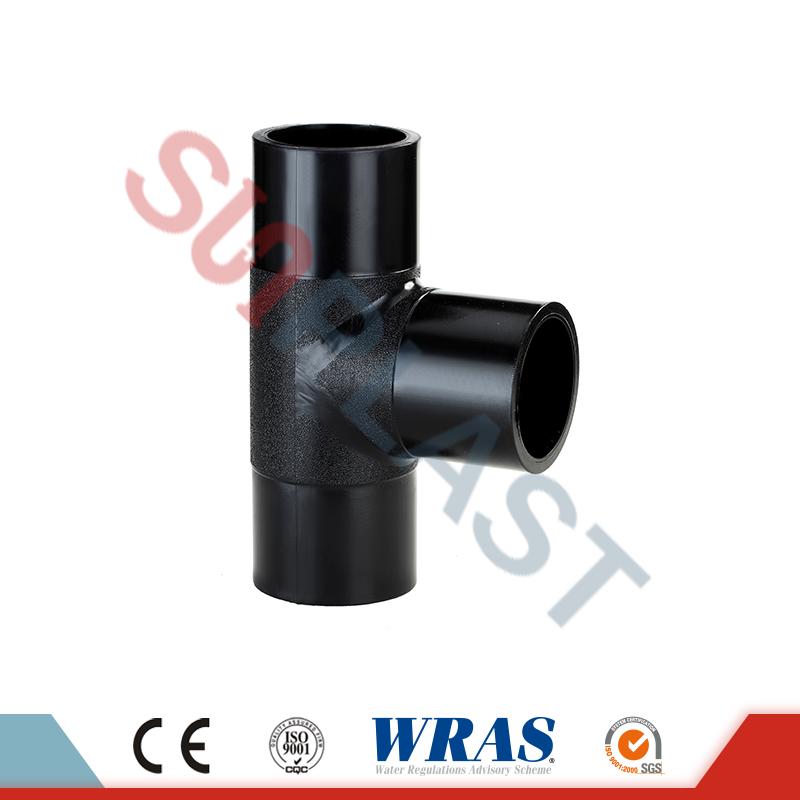
Choosing high-quality HDPE Pipe Fittings is critical to prevent leaks. Our factory provides fittings that comply with international standards and are manufactured from PE100 material, which offers high tensile strength and long-term durability. Material selection directly affects resistance to internal pressure, temperature changes, and environmental stress.
| Parameter | Specification | Application Impact |
| Material Grade | PE100 | High pressure and chemical resistance |
| Diameter Range | 20 mm – 630 mm | Supports various piping systems |
| Pressure Rating | PN10 – PN25 | Handles industrial and municipal loads |
| Temperature Range | -40°C to 60°C | Ensures performance under temperature variations |
| Certification | ISO 4427, ASTM F2620 | Ensures global compliance and reliability |
Our team at Sunplast ensures that each batch of HDPE Pipe Fittings undergoes rigorous testing before shipment. By focusing on quality material and verified specifications, our installations maintain integrity even under high-pressure systems.
What Installation Practices Minimize Leakage in HDPE Pipe Fittings?
Proper installation is as important as material quality. Our factory emphasizes the importance of alignment, correct heating, and cooling procedures during butt fusion or electrofusion welding. Misalignment or uneven heating often leads to weak joints that are prone to leakage.
We recommend thorough cleaning of pipe ends and fittings, precise alignment using specialized clamps, and following the recommended fusion times according to diameter and material thickness. Additionally, monitoring the cooling period before pressure testing is essential to ensure a robust joint.
Routine inspection of installed systems is also vital. Our experience indicates that regular visual checks and pressure testing at scheduled intervals can detect early signs of leakage, allowing corrective measures before failures occur. Implementing these practices ensures the long-term reliability of HDPE Pipe Fittings installations.
How Do Advanced Design Features Improve HDPE Pipe Fittings Reliability?
Modern HDPE Pipe Fittings incorporate design improvements that enhance sealing and performance. Features such as reinforced wall thickness, precision-molded surfaces, and advanced electrofusion couplers contribute to a secure and durable connection.
| Feature | Technology Used | Benefit |
| Wall Reinforcement | PE100 thick wall | Enhances pressure handling and reduces deformation |
| Precision Mold | High-accuracy injection molding | Improves joint fit and reduces leakage |
| Electrofusion Couplers | Embedded heating coil | Ensures uniform fusion and reliable seals |
| UV Stabilization | Anti-oxidant additives | Maintains performance in outdoor applications |
| Pressure Testing | Factory tested 1.5x PN | Guarantees long-term operational reliability |
Our factory at Ningbo Sunplast Pipe Co., Ltd. integrates these design features into every HDPE Pipe Fittings product. By combining material quality with advanced design, our fittings consistently achieve leak-free performance across industrial and municipal projects.
What Maintenance and System Monitoring Practices Prevent Leakage?
Even with high-quality fittings, system maintenance is critical to prevent leaks. Routine inspection, monitoring pressure fluctuations, and checking for environmental damage are key practices. Our team recommends implementing monitoring devices to detect pressure drops or unusual flow patterns in critical pipelines.
Training operators on proper system handling and educating maintenance personnel on early leakage signs are equally important. These steps, combined with our quality HDPE Pipe Fittings, ensure that pipelines operate efficiently without unexpected interruptions or water loss.
FAQ
What causes the majority of leakage issues in HDPE Pipe Fittings?
Most leaks result from poor alignment, inadequate welding, or using substandard materials. Ensuring proper installation and certified fittings reduces these risks significantly.
How can pressure testing prevent future leakage in HDPE pipelines?
Pressure testing identifies weak joints or material defects before the system goes operational. Our factory recommends testing at 1.5 times the working pressure for reliable results.
Are electrofusion fittings more reliable than traditional butt fusion joints?
Yes, electrofusion fittings provide uniform heat distribution and a consistent seal, reducing the likelihood of leakage in high-pressure or complex systems.
Conclusion
Preventing leakage in HDPE Pipe Fittings installations requires a combination of high-quality materials, precise installation practices, advanced design features, and proactive system monitoring. Our factory ensures that each product meets rigorous standards, and our team provides guidance for reliable, leak-free piping systems.
Our HDPE Pipe Fittings are trusted for municipal, industrial, and agricultural projects worldwide. Contact our team today to discuss your pipeline requirements and receive expert recommendations tailored to your project needs.