
How to Understand and Utilize Antimony Trioxide in Industry?
2025-12-25
Abstract: Antimony Trioxide (Sb2O3) is a crucial industrial chemical used widely in flame retardants, plastics, and electronics. This article explores its properties, industrial applications, production parameters, and frequently asked questions to provide a comprehensive guide for professionals in the chemical industry.
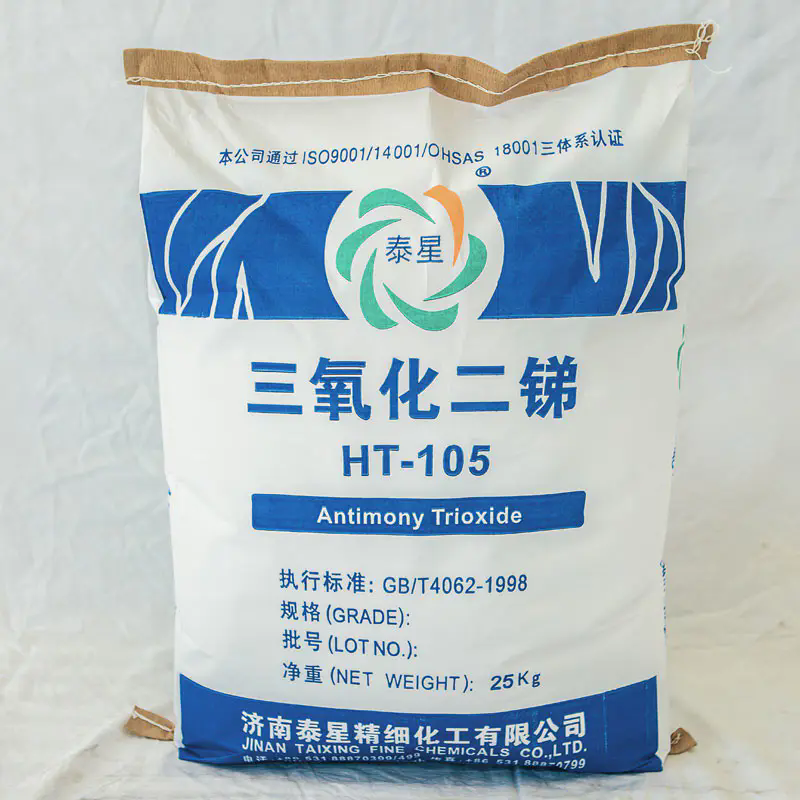
Table of Contents
1. What Are the Key Properties and Specifications of Antimony Trioxide?
Antimony Trioxide (Sb2O3) is an inorganic compound predominantly used as a flame retardant synergist and in various industrial applications. Its high thermal stability, chemical compatibility, and fine particle size make it suitable for plastics, rubber, textiles, and electronics. The following table provides an overview of the main product specifications commonly required for industrial usage:
| Parameter | Specification |
|---|---|
| Chemical Formula | Sb2O3 |
| Appearance | White to off-white powder |
| Purity | ≥99.5% |
| Particle Size | D50: 2-5 μm |
| Bulk Density | 0.8–1.0 g/cm³ |
| Moisture Content | ≤0.2% |
| Ignition Temperature | >400°C |
Understanding these specifications helps industrial users select the correct grade of Antimony Trioxide for their specific application, whether it is for flame retardant plastics, textile coatings, or high-performance electronic components.
2. How Is Antimony Trioxide Produced and Applied in Industry?
Antimony Trioxide production typically involves two methods: the oxidation of metallic antimony and the hydration of antimony trichloride. Both methods yield high-purity Sb2O3 suitable for industrial applications.
Production Processes:
- Oxidation of Antimony: Metallic antimony is oxidized in controlled furnaces, producing high-purity trioxide powder. This method is preferred for flame retardant applications.
- Hydrolysis of Antimony Trichloride: Antimony trichloride reacts with water to form Sb2O3. This method allows precise control of particle size and surface properties.
Industrial Applications:
- Flame Retardants: Sb2O3 acts synergistically with halogenated compounds to reduce flammability in plastics and textiles.
- Rubber and Polymers: Enhances thermal stability and mechanical properties.
- Electronics: Used in semiconductor materials and specialty glass production.
- Ceramics and Paints: Improves color stability and opacity.
3. What Are Common Questions About Antimony Trioxide?
Q1: How safe is Antimony Trioxide for industrial use?
A1: Antimony Trioxide is generally safe when handled with proper protective equipment, including masks, gloves, and ventilation. It is classified as a potential carcinogen in high concentrations; therefore, industrial exposure limits must be strictly followed.
Q2: How does Antimony Trioxide interact with flame retardant polymers?
A2: Sb2O3 acts as a synergist with halogenated flame retardants, enhancing char formation and reducing smoke and toxic gas release during combustion. Its fine particle size allows uniform distribution in polymer matrices.
Q3: How to choose the right particle size for specific applications?
A3: The particle size affects dispersibility, flame retardancy efficiency, and optical properties. For plastics and textiles, D50 2-5 μm is commonly preferred, whereas finer particles are used in electronics or specialty coatings.
Q4: How to store and maintain the quality of Antimony Trioxide?
A4: Sb2O3 should be stored in sealed containers in a cool, dry, and well-ventilated area to prevent moisture absorption and contamination. Avoid contact with strong acids and oxidizers.
4. How to Source High-Quality Antimony Trioxide from Reputable Suppliers?
Sourcing high-quality Antimony Trioxide requires evaluating chemical purity, particle size, and consistency from suppliers. Reliable suppliers often provide detailed certificates of analysis, adherence to industrial standards, and technical support for end-use optimization.
Shandong Taixing New Materials Co., Ltd. has been a leading supplier of high-purity Antimony Trioxide with stable particle distribution, excellent flame retardant performance, and compliance with international safety standards. For businesses seeking to integrate Sb2O3 into plastics, rubbers, electronics, or coatings, consulting a reputable supplier ensures consistent product quality and technical guidance.
If you are interested in sourcing premium Antimony Trioxide, contact us to discuss product specifications, certifications, and logistics.