
Is Antimony Trioxide Still Relevant in Modern Flame Retardant Regulations Such as RoHS and REACH
2026-04-08
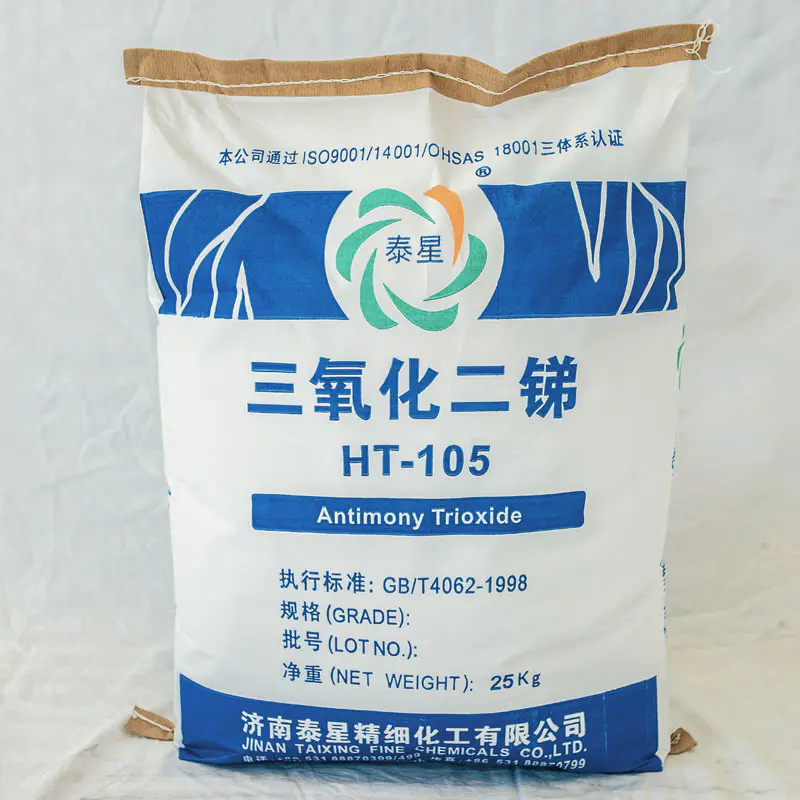
For decades, Antimony Trioxide Flame Retardant has been a cornerstone of fire safety in polymers, textiles, and electronics. However, with the rise of stringent global regulations like RoHS and REACH, many manufacturers question whether this compound remains a viable choice. At Taixing, we continuously monitor these regulatory landscapes to provide clarity. The short answer is yes—but with important conditions and evolving applications.
Understanding RoHS and REACH Restrictions
Both RoHS (Restriction of Hazardous Substances) and REACH (Registration, Evaluation, Authorisation, and Restriction of Chemicals) impact Antimony Trioxide Flame Retardant differently. The table below summarizes their current stance.
| Regulation | Status of Antimony Trioxide | Key Requirement |
|---|---|---|
| RoHS (EU) | Not explicitly restricted | No maximum concentration limit set for antimony trioxide alone |
| REACH (ECHA) | Candidate List of SVHC (since 2019) | Requires supply chain communication and potential authorization for certain uses |
While RoHS does not ban Antimony Trioxide Flame Retardant, REACH’s SVHC listing means that any product containing it above 0.1% weight by weight (w/w) triggers information obligations. This does not equate to a ban but does increase compliance burdens.
Why Industries Still Rely on Antimony Trioxide
The synergy between antimony trioxide and halogenated flame retardants (e.g., brominated compounds) remains unmatched in many high-performance applications. Taixing provides high-purity grades that help manufacturers meet fire safety standards like UL94 V-0 while navigating regulatory reporting.
| Industry Sector | Typical Use Case | Regulatory Challenge |
|---|---|---|
| Electrical & Electronics | Wire & cable insulation, connectors | REACH SVHC communication |
| Construction | Insulation foams, roofing membranes | EU Construction Products Regulation (CPR) |
| Transportation | Automotive underhood components | Global Automotive Declarable Substance List (GADSL) |
Antimony Trioxide Flame Retardant FAQ
What is the difference between RoHS restriction and REACH SVHC listing for antimony trioxide?
RoHS restricts specific hazardous substances in electrical and electronic equipment (EEE) and currently does not include antimony trioxide in its restricted list. REACH, on the other hand, places antimony trioxide on the Candidate List of Substances of Very High Concern (SVHC) due to its carcinogenic potential (H351). This means that if your product contains Antimony Trioxide Flame Retardant above 0.1% w/w, you must provide safe use information to downstream users and, upon request, to consumers. No immediate ban exists, but authorization may be required for certain high-volume uses in the future.
Can I still legally sell products containing antimony trioxide flame retardant in the EU market?
Yes, you can legally sell such products in the EU. Neither RoHS nor REACH currently prohibits the sale of products containing Antimony Trioxide Flame Retardant. However, REACH requires you to communicate the presence of the substance if it exceeds 0.1% w/w in articles. This is typically done via the SCIP database (Substances of Concern In Articles) or safety data sheets. Major brands and OEMs may impose their own restrictions, but EU law itself does not forbid the substance. Taixing recommends checking with your specific supply chain for additional corporate policies.
What are the best alternatives if I want to phase out antimony trioxide flame retardant?
Common alternatives include zinc stannates, zinc hydroxystannate, magnesium hydroxide, aluminum trihydroxide (ATH), and phosphorus-based flame retardants. However, each alternative presents trade-offs. For example, ATH requires high loading levels (often >50% by weight), which degrades mechanical properties. Phosphorus-based systems may not achieve the same UL94 V-0 rating in polyolefins or engineering plastics without expensive formulation changes. Antimony Trioxide Flame Retardant remains the most cost-effective synergist for brominated systems. Taixing advises a case-by-case evaluation: for low-voltage applications or thin-wall extrusions, alternatives may work; for high-impact or high-temperature uses, antimony trioxide often remains irreplaceable.
Future Outlook and Compliance Strategy
Regulatory pressure is increasing, but substitution is not straightforward. The European Chemicals Agency (ECHA) has not yet proposed a full restriction under REACH Annex XVII. Manufacturers using Antimony Trioxide Flame Retardant should focus on exposure control, product labeling, and SCIP database notifications. Taixing supports clients with analytical documentation and alternative screening when needed.
Contact Us
Ready to optimize your flame retardant strategy while staying compliant with RoHS and REACH Taixing offers technical consultations, high-purity antimony trioxide grades, and alternative formulations tailored to your application. Contact our team today to review your regulatory requirements and secure your supply chain.