

Is Desonide Considered a Potent Steroid and Does It Require a Prescription
2026-07-13
These are not just casual curiosities—they directly affect how you use the medication, what side effects you watch for, and whether you can refill it conveniently. As a low-potency topical corticosteroid, Desonide occupies a unique place in dermatology. It is potent enough to resolve inflammation but mild enough for sensitive areas like the face and intertriginous zones. However, its prescription-only status is non-negotiable, and for good reason. At Humanwell, we manufacture Desonide formulations that meet stringent quality standards, ensuring that every tube delivers consistent, predictable relief for conditions like atopic dermatitis, eczema, and seborrheic dermatitis.
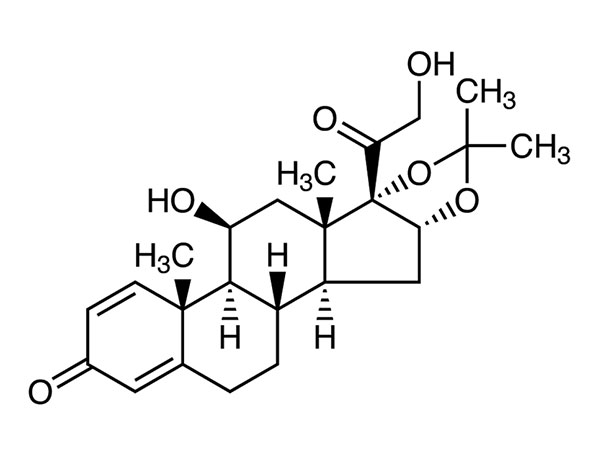
Understanding Potency: Where Does Desonide Rank?
To answer the potency question directly: Desonide is classified as a low-potency (Class VI) topical corticosteroid under the US Stoughton–Cornell classification system. This places it below mid-potency agents like triamcinolone acetonide and far below super-potent steroids like clobetasol propionate.
| Potency Class | Example Steroid | Typical Use Area |
|---|---|---|
| Super-High (Class I–II) | Clobetasol, Betamethasone dipropionate | Thick skin (palms, soles) |
| Mid (Class III–V) | Triamcinolone, Fluocinolone | Trunk, limbs |
| Low (Class VI–VII) | Desonide, Hydrocortisone 1% | Face, groin, armpits, infants |
This low potency is exactly why Desonide is often the first-line choice for delicate skin. It offers sufficient anti-inflammatory effect without the high risk of skin atrophy, striae, or systemic absorption that accompanies stronger steroids. However, "low potency" does not mean "weak ineffectiveness." In clinical trials, Desonide 0.05% cream has shown comparable efficacy to mid-potency steroids for mild-to-moderate eczema, with a significantly safer adverse-effect profile.
Prescription-Only Status: The Clinical Rationale
Yes, Desonide absolutely requires a prescription in the United States, the European Union, and most regulated markets. Over-the-counter (OTC) topical steroids are restricted to hydrocortisone 0.5%–1% only. The prescription mandate for Desonide exists for three evidence-based reasons:
-
Diagnostic necessity – Rashes that respond to Desonide (eczema, allergic contact dermatitis) often mimic fungal, bacterial, or viral infections (e.g., herpes, tinea). Using a steroid without a proper diagnosis can worsen these conditions.
-
Dosing precision – The vehicle (cream, ointment, lotion) and application frequency vary by body site and age. A physician determines the correct regimen to avoid under-treatment or overuse.
-
Adverse event monitoring – Even with low potency, prolonged use on large surface areas or occluded skin can suppress the hypothalamic-pituitary-adrenal (HPA) axis. Prescription oversight ensures periodic re-evaluation.
At Humanwell, all our Desonide products are distributed exclusively through licensed pharmacies, accompanied by FDA-approved prescribing information that details contraindications, pediatric use, and pregnancy category C data.
When to Use Desonide vs. Stronger Steroids
The choice between Desonide and a more potent steroid is not a ladder you climb arbitrarily. It is a clinical decision based on three variables: skin thickness, lesion chronicity, and patient age.
| Clinical Scenario | Recommended Agent | Rationale |
|---|---|---|
| Facial eczema in a 3-year-old | Desonide (cream) | Thin skin + higher absorption risk |
| Palmar psoriasis in an adult | Betamethasone (mid-potency) | Thick stratum corneum requires stronger penetration |
| Intertrigo in the groin area | Desonide (ointment) | Moist environment + low atrophy risk |
| Chronic lichenified plaque on elbow | Triamcinolone 0.1% | Thickened skin needs intermediate strength |
For acute, severe flares, a short course of a mid-potency steroid may be prescribed, followed by a taper to Desonide for maintenance. This step-down approach minimizes cumulative steroid burden—a strategy that Humanwell supports through clear package inserts and patient education leaflets.
Desonide FAQ – Common Questions Answered
Q: Can I use Desonide on my face every day for a year?
A: No. Even though Desonide is low potency, daily application on the face for more than 2–4 consecutive weeks is not recommended without dermatologist re-evaluation. Facial skin has a high surface-area-to-volume ratio, which increases percutaneous absorption. Prolonged use can lead to perioral dermatitis, rosacea-like eruptions, or telangiectasia. For chronic facial conditions, your physician will likely advise intermittent use (e.g., 2 days on, 5 days off) or transition to a calcineurin inhibitor (tacrolimus/pimecrolimus) for long-term control. Always taper gradually—never stop abruptly after extended use.
Q: Is Desonide ointment better than the cream for weeping eczema?
A: Yes, but with a caveat. Desonide ointment (petrolatum-based) is occlusive, which enhances penetration and soothes dry, cracked, or scaling lesions. However, for acutely weeping or oozing eczema, the cream or lotion is preferred because the ointment can trap serous exudate and macerate the skin. In general, ointment works best for chronic, hyperkeratotic plaques, while cream suits subacute or mixed-type dermatitis. Humanwell offers both vehicles, allowing prescribers to match the formulation to the lesion morphology. If you are unsure, apply a thin film of the cream to moist areas and the ointment to thick, dry patches—but always follow your doctor’s written instructions.
Q: What happens if I stop Desonide cold turkey after 6 weeks of use?
A: Stopping Desonide abruptly after 6 weeks of continuous use can precipitate a rebound flare—a sudden worsening of redness, itching, and scaling that may exceed your original symptoms. This occurs because the skin’s natural corticosteroid production has been suppressed, and the underlying inflammation rebounds. To avoid this, your prescriber will design a taper schedule, such as reducing application from twice daily to once daily for 1 week, then every other day for another week, before discontinuing. If you experience severe rebound, contact your dermatologist immediately; do not restart Desonide on your own. Humanwell includes a tapering reminder in our patient information inserts to support safe discontinuation.
Safety Monitoring and Practical Tips
While Desonide is considered safe for pediatric use (down to 3 months of age) and for short-term facial application, you should monitor for:
-
Local: burning, stinging, folliculitis, hypopigmentation
-
Systemic: rare but possible with prolonged occlusion—watch for fatigue, weight gain, or hypertension
Always wash your hands after application unless treating hand eczema. Do not use occlusive dressings (bandages, plastic wraps) unless explicitly directed. And never share your Desonide with family members—their skin condition may require a completely different therapy.
Why Choose Humanwell for Your Desonide Therapy?
As a globally trusted pharmaceutical manufacturer, Humanwell ensures that every batch of Desonide cream, ointment, and lotion meets USP standards for purity, particle size, and release kinetics. Our products are micronized for optimal skin penetration, paraben-free in selected lines, and packaged with clear, patient-friendly labeling. We collaborate with dermatologists to continuously update our formulation science, so you receive not just a steroid, but a precision tool for managing inflammatory skin disease.
Contact Us
Managing eczema or dermatitis with Desonide is a partnership between you, your prescriber, and a reliable manufacturer. If you have questions about our Desonide product portfolio, stability data, or sourcing for your clinic or pharmacy, do not hesitate to reach out. Contact us today through our official website or email our medical information team—we are here to provide evidence-based answers and technical support for healthcare professionals and patients alike. Your safe, effective treatment journey starts with informed choices, and we are committed to walking that path with you.