What Are the Key Advantages of Spherical Yttria Stabilized Zirconia Powder in 3D Printing Ceramics
2026-06-16
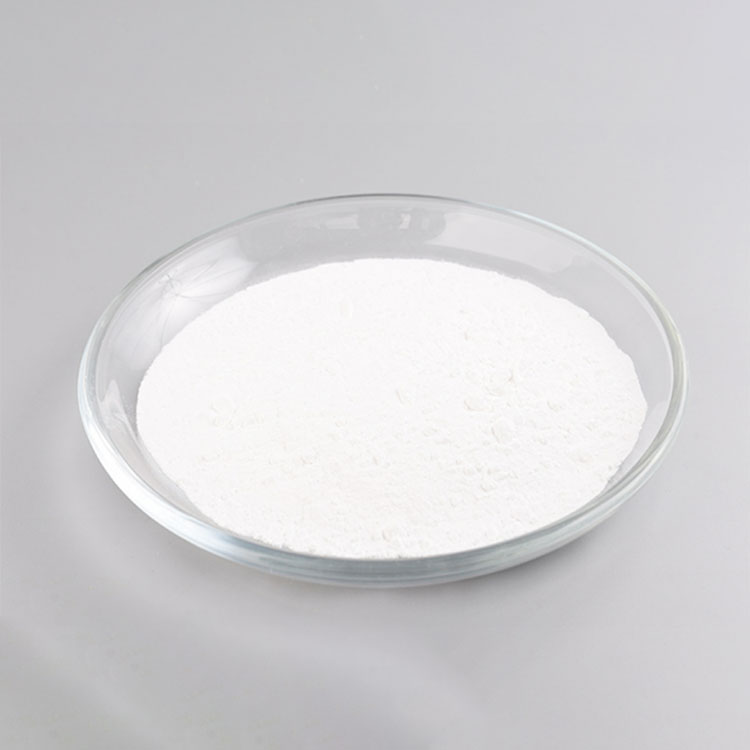
Additive manufacturing of advanced ceramics has entered a new era, and at the heart of this revolution is Spherical Yttria Stabilized Zirconia Powder. Unlike irregular or angular particles, this engineered material offers unprecedented flowability and packing density—two non-negotiable properties for high-resolution 3D printing. For industry leaders like Nextgen, mastering this powder is not just about material science; it is about unlocking reliable, repeatable, and high-performance ceramic components. This article explores the technical advantages of Spherical Yttria Stabilized Zirconia Powder in ceramic additive manufacturing and why it outperforms conventional feedstocks.
1. Superior Flowability and Layer Uniformity
In powder-bed fusion and binder-jetting processes, the recoating mechanism demands a powder that moves like a fluid. Spherical Yttria Stabilized Zirconia Powder exhibits near-perfect sphericity, which minimizes mechanical interlocking between particles. This results in:
-
Consistent layer spreading without ridges or voids.
-
Higher apparent density in the green body, reducing shrinkage anisotropy.
-
Faster recoating speeds, directly improving production throughput.
Nextgen has validated through internal rheology tests that spherical morphologies reduce avalanche angles by up to 40% compared to crushed powders, ensuring every printed layer is defect-free.
2. Optimized Packing Density for Sintering Performance
The spherical shape enables bimodal or multimodal particle size distributions to pack more efficiently. This directly influences the final ceramic part:
| Parameter | Irregular Powder | Spherical Yttria Stabilized Zirconia Powder |
|---|---|---|
| Green Density | 48–52% | 58–64% |
| Sintered Density | 94–96% | 98–99.5% |
| Linear Shrinkage Variation | ±0.8% | ±0.2% |
| Pore Residual Rate | High (interconnected) | Low (isolated, fine) |
Higher green density means fewer large pores, which translates to superior mechanical strength and translucency—critical for dental and aerospace applications. Nextgen recommends this powder for parts requiring >1200 MPa flexural strength.
3. Reduced Defect Formation During Debinding and Sintering
Irregular particles create stress concentrators and uneven thermal gradients. With Spherical Yttria Stabilized Zirconia Powder, the homogeneous packing ensures:
-
Uniform heat transfer throughout the debinding stage.
-
Minimal crack initiation due to reduced differential shrinkage.
-
Consistent grain growth during final sintering, preserving the tetragonal phase.
This advantage is particularly valuable for thin-walled structures (e.g., ceramic cores for investment casting) where warpage is a primary rejection cause. Nextgen supplies customized size cuts (D50 = 10–45 µm) to match specific 3D printer nozzle and layer thickness requirements.
4. Superior Rheology for Paste-Based Extrusion 3D Printing
For direct-ink-writing (DIW) or robocasting, the powder’s shape directly affects the shear-thinning behavior of the paste. Spherical Yttria Stabilized Zirconia Powder requires less organic binder to achieve target viscosity, which:
-
Reduces binder burnout time by 20–30%.
-
Lowers carbon residue that can degrade zirconia’s ionic conductivity.
-
Enables higher solid loading (>55 vol%) without clogging fine nozzles.
Nextgen has developed surface-modified grades that further enhance dispersion stability in aqueous and non-aqueous systems, giving engineers greater formulation flexibility.
5. Enhanced Print Resolution and Surface Finish
Because spherical particles scatter laser energy more predictably in SLA or DLP-based ceramic printing, the cure depth and width become more controllable. The result:
-
Sharp feature definition (down to 100 µm lines).
-
Smooth as-printed surfaces (Ra < 2 µm) that reduce post-processing costs.
-
Better edge retention for intricate geometries like lattice structures and internal cooling channels.
Frequently Asked Questions (FAQ) about Spherical Yttria Stabilized Zirconia Powder
Q1: What is the optimal particle size distribution of Spherical Yttria Stabilized Zirconia Powder for powder-bed fusion 3D printing?
A1: For powder-bed fusion (e.g., selective laser sintering), the optimal distribution is typically a bimodal blend with a coarse fraction (D50 ≈ 40–50 µm) for flowability and a fine fraction (D50 ≈ 5–10 µm) to fill interstitial voids. The span (D90–D10/D50) should be below 1.5 to ensure uniform melting. Nextgen offers pre-blended grades with precisely controlled spans, reducing the need for on-site mixing. For layer thicknesses of 30–50 µm, a D50 of 35–45 µm is standard, while thinner layers (20 µm) require finer D50 ≈ 20–30 µm to avoid particle pull-out during recoating.
Q2: How does the yttria content (e.g., 3Y vs. 8Y) affect the 3D printing performance of Spherical Yttria Stabilized Zirconia Powder?
A2: The yttria content dictates the final phase stability and mechanical regime. 3 mol% Y₂O₃ (3Y) yields predominantly tetragonal phase, offering high fracture toughness (~6–8 MPa·m¹/²) and flexural strength (>1200 MPa)—ideal for structural and dental implants. 8 mol% Y₂O₃ (8Y) produces fully cubic or partially stabilized phases, providing superior ionic conductivity and thermal shock resistance, suitable for solid oxide fuel cell components but with lower strength (~400–500 MPa). In 3D printing, 3Y is more forgiving due to its transformation-toughening mechanism, which arrests crack propagation during sintering. Nextgen recommends 3Y for load-bearing parts and 8Y for functional electroceramics; always verify your printer’s maximum operating temperature because 8Y sinters at higher temperatures (1550°C vs. 1450°C for 3Y).
Q3: Can Spherical Yttria Stabilized Zirconia Powder be recycled in 3D printing, and how many times?
A3: Yes, recycling is feasible but limited. In powder-bed systems, unsintered powder undergoes thermal and mechanical stress during each cycle, leading to particle rounding changes, agglomeration, and slight yttria segregation. High-quality Spherical Yttria Stabilized Zirconia Powder from Nextgen can be recycled up to 5–7 times with proper sieving (to remove agglomerates >50 µm) and moisture conditioning (drying at 120°C for 2 hours). However, after each cycle, you must monitor flowability (Hall flowmeter) and apparent density—if the Hall flow time exceeds 35 seconds per 50 g, discard the batch. For mission-critical aerospace parts, Nextgen advises using fresh powder only and diverting recycled material to non-structural prototypes. Always requalify recycled batches with a test print of a standard coupon before production runs.
Conclusion and Call to Action
The shift from irregular to Spherical Yttria Stabilized Zirconia Powder is not incremental—it is transformational for ceramic 3D printing. From unrivaled flowability and packing density to defect-free sintering and fine resolution, this material empowers engineers to produce components that were previously impossible or economically unviable. Nextgen continues to lead this space by offering tailored particle sizes, surface treatments, and technical support that bridge the gap between powder characteristics and printer requirements.
Are you ready to upgrade your ceramic additive manufacturing line? Contact Nextgen today for a free powder flowability analysis and a customized sample kit designed for your specific 3D printer model. Our application engineers are standing by to help you optimize your sintering profile and achieve first-pass yield rates above 95%. Reach out via our website or email—let’s print the future, layer by layer.