

What Are the Key Applications of Hot-Pressed Grade Boron Carbide B4C in Nozzle Manufacturing
2026-06-09
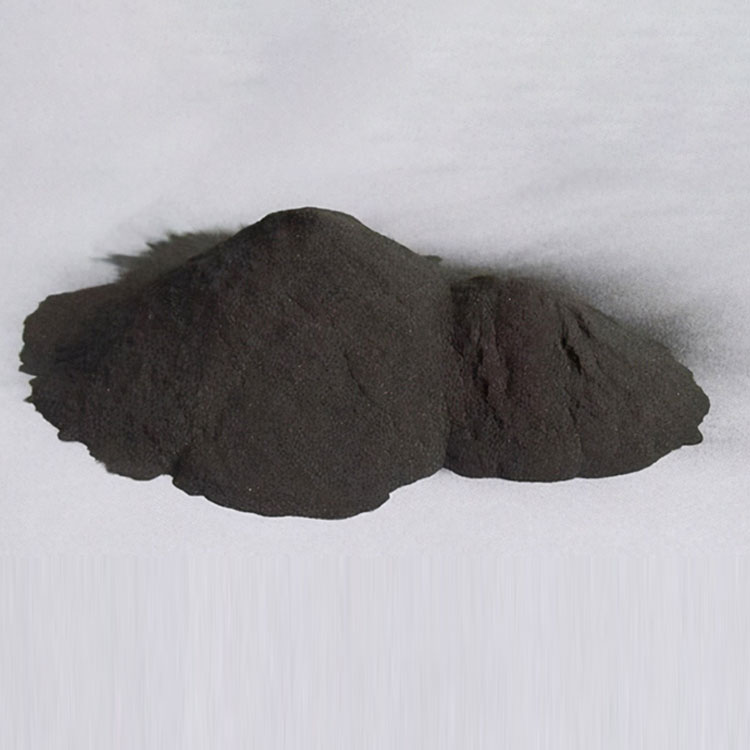
When extreme wear resistance meets high-temperature stability, Hot-Pressed Grade Boron Carbide B4C becomes the material of choice. Nextgen Advanced Materials specializes in this advanced ceramic, which outperforms conventional nozzle materials in demanding industrial environments. Unlike sintered or reaction-bonded ceramics, the hot-pressed grade delivers near-theoretical density, ultra-fine grain structure, and exceptional hardness—making it ideal for abrasive and high-velocity applications.
Key Nozzle Applications
| Application Area | Why Hot-Pressed Grade Boron Carbide B4C Excels |
|---|---|
| Abrasive Blasting Nozzles | Resists erosion from silica, aluminum oxide, and garnet abrasives |
| Waterjet Cutting Nozzles | Maintains dimensional accuracy under high-pressure slurry flow |
| Thermal Spray Nozzles | Withstands rapid thermal cycling and particle impact |
| Powder Injection Nozzles | Provides long service life when handling hard metal powders |
Performance Comparison
| Property | Hot-Pressed Grade Boron Carbide B4C | Tungsten Carbide | Alumina |
|---|---|---|---|
| Hardness (HV) | 2800–3200 | 1400–1800 | 1300–1600 |
| Density (g/cm³) | 2.51 | 14.5–15.0 | 3.9 |
| Wear Resistance | Excellent | Moderate | Low |
FAQ
Q1: Why is Hot-Pressed Grade Boron Carbide B4C more wear-resistant than sintered B4C in nozzles?
A: The hot-pressing process applies simultaneous heat and uniaxial pressure, eliminating nearly all residual porosity. Nextgen Advanced Materials achieves over 99% theoretical density, which removes weak points where erosion typically initiates. Sintered grades retain 5–10% porosity, leading to faster grain pullout under abrasive flow.
Q2: Can Hot-Pressed Grade Boron Carbide B4C nozzles handle both dry and slurry abrasive media?
A: Yes. The material’s chemical inertness resists corrosion from water-based slurries, while its extreme hardness (28–32 GPa) withstands dry abrasive impact. For dry blasting with steel grit or aluminum oxide, nozzle life increases 5–8 times compared to tungsten carbide. For waterjet slurry, edge retention remains stable over hundreds of operating hours.
Q3: What maximum operating temperature can Hot-Pressed Grade Boron Carbide B4C nozzles sustain?
A: The material maintains structural integrity up to 1200°C in inert atmospheres and up to 800°C in oxidizing environments. This makes it suitable for thermal spray nozzles handling molten ceramic or metal particles. Nextgen Advanced Materials recommends evaluating thermal cycling rates; the low thermal expansion coefficient (4.5×10⁻⁶/K) prevents cracking during intermittent high-temperature processes.
Contact Us
For custom nozzle geometries, competitive pricing, or technical datasheets on Hot-Pressed Grade Boron Carbide B4C, reach out to Nextgen Advanced Materials today. Our engineering team supports rapid prototyping and volume production. Contact us via the website form or email directly to discuss your abrasive flow control challenges.