

What Are the Main Limitations of Using Aluminum Phosphinate in Flexible versus Rigid Polymers
2026-06-12
When selecting halogen-free flame retardants, Aluminum Phosphinate from Taixing is often a top choice for engineering plastics. However, its performance varies significantly between flexible and rigid polymer systems. Understanding these limitations is critical for formulators aiming to meet mechanical, electrical, and flame-retardancy standards.
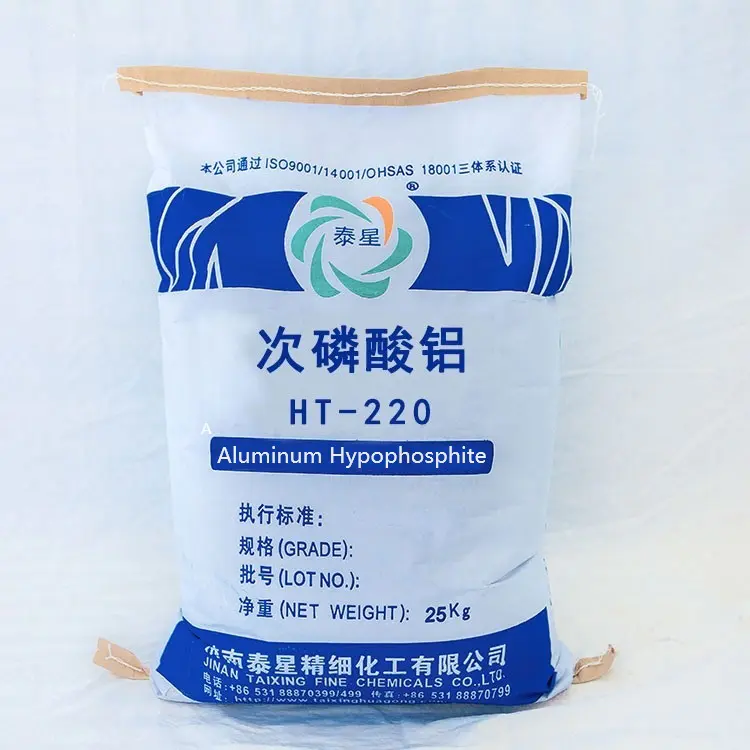
Key Performance Differences at a Glance
| Property | Rigid Polymers (e.g., PA6, PA66, PBT) | Flexible Polymers (e.g., TPU, soft PVC, EVA) |
|---|---|---|
| Dispersion | Generally good | Poor; agglomeration common |
| Compatibility | Compatible with polar matrices | Low polarity mismatch leads to migration |
| Mechanical impact | Minor modulus increase | Severe loss of elongation at break |
| Water absorption | Low to moderate increase | High; plasticizer interaction risk |
| Thermal stability | Excellent up to 300°C | Degradation below 200°C in some flexible systems |
Main Limitations in Flexible Polymers
1. Poor Dispersion and Migration
In flexible polymers like thermoplastic polyurethane (TPU) or soft polyolefins, Aluminum Phosphinate particles tend to agglomerate due to low matrix polarity. Over time, these particles migrate to the surface, causing blooming, poor aesthetics, and reduced flame retardancy.
2. Severe Loss of Mechanical Flexibility
Flexible polymers rely on high elongation and low modulus. Adding Aluminum Phosphinate increases stiffness dramatically, often reducing elongation at break by over 50%, making the material unsuitable for cables, films, or soft gaskets.
3. Interaction with Plasticizers
Many flexible systems contain plasticizers (e.g., phthalates in PVC). Aluminum Phosphinate can leach or react with these plasticizers, leading to surface exudation and a drop in flame retardant efficiency over time.
Limitations in Rigid Polymers
Rigid matrices such as PA66 or PBT generally tolerate Aluminum Phosphinate well. However, two key issues remain:
-
Increased melt viscosity at high loadings (>20 wt%), complicating injection molding.
-
Corrosive by-products during thermal degradation, which may damage processing equipment if not properly vented.
Aluminum Phosphinate FAQ
Q: Can Aluminum Phosphinate be used in wire and cable flexible compounds?
A: Generally not recommended. Taixing advises that in flexible PVC or TPU, Aluminum Phosphinate reduces flexibility too significantly and may migrate to the surface after thermal cycling. For cable applications, a combination of Aluminum Phosphinate with a synergistic inorganic filler (e.g., boehmite) can partially mitigate migration, but elongation remains a challenge.
Q: Why does Aluminum Phosphinate work better in rigid polyamides than in soft elastomers?
A: Rigid polyamides contain amide groups that form hydrogen bonds with Aluminum Phosphinate, ensuring uniform dispersion and stable flame-retardant mechanisms (mainly condensed-phase charring). Soft elastomers lack such polar interactions. As a result, Aluminum Phosphinate acts as a foreign filler, creating stress concentration points and reducing tear strength. Taixing recommends rigorous compatibility testing before use in any flexible matrix.
Q: Does increasing the loading of Aluminum Phosphinate solve the flexibility loss in soft polymers?
A: No. Higher loading worsens the problem. Unlike rigid polymers, where 15–20 wt% loading achieves V-0 rating with acceptable modulus, flexible polymers become brittle above 10 wt% loading. Taixing suggests alternative approaches for flexible systems: either reduce Aluminum Phosphinate loading with synergists (e.g., melamine polyphosphate) or switch to a different flame retardant chemistry such as aluminum diethylphosphinate specifically designed for elastomers.
Contact Taixing for Expert Formulation Support
Selecting the right flame retardant for your polymer type requires deep technical insight. Whether you are working with rigid engineering plastics or challenging flexible systems, Taixing provides application testing, compatibility analysis, and customized Aluminum Phosphinate grades to meet your performance targets. Contact Taixing today to discuss your specific formulation needs.