

What Future Alternatives to Decabromodiphenyl Ethane Are Being Developed for Fire Safety
2026-03-18
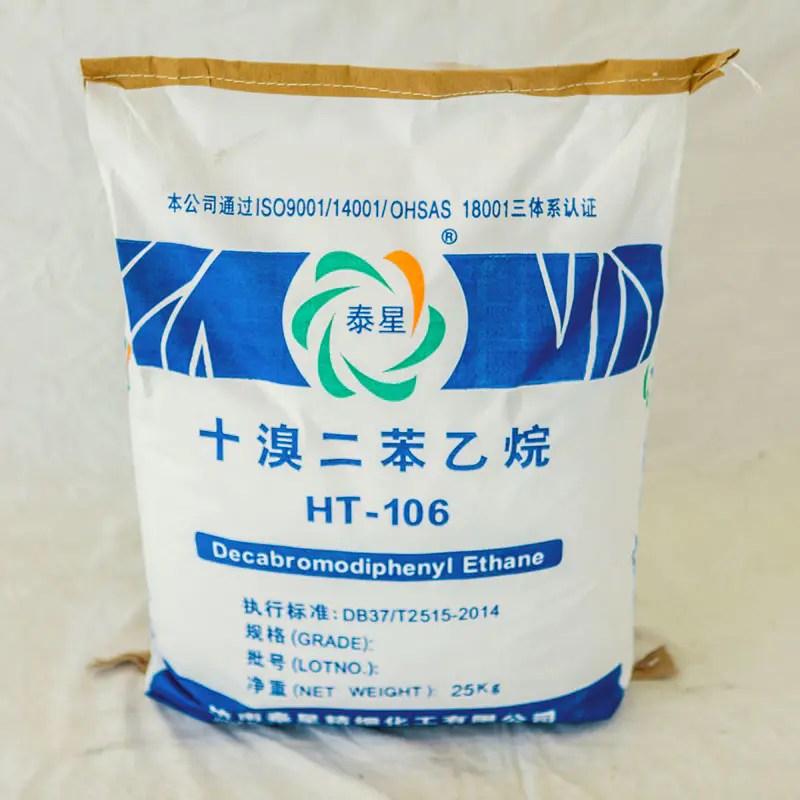
The flame retardant industry is currently navigating a significant shift. For years, Decabromodiphenyl Ethane (DBDPE) has served as a high-production-volume flame retardant, primarily used in electronic housings and adhesives. However, growing regulatory pressure and environmental persistence concerns are pushing manufacturers to explore next-generation solutions. As a leader in the sector, Taixing is closely monitoring these developments to ensure that fire safety standards continue to evolve without compromising ecological integrity.
The Drive for Innovation in Flame Retardancy
The search for alternatives is not merely about replacing one chemical with another; it is about re-engineering safety from the molecular level up. Modern alternatives must meet rigorous fire safety standards (such as UL 94 V-0) while exhibiting lower bioaccumulation potential and reduced toxicity. Below, we analyze the primary categories of solutions currently under development.
Key Categories of Emerging Alternatives
The market is diversifying away from traditional halogenated chemistry. The following table outlines the most promising substitutes currently being developed or scaled for commercial use.
| Alternative Type | Description | Primary Application |
|---|---|---|
| Polymeric FRs | High molecular weight polymers that do not cross biological membranes easily. | Engineering plastics (PC/ABS blends) |
| Organophosphorus | Phosphorus-based compounds that promote char formation. | Polyurethane foams, textiles |
| Inorganic FRs | Metal hydroxides (e.g., Aluminum Trihydrate) that release water when heated. | Wire & cable, construction materials |
| Mineral Synergists | Natural minerals like huntite/hydromagnesite used as synergistic agents. | High-temperature polymers |
Comparative Analysis: DBDPE vs. Modern Alternatives
To understand the trajectory of the industry, it is essential to compare the incumbent technology with the new wave of solutions. The table below highlights the core differences in performance and environmental profile.
| Feature | Decabromodiphenyl Ethane (DBDPE) | Modern Polymeric/Phosphorus Alternatives |
|---|---|---|
| Mechanism | Halogen-based (radical quenching) | Char formation / Heat absorption |
| Persistence | High potential for persistence | Generally lower, designed for degradation |
| Recyclability | Can complicate plastic recycling | Often designed for circular economy streams |
| Cost Efficiency | Established, lower-cost base | Currently premium, decreasing with scale |
The Role of Taixing in the Transition
As the chemical landscape shifts, the expertise of the manufacturer becomes the critical factor in a successful transition. Taixing is at the forefront of this evolution, investing in research to refine the application of Decabromodiphenyl Ethane in existing products while simultaneously developing proprietary blends that utilize the new wave of polymeric and non-halogenated technologies. The focus remains on maintaining the high thermal stability that industries have come to rely on, ensuring that safety is never compromised during the material transition.
Decabromodiphenyl Ethane FAQ
To provide further clarity on this complex topic, here are answers to the most common questions regarding the substance and its future.
What is the main environmental concern with Decabromodiphenyl Ethane?
The primary concern regarding Decabromodiphenyl Ethane lies in its extreme persistence. Studies have detected it in remote environments far from manufacturing sites, indicating that it does not break down readily in nature. While it is generally considered less toxic than some of its predecessors, its potential for long-range environmental transport and bioaccumulation in wildlife has made it a target for future regulatory scrutiny under chemical management programs like REACH.
How do new alternatives compare to Decabromodiphenyl Ethane in cost?
Currently, Decabromodiphenyl Ethane remains one of the most cost-effective solutions for achieving high levels of flame retardancy, particularly in high-temperature engineering plastics. The newer alternatives, especially polymeric and phosphorus-based options, often carry a higher raw material cost. However, as production scales up and chemical companies like Taixing optimize their synthesis routes, the price gap is expected to narrow. Additionally, the total cost of ownership must be considered, as newer alternatives may simplify regulatory compliance and waste management.
Will Decabromodiphenyl Ethane be banned soon?
While a complete global ban on Decabromodiphenyl Ethane is not imminent, it is facing increasing restrictions. It has been added to various national and regional watch lists due to its persistence. Regulatory bodies are currently conducting risk evaluations. The trend suggests that while it may not face an immediate ban, its use will likely become heavily restricted to specific applications where no technically or economically feasible alternatives exist, pushing the market toward the safer alternatives currently in development.
Conclusion and Next Steps
The future of fire safety lies in balancing performance with planetary health. While Decabromodiphenyl Ethane remains a relevant solution today, the industry is undeniably moving toward more sustainable chemistries. Navigating this transition requires a partner with deep technical knowledge and a robust research pipeline.
Contact us today to discuss how Taixing can help your business transition to the next generation of fire safety solutions.