
What Happens If You Use the Wrong Salt For Water Softeners
2026-06-15
Choosing the correct Salt For Water Softeners is critical for system longevity and water quality. At KYHG, we have analyzed thousands of softener failures. Using the wrong salt does not just reduce efficiency; it actively damages your equipment. This guide explains the consequences and how to select the right product for your home.
The Technical Consequences of Incorrect Salt Use
When you use table salt, rock salt with high insolubles, or salt designed for de-icing, several mechanical and chemical failures occur inside the resin tank.
| Problem | Cause | Effect on System |
|---|---|---|
| Mushing | Fine salt particles dissolve too quickly and recrystallize as mud. | Blocks the lower distributor, stops regeneration, and causes hard water breakthrough. |
| Bridging | Impurities (magnesium, calcium sulfate) bond salt crystals together. | Creates an empty space under the salt; no brine is made, so resin beads become exhausted. |
| Iron Fouling | High-iron well water reacts with impure salt. | Coats resin beads permanently, reducing exchange capacity by up to 70%. |
| Injector Clogs | Undissolved sediment from low-grade salt. | Prevents brine draw cycle; system fails to clean resin. |
Case Example: A KYHG service call found a system using highway de-icing salt. The resin tank contained 3 kg of insoluble clay, requiring a full resin replacement.
How to Identify Wrong Salt Damage
Inspect your brine tank monthly. Signs of incorrect Salt For Water Softeners include:
-
Hard water spots on dishes (regeneration failed).
-
Salt "crust" on the tank walls (bridging).
-
Sludge layer at the bottom (mushing).
-
Motor humming but no water draw (clogged injector).
Salt For Water Softeners FAQ – Common Questions
Q1: Can I use normal table salt in my water softener in an emergency?
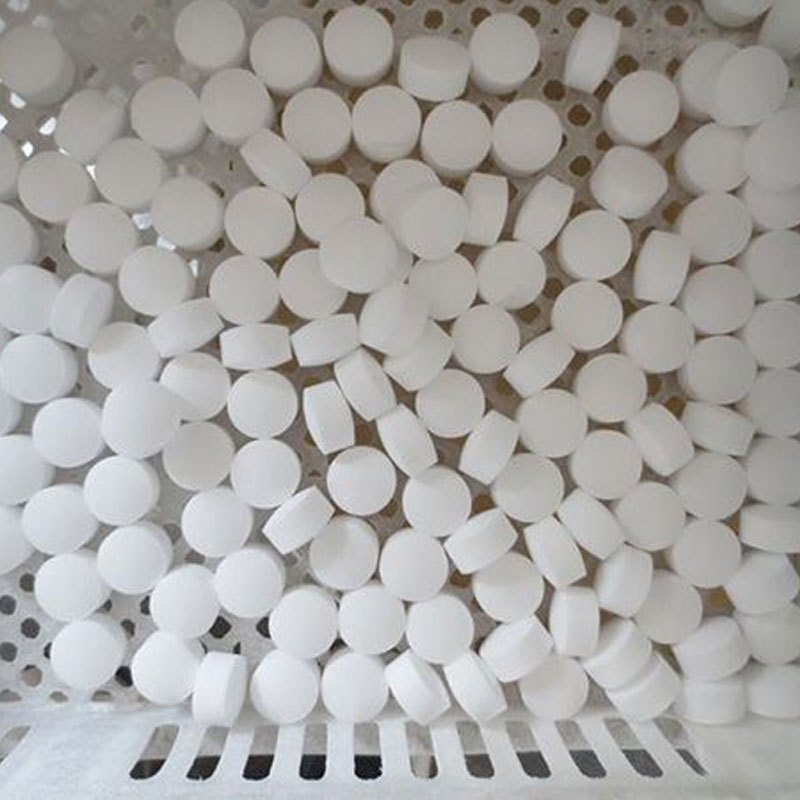
A: No, never. Table salt (sodium chloride with anti-caking agents like sodium ferrocyanide) will not dissolve properly in a brine tank. The anti-caking agents create a sticky sludge that coats the float assembly and injector. Even one bag can cause permanent clogging. Always use high-purity evaporated or pellet Salt For Water Softeners from brands like KYHG.
Q2: Why does my softener use more salt than my neighbor’s, even with similar water hardness?
A: You may be using the wrong salt grade. Solar salt (crystals) dissolves slower and works best in humid climates. Pellet salt dissolves faster but can mush if your pre-rinse cycle is too short. First, check your salt for impurities: place a cup of your current Salt For Water Softeners in warm water. If more than 1% residue (dark sand or gray film) remains, switch to KYHG premium pellets. Second, measure your brine refill setting – a wrong setting wastes 30-50% more salt.
Q3: How do I fix a salt bridge caused by the wrong salt type?
A: A salt bridge is a hard crust above the water level. Do not add more salt. Take a broom handle and push it straight down into the crust – you should feel a hollow thud when you break through. Break the bridge in 4-5 spots. Then perform a manual regeneration. To prevent recurrence, switch to KYHG rust-resistant pellets. Standard rock salt contains 2-5% insoluble binders that form bridges within 2 weeks. After fixing, clean the brine tank fully every 6 months.
Best Practices for Choosing Salt For Water Softeners
Follow this decision table based on your water quality and system type:
| Water Condition | Recommended Salt Type | Why KYHG Recommends This |
|---|---|---|
| Hardness < 15 gpg, no iron | Extra coarse solar crystals | Prevents mushing; lowest cost per regeneration. |
| Hardness > 15 gpg, or iron > 1 ppm | Premium evaporate pellets (98%+ purity) | Removes iron without resin fouling. |
| High humidity area | Potassium chloride (if potassium is viable) | No bridging; also reduces sodium intake. |
| Any condition with old resin (>7 years) | KYHG purified cubes | Uniform dissolve rate protects weakened resin. |
Final Warning from KYHG Technicians
The most expensive mistake is saving $2 on a bag of wrong **Salt For Water Softeners**. A full resin bed replacement costs $400-$800 plus labor. A clogged valve assembly adds another $250. For less than $7 per month, KYHG delivers lab-tested, high-purity salt pellets that meet NSF/ANSI Standard 60 – the benchmark for safe water treatment.
Take Action Today
Protect your investment. Switch to the correct Salt For Water Softeners before irreversible damage occurs. Contact us at KYHG for a free salt analysis and personalized recommendation. Our team will test a sample of your current salt and water hardness to prevent system failure. Reach out via our website or call your local KYHG distributor – we are ready to keep your water soft, your pipes clean, and your home safe.