

What Industries Benefit Most from PTFE Dispersion Resin
2026-09-23
PTFE Dispersion Resin is a specialized fluoropolymer supplied as an aqueous colloidal dispersion, and it has become a critical material for industries that demand extreme chemical resistance, low friction, and high thermal stability. Nianjing has spent years supplying this resin to manufacturers who need consistent particle size, reliable solids content, and repeatable processing behavior. Understanding which sectors gain the most from this material helps engineers, procurement teams, and product developers select the right grade with confidence.
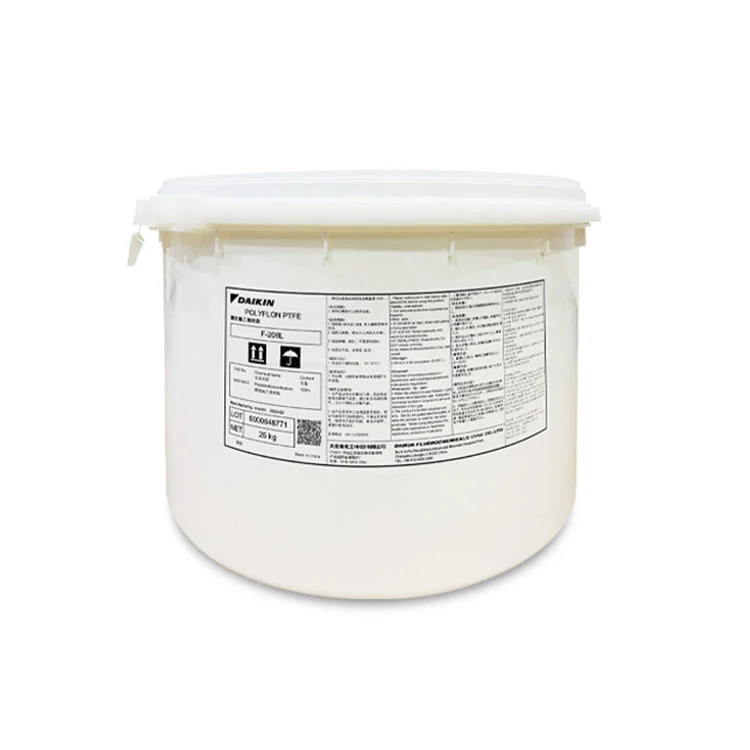
Why PTFE Dispersion Resin Performs Where Other Materials Fail
PTFE Dispersion Resin combines the inherent properties of polytetrafluoroethylene with the processing flexibility of a liquid dispersion. It can be coated, impregnated, cast into films, and blended into formulations that conventional granular PTFE cannot easily achieve.
Key performance advantages include:
-
Exceptional chemical inertness against acids, bases, and solvents
-
Continuous service temperatures from -200°C to 260°C
-
Extremely low coefficient of friction
-
Excellent dielectric properties
-
Non-stick and release characteristics
-
Biocompatibility and low extractables when properly formulated
These properties explain why PTFE Dispersion Resin appears in applications ranging from industrial coatings to medical devices.
Industries That Benefit Most
| Industry | Typical Application | Why PTFE Dispersion Resin Fits |
|---|---|---|
| Chemical Processing | Tank linings, pipe coatings, gaskets | Withstands aggressive chemicals and extends equipment life |
| Electronics | Wire insulation, dielectric films, laminates | Low dielectric constant and high thermal stability |
| Medical Devices | Catheters, guidewires, surgical instruments | Biocompatibility, lubricity, and sterilization resistance |
| Automotive | Fuel hoses, seals, bearings | Chemical resistance and friction reduction |
| Food Processing | Conveyor belts, molds, bakeware coatings | Non-stick, inert, and easy to clean |
| Textile and Filtration | Filter membranes, fabric coatings | Porosity control and chemical durability |
| Aerospace | Seals, wiring, fuel system components | Performance across extreme temperatures |
| Energy | Battery components, fuel cell membranes | Chemical stability and electrical insulation |
Nianjing supports customers in each of these sectors with PTFE Dispersion Resin grades tailored to different solids content, surfactant systems, and particle size distributions.
Selection Criteria for Industrial Buyers
Choosing the right PTFE Dispersion Resin requires attention to several technical parameters:
-
Solids Content – affects coating thickness and number of passes
-
Particle Size Distribution – influences film formation and surface smoothness
-
Surfactant Type – impacts wettability, foam control, and residue
-
pH Stability – critical for storage and blending
-
Viscosity – determines processing method and equipment
-
Coagulation Behavior – important for impregnation and casting
Nianjing provides technical data sheets and application support to help buyers match these parameters to their specific process.
PTFE Dispersion Resin FAQ
What is PTFE Dispersion Resin used for?
PTFE Dispersion Resin is used for coating metal surfaces, impregnating fabrics and fibers, producing free-standing films, lining chemical equipment, and manufacturing medical and electronic components where chemical inertness and low friction are essential.
How is PTFE Dispersion Resin different from granular PTFE?
PTFE Dispersion Resin is supplied as a liquid colloidal dispersion that enables thin-film coating and impregnation, while granular PTFE is a dry powder processed through molding and sintering, making the dispersion form better suited to coating and casting applications.
What temperature range can PTFE Dispersion Resin withstand?
PTFE Dispersion Resin maintains stable performance from approximately -200°C to 260°C, with short-term excursions possible above 260°C depending on formulation and substrate.
Can PTFE Dispersion Resin be applied to metal substrates?
Yes, PTFE Dispersion Resin is commonly applied to aluminum, stainless steel, and carbon steel after surface preparation, followed by drying and sintering to form a continuous non-stick coating.
Is PTFE Dispersion Resin suitable for food contact applications?
When formulated and processed correctly, PTFE Dispersion Resin can meet food contact requirements because of its inertness and low extractables, though final compliance depends on the complete coating system and local regulations.
Contact Us
Nianjing supplies high-quality PTFE Dispersion Resin with consistent batch performance, full technical documentation, and responsive application support. Contact us today to discuss your coating, impregnation, or film requirements and request a sample or quotation.