

What Is Antimony Trioxide and Why Is It Essential in Flame Retardants?
2026-01-19
Antimony Trioxide is a critical flame retardant widely used in plastics, textiles, and electronics. This article explores its properties, applications, production standards, and common questions, helping manufacturers and industrial buyers make informed decisions. Shandong Taixing offers reliable Antimony Trioxide products tailored to meet diverse industrial requirements.
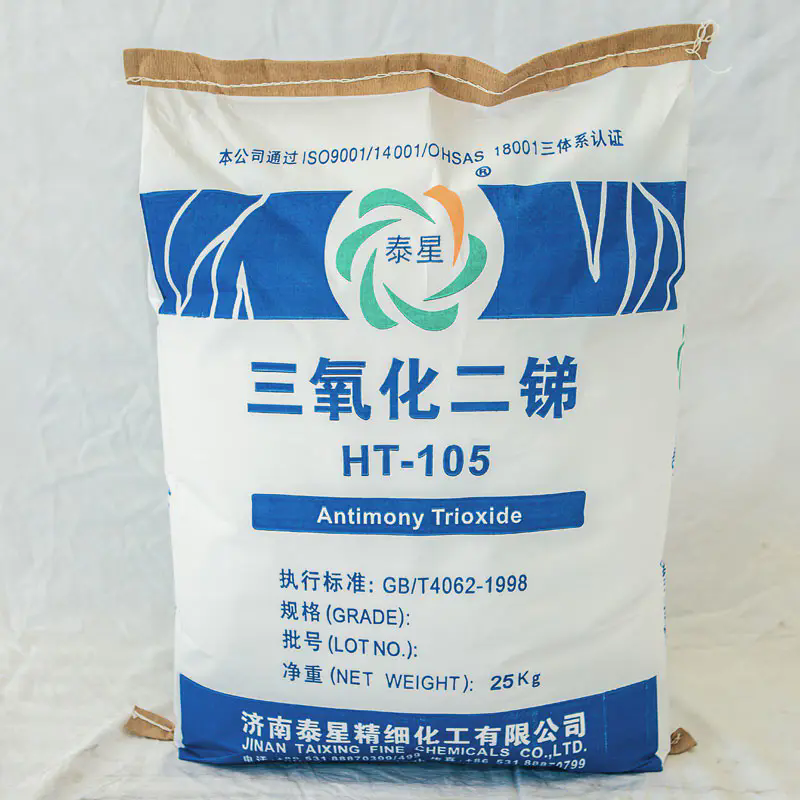
Table of Contents
- Overview of Antimony Trioxide
- Applications Across Industries
- Technical Specifications
- Production and Quality Standards
- Frequently Asked Questions
- Contact Us
Overview of Antimony Trioxide
Antimony Trioxide (Sb2O3) is an inorganic compound commonly used as a synergist in halogenated flame retardants. It enhances fire resistance by promoting char formation and slowing down the combustion process. Its high thermal stability, low toxicity, and compatibility with multiple polymers make it a preferred choice in fire safety applications.
Applications Across Industries
Antimony Trioxide is utilized in numerous industrial applications due to its excellent flame-retardant properties:
- Plastics: Used in PVC, polypropylene, and polyester to improve fire safety.
- Textiles: Incorporated into fibers and coatings to enhance fire resistance.
- Electronics: Applied in cables, circuit boards, and connectors to prevent fire hazards.
- Rubber: Adds flame retardancy in automotive and industrial rubber products.
- Adhesives and Coatings: Integrated to reduce flammability in industrial coatings and sealants.
Technical Specifications
The following table summarizes key product parameters of Antimony Trioxide supplied by Shandong Taixing:
| Parameter | Typical Value | Unit |
|---|---|---|
| Purity | ≥99.8 | % |
| Particle Size | 1–3 | μm |
| Bulk Density | 0.6–0.9 | g/cm³ |
| Moisture Content | ≤0.1 | % |
| Appearance | White Powder | - |
| CAS Number | 1309-64-4 | - |
Production and Quality Standards
Shandong Taixing employs advanced manufacturing processes to ensure consistent product quality. Key aspects include:
- High-Purity Raw Materials: Ensures flame retardant performance and low impurities.
- Stringent Quality Control: Multi-stage testing for particle size, purity, and moisture content.
- Environmentally Friendly Production: Compliance with industrial safety and environmental regulations.
- Customized Packaging: Bulk bags or drums based on client requirements to prevent contamination.
Frequently Asked Questions
Q1: What industries benefit most from Antimony Trioxide?
A1: Industries such as plastics, textiles, electronics, rubber, and coatings benefit significantly because it enhances fire resistance and meets regulatory fire safety standards.
Q2: How is Antimony Trioxide different from other flame retardants?
A2: Unlike halogen-free alternatives, Antimony Trioxide works synergistically with halogenated compounds to improve flame retardancy while maintaining material strength and processability.
Q3: Is Antimony Trioxide safe to handle?
A3: When proper industrial safety protocols are followed, including protective equipment and controlled environments, Antimony Trioxide is considered safe for manufacturing applications.
Q4: What forms of Antimony Trioxide are available?
A4: It is typically available as fine powder, coated grades, and ultra-fine particles suitable for diverse industrial processes.
Contact Us
Shandong Taixing is committed to providing high-quality Antimony Trioxide products that meet rigorous industrial standards. For inquiries, bulk orders, or technical consultation, contact us today to receive personalized support and competitive pricing.