
Perchlorate is a highly soluble inorganic anion that can occur naturally or result from industrial and human activities. Understanding its chemistry, sources, environmental behavior, analytical requirements, and potential health implications is essential for laboratories, environmental monitoring programs, water-treatment operations, and industrial users.
What Perchlorate Means Chemically
Perchlorate refers to the anion ClO4−, in which chlorine is bonded to four oxygen atoms. In its ionic form, perchlorate normally exists together with a positively charged ion, forming a salt. Common examples include ammonium perchlorate, sodium perchlorate, and potassium perchlorate.
From an analytical perspective, the perchlorate ion is especially important because it is highly soluble in water. Once introduced into an aqueous environment, it can remain dissolved rather than rapidly attaching to soil particles. This behavior makes the compound relevant to groundwater, surface-water, drinking-water, and environmental monitoring programs.
Common Sources of Perchlorate
Perchlorate can be naturally occurring, but industrial and human activities have historically been important sources of environmental releases. The United States Environmental Protection Agency identifies uses associated with solid rocket propellants, munitions, fireworks, airbag initiators, matches, and signal flares. Perchlorate has also been associated with certain fertilizers and improper handling of hypochlorite solutions used in water treatment.
The actual source of a detected concentration therefore needs to be evaluated according to the location, surrounding activities, historical land use, water pathway, and laboratory evidence rather than assumed from the analytical result alone.
| Potential Source | Why It Matters | Typical Monitoring Interest |
|---|---|---|
| Rocket propellant-related activities | Perchlorate salts have been used in energetic formulations. | Groundwater and soil investigations |
| Fireworks and signal devices | Perchlorate compounds may be used as oxidizing components. | Site and surface-water monitoring |
| Airbag initiators | Certain historical formulations have involved perchlorate chemistry. | Industrial and waste-site assessment |
| Fertilizers | Some fertilizers can contain naturally occurring perchlorate. | Agricultural water and groundwater studies |
| Water-treatment chemicals | Improper handling of hypochlorite solutions can be a potential source. | Drinking-water monitoring |
Key Chemical and Physical Properties
The practical importance of perchlorate comes largely from its chemical stability and strong water solubility. These characteristics influence transportation, storage, sample preparation, environmental migration, and analytical methodology.
High Water Solubility
Many perchlorate salts dissolve readily in water. As a result, perchlorate can move with groundwater or surface water and may travel beyond the original release location. Environmental investigations therefore often examine the relationship between the suspected source, groundwater flow direction, sampling locations, and concentration trends.
An Inorganic Anion
Perchlorate is an inorganic anion rather than an organic molecule. This distinction is important when selecting laboratory instrumentation. Ion chromatography is widely used because it separates ionic species according to their chromatographic behavior before detection.
Relatively Persistent Environmental Behavior
Perchlorate does not simply disappear from an aqueous system because the original source has been removed. Depending on site conditions, contaminated water can continue to contain dissolved perchlorate. Remediation and monitoring therefore require an understanding of both the source and the transport pathway.
How Perchlorate Behaves in Water and the Environment
One of the biggest practical challenges associated with perchlorate is its mobility in aqueous environments. Because dissolved perchlorate can travel with water, environmental testing may involve several types of samples, including drinking water, groundwater, surface water, and other aqueous matrices.
Concentration distribution is rarely uniform across a contaminated site. A sampling program may therefore need multiple locations and repeated measurements. A single positive result can identify the need for additional investigation, but it does not automatically establish the complete source or migration pathway.
Determine whether there is a historical or current activity capable of introducing perchlorate.
Consider groundwater movement, surface-water connections, and other potential transport routes.
Compare results from different sampling points to identify concentration patterns.
Repeated testing can help determine whether concentrations are stable, increasing, or declining.
Why Perchlorate Is Monitored for Health Reasons
Perchlorate receives particular attention because it can interfere with the thyroid's uptake of iodide. Iodide is required for thyroid hormone production, and thyroid hormones play important roles in metabolism, growth, and development.
The U.S. EPA explains that perchlorate can reduce iodide uptake by the thyroid and that changes in thyroid hormone production can have implications for sensitive populations. ATSDR similarly identifies the thyroid as a critical target and describes inhibition of iodide uptake as an important biological effect.
These scientific findings are one reason perchlorate measurement can be important in drinking-water and environmental monitoring. However, health risk interpretation depends on exposure level, exposure duration, iodine status, life stage, individual factors, and the applicable regulatory or scientific framework. An analytical result should therefore be interpreted in its proper context rather than viewed in isolation.
How Perchlorate Is Detected and Measured
Accurate perchlorate analysis requires suitable separation, detection, calibration, quality control, and consideration of matrix effects. Ion chromatography is a major analytical approach for aqueous samples. EPA Method 314.0, for example, describes the determination of perchlorate in reagent water, surface water, groundwater, and finished drinking water using ion chromatography.
In the method, a sample is introduced into an ion chromatograph. The perchlorate ion is separated from other ions using a chromatographic column and then measured with suppressed conductivity detection. The analytical system includes components such as a pump, injection system, guard column, analytical column, suppressor, and conductivity detector.
Common Analytical Considerations
- Sample matrix can affect separation and detection performance.
- Background inorganic anions may interfere with chromatographic measurement.
- Calibration standards need to be appropriate for the target concentration range.
- Retention time and quality-control criteria are important for reliable identification.
- Low-level measurements require careful control of contamination and analytical variability.
- Alternative analytical methods may be appropriate when additional selectivity or sensitivity is required.
EPA has also developed methods including 314.1, 314.2, 331.0, and 332.0 for perchlorate analysis. Depending on the laboratory, sample matrix, reporting requirement, and target detection capability, ion chromatography or liquid chromatography coupled with mass spectrometric detection may be considered.
| Analytical Approach | Main Principle | Typical Consideration |
|---|---|---|
| Ion Chromatography | Separates ionic species before conductivity-based detection. | Widely applicable to aqueous perchlorate analysis. |
| IC with Advanced Separation | Uses additional chromatographic strategies to manage matrix effects. | Useful when sample composition creates analytical challenges. |
| LC-MS/MS or Related MS Methods | Combines chromatographic separation with mass-based detection. | Can provide additional selectivity for demanding applications. |
Common Testing and Procurement Challenges
Challenge 1: The Required Detection Level Is Not Clearly Defined
Buyers sometimes specify only “perchlorate testing” without defining the expected concentration range, reporting limit, sample matrix, or applicable standard. This can lead to selecting an analytical solution that does not match the actual project requirement.
Challenge 2: Matrix Effects Are Underestimated
Clean laboratory water is considerably easier to analyze than a complex industrial or environmental sample. High ionic strength, organic content, or other dissolved species can influence chromatographic performance. Sample preparation and method selection should therefore be based on the actual matrix.
Challenge 3: Chemical Specifications Are Incomplete
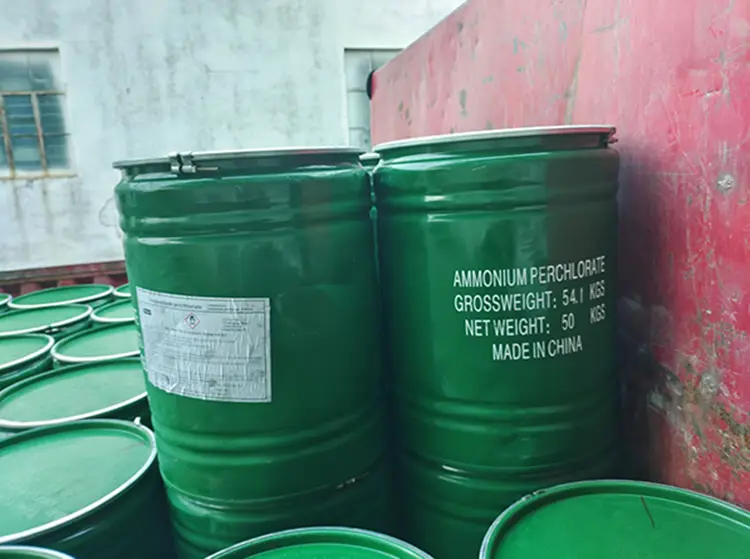
When purchasing perchlorate-related chemical products, buyers should not rely on the product name alone. Purity, chemical form, concentration, packaging, lot identification, certificate availability, and intended application can all affect suitability.
Challenge 4: Documentation Does Not Match the Application
A laboratory may require a certificate of analysis, traceability information, batch documentation, or a defined purity specification. These requirements should be clarified before an order is placed, especially when the chemical is intended for analytical standards, research, method development, or quality-control work.
How to Select Perchlorate-Related Chemical Products
For laboratories, research organizations, environmental testing companies, and industrial buyers, purchasing decisions should begin with the application rather than the product name. A suitable specification should provide enough information for the purchaser and laboratory team to confirm compatibility.
| Specification | Questions Buyers Should Confirm |
|---|---|
| Chemical form | Is the required material ammonium, sodium, potassium, or another perchlorate form? |
| Purity | Does the purity level meet the intended research, analytical, or industrial application? |
| Concentration | Is the material supplied as a solid, solution, or defined concentration? |
| Packaging | Is the package size suitable for laboratory consumption and storage requirements? |
| Documentation | Can the supplier provide batch information, specifications, and a certificate of analysis when required? |
| Application | Is the product intended for analytical work, research, process use, or another defined purpose? |
For commercial procurement, consistency between batches can be just as important as nominal purity. Laboratories often need predictable material quality because changes in reagent characteristics can complicate method validation, calibration, quality control, or comparative testing.
Applications and Industries That Monitor Perchlorate
Perchlorate-related products and analytical services can be relevant to several technical sectors. The exact specification depends on the intended use, regulatory environment, and laboratory procedure.
- Environmental laboratories: Testing groundwater, surface water, drinking water, and other environmental samples.
- Water utilities: Monitoring drinking-water sources and treatment-system performance where perchlorate is a concern.
- Research institutions: Studying perchlorate chemistry, environmental transport, analytical methods, and biological effects.
- Industrial laboratories: Investigating raw materials, process water, wastewater, and site conditions.
- Remediation projects: Tracking perchlorate concentrations before, during, and after treatment activities.
- Analytical method development: Developing or validating methods capable of measuring low concentrations in complex matrices.
In each application, the most useful procurement specification is the one that connects chemical quality with the actual analytical or process requirement. This reduces the risk of purchasing material that is technically correct by name but unsuitable for the intended procedure.
Frequently Asked Questions About Perchlorate
What is perchlorate?
Perchlorate is the anion ClO4−. It forms salts with positively charged ions and is known for its high water solubility and environmental mobility.
Where can perchlorate be found?
Perchlorate may occur naturally and can also be associated with industrial activities, certain energetic materials, fireworks, airbag initiators, fertilizers, and some water-treatment-related situations.
Why is perchlorate tested in drinking water?
Perchlorate can interfere with iodide uptake by the thyroid. Because thyroid hormones are important for metabolism, growth, and development, monitoring perchlorate can be relevant to drinking-water quality programs.
How is perchlorate commonly measured?
Ion chromatography is an established approach for perchlorate measurement in aqueous samples. Depending on the method and analytical requirement, more advanced chromatographic and mass-spectrometric techniques may also be used.
Can perchlorate move through groundwater?
Yes. Its high solubility allows dissolved perchlorate to move with water, which is why groundwater transport and site hydrogeology are important considerations during environmental investigations.
What should I provide when requesting a perchlorate quotation?
Provide the exact chemical form, purity or concentration, package size, quantity, intended application, required documentation, and destination market. If the material is for laboratory analysis, also specify whether a particular analytical grade or certificate is required.
Is every perchlorate product suitable for analytical work?
No. Product suitability depends on purity, impurities, concentration, chemical form, documentation, and the requirements of the analytical method. Buyers should confirm the specification against their laboratory procedure before purchase.
Need Perchlorate for Your Laboratory or Industrial Application?
Choosing the right perchlorate product starts with a clear understanding of the chemical form, purity, concentration, packaging, documentation, and intended use. Feixiang can work with B2B buyers to review technical requirements and provide product information for suitable perchlorate-related chemical solutions.
If you are sourcing perchlorate for laboratory analysis, research, environmental testing, industrial use, or method development, contact us with your required specifications, quantity, and application. Our team can help you clarify the appropriate product requirements before quotation and order confirmation.
Contact Us