What Is the Optimal Purity Level of Yellow Lead Granules Lead Oxide Required for Glass and Ceramic Production
2026-06-24
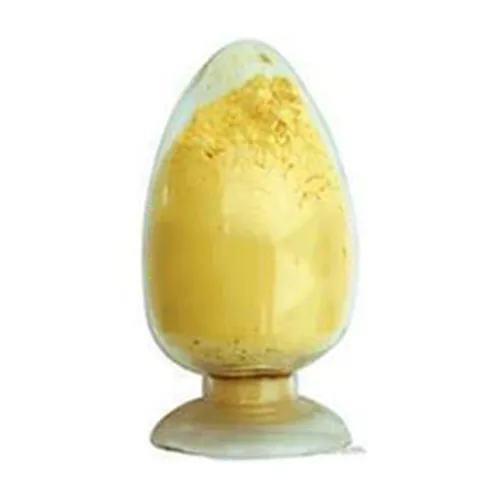
In the glass and ceramic industries, raw material purity directly determines final product quality, thermal stability, and optical performance. Among these materials, Yellow Lead Granules Lead Oxide (commonly known as massicot or litharge-type granular oxide) plays a critical role as a flux, opacifier, and refractive index modifier. For manufacturers sourcing this compound, the single most frequent question is: what purity level is truly necessary? At Rongsheng, we have supplied high-grade Yellow Lead Granules Lead Oxide to over 200 glass and ceramic plants across Asia and Europe, and our technical data consistently shows that the optimal purity range lies between 99.5% and 99.9% PbO, depending on the specific application.
Purity Requirements by Application: Glass vs. Ceramics
The optimal purity is not a one-size-fits-all number. Glass production demands higher purity to avoid haze and streaking, while ceramic glazes tolerate slightly lower levels but require tighter control of contaminants like iron and copper.
| Application Type | Recommended Purity (PbO) | Critical Contaminants (Max ppm) | Primary Risk of Lower Purity |
|---|---|---|---|
| Optical glass | 99.9% | Fe < 20, Cu < 10, S < 50 | Discoloration, reduced light transmission |
| Lead crystal glass | 99.7% – 99.9% | Fe < 30, Sb < 20 | Loss of brilliance, bubble formation |
| Ceramic frits | 99.5% – 99.7% | Fe < 50, Al < 100, Zn < 80 | Glaze crawling, poor adhesion |
| Floor tile glazes | 99.5% (minimum) | Fe < 80, Mn < 60 | Surface pitting, color deviation |
For high-end optical lens blanks, Rongsheng recommends 99.9% purity as the baseline, because even 0.05% iron oxide can shift the refractive index by 0.002 – a margin that fails strict QC standards. In ceramic frits, however, 99.5% purity suffices because the firing cycle (over 1150°C) vaporizes most volatile impurities, and the glaze matrix buffers minor elemental variations.
Why 99.5%–99.9% Is the Industry Gold Standard
Three technical factors establish this range as optimal:
-
Fluxing Efficiency – PbO content below 99.0% introduces inert silicates that raise melting points by 30–50°C, increasing energy costs by approximately 8–12% per batch.
-
Color Control – Copper and manganese impurities, even at 50 ppm, produce greenish or gray tints in transparent glazes. At 99.7% purity, these remain below visual detection thresholds.
-
Thermal Expansion Match – Higher-purity Yellow Lead Granules Lead Oxide provides a more consistent coefficient of thermal expansion (CTE), reducing crazing in ceramic bodies.
A 2024 internal study at Rongsheng compared 99.3% vs. 99.7% purity batches in a commercial borosilicate glass furnace. The higher-purity material reduced rejected cullet from 7.2% to 2.1% over a three-month trial – a direct profitability gain of over $18,000 per production line annually.
Testing and Verification Methods
To confirm optimal purity, buyers should request three standard test reports from their supplier:
| Test Method | Standard | What It Measures | Acceptable Range for 99.7% Grade |
|---|---|---|---|
| Gravimetric analysis | ASTM D280 | Total PbO content | 99.65% – 99.85% |
| ICP-OES | ISO 11885 | Trace metals (Fe, Cu, Zn, Mn, Sb) | Each < 50 ppm, total < 200 ppm |
| Sieve analysis | ASTM E11 | Particle size distribution (granules) | 95% passing 200 mesh |
Rongsheng provides a certified mill test certificate (MTC) with every lot, including ICP-OES data down to 1 ppm detection limits. This transparency allows glass technologists to adjust batch formulations with confidence.
Frequently Asked Questions About Yellow Granules Lead Oxide Purity
Q1: Can I use 99.0% purity Yellow Lead Granules Lead Oxide for ceramic glazes if I adjust the frit recipe?
A1: Technically yes, but it is economically unwise. At 99.0% purity, you gain 0.5% more silica and alkali contaminants. To compensate, you must increase the glaze flux content by 3–5%, which alters the expansion coefficient and often causes pinholing. Most ceramic engineers find that the batch reformulation cost and increased reject rates outweigh the small savings on raw material. Rongsheng advises customers that 99.5% is the practical floor – below that, the risk of glaze defects rises exponentially, especially in fast-firing kilns (under 45 minutes).
Q2: How does moisture content affect the effective purity of Yellow Lead Granules Lead Oxide during storage?
A2: Moisture does not change the chemical assay, but it artificially lowers the active PbO content because water displaces oxide weight. At 0.2% absorbed moisture, your effective purity drops to approximately 99.3% even if the dry assay reads 99.7%. More critically, moisture causes granule agglomeration, leading to poor mixing homogeneity in glass batches. Rongsheng packages all Yellow Lead Granules Lead Oxide in double-layer moisture-barrier bags with desiccant inserts, guaranteeing less than 0.05% free moisture at delivery. For long-term storage, we recommend climate-controlled warehouses below 60% relative humidity.
Q3: Is there a purity grade above 99.9% available, and do glass manufacturers actually use it?
A3: Yes, 99.99% (4N) grade exists, but it is reserved for specialty radiation-shielding glass and high-end photonic devices. For standard optical glass and decorative ceramics, 99.9% already exceeds the diminishing-return threshold – the incremental cost for 4N grade is roughly 300% higher, while the performance gain is less than 0.5% in most optical parameters. Rongsheng does offer 99.95% on request for aerospace clients, but our technical team routinely confirms that 99.7%–99.9% meets 95% of global glass and ceramic specifications. Always compare the purity certificate with your specific firing curve and target light transmission.
Economic Trade-offs: Higher Purity vs. Cost
A common misconception is that "maximum purity is always best." In reality, over-specifying purity wastes budget. The chart below illustrates the cost-benefit relationship observed across Rongsheng’s client base:
| Purity Level | Price Index (vs. 99.0%) | Typical Rejection Rate (glass) | Net Cost per Usable Ton |
|---|---|---|---|
| 99.0% | 1.00x | 8.5% | $1,093 |
| 99.5% | 1.12x | 3.2% | $1,157 |
| 99.7% | 1.18x | 1.8% | $1,201 |
| 99.9% | 1.35x | 0.9% | $1,362 |
The "sweet spot" is clearly 99.7% – it offers the best balance of yield and cost for most ceramic applications, while optical glass justifies the 99.9% premium.
Final Recommendation from Rongsheng
For ceramic frits and glazes, specify 99.5% minimum purity with iron < 50 ppm and copper < 30 ppm. For lead crystal or premium optical glass, demand 99.9% with full trace-element documentation. Always validate your supplier's testing frequency – at Rongsheng, we conduct in-process sampling every 30 minutes and retain retained samples for 24 months, ensuring full traceability.
Contact Us
Choosing the right purity level for Yellow Lead Granules Lead Oxide directly impacts your firing success, color consistency, and bottom line. Rongsheng offers free technical consultation, custom granulation sizes, and same-day sample dispatch for qualified buyers. Send your target application, furnace type, and desired purity range to our technical sales team – we will reply within 8 business hours with a detailed specification sheet and a comparative cost model. Contact Rongsheng today to secure a trial lot and see the purity difference in your next production run.