

What Manufacturing Challenges Can Anti-Friction TPR Material Solve in the Electronics Industry
2026-03-31
In the fast‑evolving electronics industry, manufacturers constantly seek materials that reduce wear, lower noise, and improve device longevity. Anti-Friction TPR material has emerged as a game‑changing solution. At Zhongsu Wang, we have seen how Anti-Friction TPR material addresses critical production pain points, from micro‑vibration damping to scratch‑free assembly.
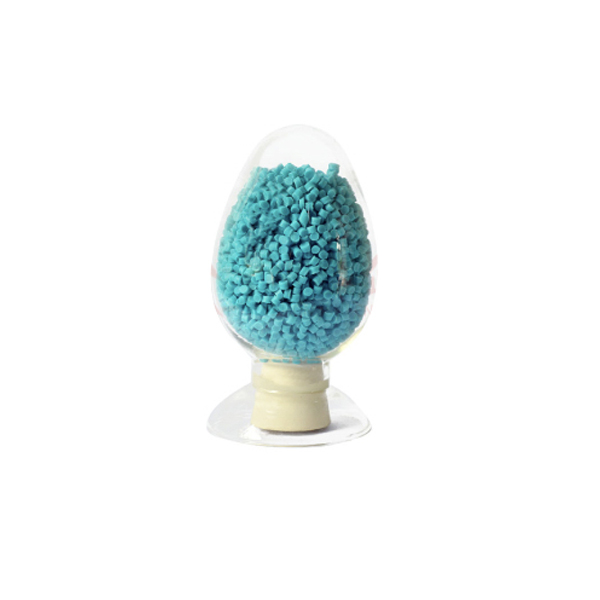
Key Manufacturing Challenges Solved by Anti-Friction TPR
| Challenge | How Anti-Friction TPR Material Solves It | Benefit for Electronics |
|---|---|---|
| Surface scratching during assembly | Low coefficient of friction prevents marring of delicate PCBs and coated enclosures | Higher yield, less rework |
| Micro‑vibration in compact devices | Viscoelastic damping absorbs high‑frequency oscillations | Stable performance in smartphones and wearables |
| Thermal expansion mismatch | Stable friction properties across -40°C to +80°C | Reliable operation in variable environments |
| Dust and particle generation | Non‑abrasive surface reduces particulate shedding | Cleanroom‑compatible for hard disk and lens modules |
| Insert molding complexity | Bonds seamlessly with ABS, PC, and nylon | Simplified overmolding, lower rejection rates |
Why Electronics Engineers Choose Zhongsu Wang
Zhongsu Wang provides custom‑formulated Anti-Friction TPR material tailored to automated pick‑and‑place lines, connector housings, and foldable hinge components. The material reduces static charge buildup and requires no additional lubricants, cutting both assembly time and maintenance costs.
Anti-Friction TPR Material FAQ
Q1: Can Anti-Friction TPR material withstand repeated sliding contact in USB‑C connectors?
A1: Yes. Anti-Friction TPR material maintains a dynamic coefficient of friction below 0.25 for over 10,000 insertion cycles. Unlike standard TPE, it does not cold‑flow or delaminate under cyclic shear. This makes it ideal for connector latches and port shutters where metal‑on‑plastic wear is a common failure mode. Zhongsu Wang validates each batch with a 20,000‑cycle wear test.
Q2: Does Anti-Friction TPR material interfere with EMI shielding or antenna performance?
A2: No. Anti-Friction TPR material is inherently dielectric with a volume resistivity >10¹² Ω·cm. It does not contain carbon black or metallic fillers unless specifically requested. When used as gaskets, bumpers, or sliding guides inside 5G devices or wireless chargers, it does not degrade signal integrity. Zhongsu Wang can supply RF‑transparent grades that pass standard near‑field emission tests.
Q3: How does Anti-Friction TPR material compare to PTFE in automated surface‑mount technology (SMT) trays?
A3: Anti-Friction TPR material offers three clear advantages over PTFE for SMT trays. First, it is less expensive to injection mold with shorter cycle times. Second, it provides better impact resistance, preventing tray cracking during robotic handling. Third, it does not creep under static load at 85°C, so component pockets maintain dimensional accuracy. PTFE remains superior for continuous high‑temperature exposure above 200°C, but for most SMT storage and transport applications, Anti-Friction TPR material delivers better overall value. Zhongsu Wang offers grades with heat deflection up to 120°C for reflow‑adjacent uses.
Conclusion
From reducing scratch defects to enabling cleaner assembly lines, Anti-Friction TPR material solves multiple manufacturing challenges in the electronics industry. Zhongsu Wang combines material science expertise with precision compounding to help OEMs and contract manufacturers achieve higher throughput and lower scrap rates.
Contact us today for a custom sample or technical consultation. Our engineers will match the right Anti-Friction TPR material to your production line.