

What Quality Factors Should Buyers Evaluate in GPPS Resin Pellets?
2026-11-24
What Quality Factors Should Buyers Evaluate in General-Purpose Polystyrene Resin Pellets?
General-Purpose Polystyrene Resin is widely used in plastic injection molding and extrusion because of its rigidity, dimensional stability, natural transparency and convenient processing characteristics. However, choosing the right pellets requires more than checking the material name or quoted price. Buyers need to evaluate polymer consistency, melt flow behaviour, colour, contamination, physical properties and batch stability before placing regular orders. These factors directly influence production efficiency, finished-product appearance and the amount of material that may be rejected during manufacturing.
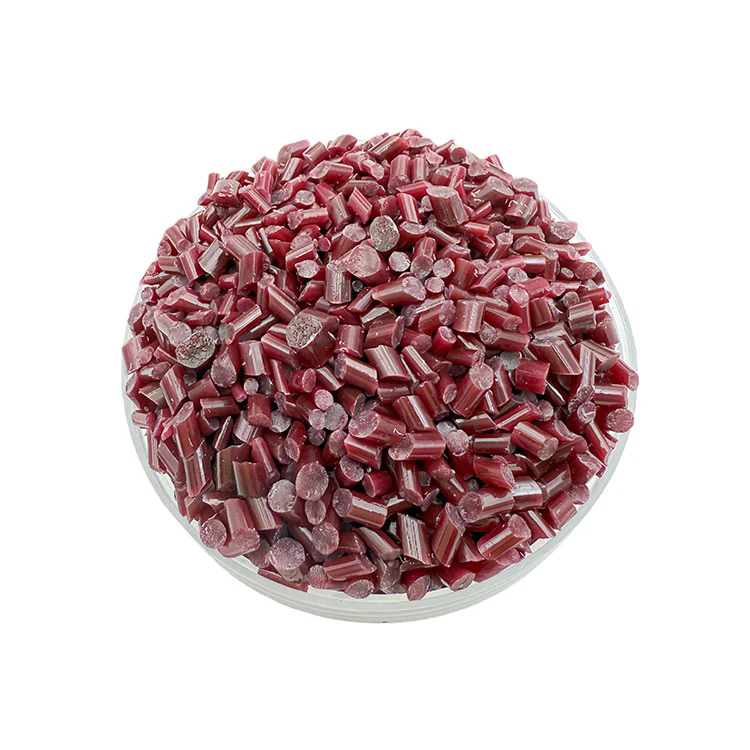
For manufacturers purchasing recycled PS pellets, quality evaluation also involves understanding the feedstock, sorting process and material-control procedures. Ningbo JUWU International Trading Co., Ltd. specializes in recycled PS pellet production, processing and trading. Its published product information includes tea-coloured, black, red and white pellets, with a factory established in 2001 and more than 20 years of experience in PS and GPPS processing. Buyers should match each material grade with its intended application and verify the relevant technical properties before confirming an order.
1. Which Physical Properties Determine the Quality of GPPS Pellets?
Physical properties provide the first basis for evaluating plastic resin quality. Before a material enters an injection molding or extrusion line, buyers should understand its appearance, pellet uniformity, colour consistency, density and general condition. These characteristics may seem straightforward, but they can influence material handling, feeding stability and the appearance of finished plastic products. A consistent pellet supply makes it easier for production teams to maintain stable processing conditions and identify abnormal changes between batches.
Pellet appearance is one of the easiest indicators to check during incoming inspection. A suitable batch should have a reasonably consistent shape, size and colour according to the agreed product specification. Excessive fines, dust, irregular fragments or foreign particles may indicate problems during production, screening, packaging or transportation. Although appearance inspection cannot replace laboratory testing, it provides a useful initial assessment of whether the delivered material matches the approved sample.
Colour consistency deserves particular attention when the resin will be used in visible products. Tea-coloured, black, red and white recycled PS pellets may serve different manufacturing requirements. Buyers should confirm the required colour before ordering and compare the delivered batch with an approved reference sample. A noticeable colour difference can affect the appearance of molded products, especially when the finished parts are produced in large quantities or supplied to customers who require consistent visual presentation.
Density is another useful material property. It can help buyers compare grades, check material consistency and assess whether a delivered product is consistent with its technical specification. However, density should not be treated as a complete indicator of resin quality. Two materials with similar density values may differ in melt flow behaviour, contamination level, mechanical performance and thermal characteristics. Buyers should therefore evaluate density alongside other relevant test results rather than using it as the only acceptance criterion.
Pellet uniformity also affects the practical operation of production equipment. Significant differences in pellet dimensions or excessive fines may influence feeding behaviour, particularly in automated conveying and dosing systems. A stable pellet form helps maintain predictable material flow from the hopper to the processing unit. For manufacturers operating continuous production lines, inconsistent feeding can lead to interruptions, uneven plasticizing or additional cleaning requirements.
Our quality assessment should distinguish between visible appearance and verified material performance. A batch that looks clean and uniform may still have an unsuitable melt flow rate or inconsistent mechanical properties. Conversely, a material intended for a coloured or non-transparent application may not require the same optical appearance as a clear-grade resin. The acceptance criteria should reflect the actual product requirements instead of applying one general appearance standard to every grade.
2. How Do Melt Flow, Thermal Behaviour and Mechanical Properties Affect Material Selection?
Melt flow behaviour is one of the most important factors when selecting a resin for a specific production process. Melt flow rate, commonly abbreviated as MFR or MFI in commercial discussions, indicates how much molten polymer flows through a standard test opening under defined temperature and load conditions. It provides a reference for comparing the flow characteristics of different material grades. However, an MFR value is meaningful only when the test temperature, applied load and test method are also specified.
A material with a higher melt flow rate generally flows more easily under the same test conditions, while a lower value indicates greater resistance to flow. In injection molding, flow behaviour influences cavity filling, the ability to reproduce product details and the pressure required during processing. In extrusion, it affects melt stability and the conditions needed to maintain a consistent output. Neither a high nor a low value is automatically better. The appropriate range depends on the product design, equipment configuration and processing requirements.
Thermal behaviour should be reviewed alongside melt flow. Polystyrene is a thermoplastic material, meaning it softens when heated and solidifies during cooling. Its processing characteristics depend on the selected grade, temperature profile, residence time and equipment conditions. Excessive thermal exposure may contribute to degradation, discolouration or changes in processing behaviour. Buyers should request the supplier's recommended processing information where available and confirm that the material can operate within the production line's practical temperature range.
Mechanical properties determine whether the material can meet the physical demands of the finished product. GPPS is generally valued for its rigidity, hardness and dimensional stability, but it is relatively brittle compared with impact-modified polystyrene and several engineering plastics. This distinction is important when the finished component may experience impact, repeated bending or mechanical stress. A resin that processes easily may still be unsuitable if the final product requires greater toughness.
Tensile strength, elongation at break, flexural properties and impact performance may all be relevant, depending on the application. Buyers should request the properties that directly relate to the product's intended use. Each reported value should be accompanied by its test method and specimen conditions. Results obtained using different methods or specimen preparation procedures may not be directly comparable, so a technical data sheet should be reviewed as a complete document rather than as a list of isolated numbers.
The following table summarizes the main properties buyers can include in a material evaluation. The actual acceptance limits should be agreed with the supplier for the specific grade and application.
| Quality factor | What buyers should check | Why it matters |
| Melt flow rate | Measured value, test temperature and applied load | Helps assess processing flow and grade consistency |
| Density | Test result and applicable method | Supports material identification and batch comparison |
| Tensile properties | Strength and elongation under specified test conditions | Indicates resistance to tensile loading |
| Impact performance | Test method, specimen preparation and measured result | Helps assess resistance to sudden loading |
| Thermal properties | Relevant softening or heat-related test results | Supports application and processing assessments |
| Colour consistency | Approved reference sample and batch comparison | Reduces visible variation in finished products |
For JUWU, buyers should request the technical data available for the exact recycled PS grade under consideration. General company experience and product-category information cannot replace grade-specific MFR, density or mechanical test results. Where a particular numerical property has not been confirmed, it should be treated as an item for technical clarification rather than assumed from the general GPPS classification.
3. What Contamination and Batch-Control Issues Should Buyers Check?
Contamination is a major quality concern in recycled plastic materials. Unlike a specification that focuses only on the appearance of the pellets, contamination control examines whether unwanted substances or incompatible polymers may affect the finished product. Potential sources include mixed plastic feedstock, residual labels, adhesives, dust, metal fragments, degraded polymer and material carried over from previous production runs. Even a relatively small amount of unwanted material may create visible defects or affect processing consistency, depending on the product and application.
Polymer separation is particularly important. Different plastics can have different melting and processing characteristics. If incompatible polymers enter a GPPS batch, they may not blend uniformly during processing. This can contribute to surface defects, weak areas, inconsistent appearance or unstable production behaviour. Buyers should ask how the supplier identifies and separates the incoming feedstock and whether material identification or sorting procedures are used.
Filtration and screening are also relevant to recycled pellet production. Screening can help remove oversized particles and fines, while suitable filtration during processing may reduce certain solid contaminants. However, filtration should not be described as a guarantee that every type of contamination has been eliminated. The effectiveness of a control process depends on the equipment, operating conditions and the nature of the contaminants. Buyers should discuss the actual process and request supporting information when contamination limits are critical.
Batch consistency is closely connected with feedstock management. Recycled material may originate from different sources, and variations in the incoming material can affect colour, flow behaviour and other properties. A supplier should have a practical method for identifying production batches and maintaining traceability. Batch numbers, production records and retained samples can help both parties investigate differences between shipments and determine whether a complaint relates to the material, storage or processing conditions.
Packaging and transportation should not be overlooked. Pellets may be exposed to moisture, dust or foreign substances if packaging is damaged or not properly sealed. Buyers should check the condition of bags or other packaging on arrival and confirm that the material has been stored in a suitable environment. During warehouse handling, separate storage areas and clear product identification can reduce the risk of mixing different grades or colours.
Our factory evaluation should include a discussion of the production and inspection procedures that support batch consistency. Buyers can ask about feedstock selection, sorting, screening, filtration, colour control, packaging and batch identification. These questions help establish whether the supplier's quality practices are appropriate for the intended use. They also provide a more reliable basis for comparison than price or pellet appearance alone.
Incoming inspection can be organized into several levels. A basic visual check identifies packaging damage, colour differences, excessive fines and obvious foreign particles. A more detailed inspection may include sampling, laboratory testing and comparison with an approved technical specification. For recurring orders, buyers should agree on a sampling frequency and acceptance procedure before production begins. This avoids inconsistent decisions when different batches arrive at different times.
For materials used in demanding applications, buyers may also need to define limits for ash content, moisture, foreign matter or other application-specific indicators. These values should not be assumed or invented when they are absent from the supplier's documentation. Instead, the purchasing specification should identify which tests are required, how samples are collected and what limits will be used for acceptance. A clear agreement makes it easier to resolve quality issues objectively.
4. How Can Buyers Verify Supplier Specifications Before Placing an Order?
A reliable purchasing decision combines technical documentation, sample evaluation and supplier communication. A product description can explain the general material category, but it rarely provides every detail needed for industrial production. Buyers should request a technical data sheet for the exact grade and confirm that the information applies to the material being quoted. If the supplier provides several colour or performance options, each should be identified separately to prevent confusion during ordering and repeat procurement.
The first document to review is the technical data sheet. It should identify the material grade and provide relevant physical, mechanical and processing properties where these are available. Test methods and conditions are essential because they determine how the values should be interpreted. If a document lists an MFR value without the test temperature and load, for example, the result is incomplete for meaningful comparison. Buyers should request clarification rather than treating an isolated figure as a universal specification.
A safety data sheet serves a different purpose. It provides information about material handling, storage, potential hazards and emergency measures. It should not be confused with a technical data sheet or used as proof of mechanical or processing performance. Depending on the destination market and application, buyers may also need additional compliance documents. Any certification or regulatory statement should be checked against the exact product, scope and intended use.
Sample testing is an essential step before approving a new grade. Buyers should request a representative sample and compare it with the agreed specification. Testing may include pellet appearance, colour, melt flow rate, density and application-specific mechanical properties. If the material is intended for injection molding or extrusion, a production trial can provide additional evidence about feeding, melting, filling, surface quality and finished-part consistency.
The trial should use realistic production conditions wherever possible. A small laboratory specimen may not reproduce the wall thickness, flow length or cooling behaviour of the actual product. Manufacturers should record the machine settings, material batch, mold or die conditions and inspection results. This information makes it easier to identify whether a defect is caused by the resin, processing conditions or product design.
Our buyers should also clarify the commercial details before confirming an order. These include the exact grade, colour, packaging format, order quantity, delivery schedule and batch identification requirements. If the material will be purchased repeatedly, both parties should agree on how changes to feedstock or production conditions will be communicated. A clear specification reduces the risk of receiving a product that has the correct general name but does not match the previously approved material.
The following checklist can help structure supplier evaluation and incoming quality control.
| Verification stage | Buyer action | Expected evidence |
| Product identification | Confirm polymer type, grade and colour | Written product specification |
| Technical review | Check MFR, density and relevant mechanical properties | Grade-specific technical data sheet |
| Contamination control | Ask about sorting, screening and filtration | Process information or quality-control records |
| Sample approval | Test a representative batch | Sample evaluation and test results |
| Production trial | Run the material on intended equipment | Processing records and finished-part inspection |
| Repeat procurement | Agree on batch identification and acceptance limits | Order specification and traceability records |
Ningbo JUWU International Trading Co., Ltd. provides recycled PS pellets and has experience in PS and GPPS processing. Its published information identifies a 5,000 square metre factory established in 2001, while the trading company was established in 2017. The company also lists a monthly capacity figure of 2,400 tons in its profile. Buyers should confirm the current availability, grade coverage and applicable production capacity for the specific material they intend to purchase, rather than assuming that every listed figure applies to every product option.
A supplier comparison should ultimately consider technical suitability, quality consistency, communication, delivery reliability and total procurement cost. A low quotation may not represent good value if the material causes frequent production adjustments, high rejection rates or inconsistent finished products. Equally, a more expensive grade may not be necessary when the application has relatively simple performance requirements. The best purchasing decision is based on verified specifications and actual production results.
Conclusion
Evaluating GPPS pellet quality requires a structured review of physical appearance, melt flow behaviour, mechanical properties, thermal characteristics, contamination control and batch consistency. Buyers should request grade-specific documentation, confirm test methods and verify samples under realistic production conditions. For recycled materials, feedstock management and traceability are especially important because they can influence the consistency of the finished product.
Ningbo JUWU International Trading Co., Ltd. offers experience in recycled PS pellet production and processing, with several colour options identified in its published product information. If you are sourcing General-Purpose Polystyrene Resin for injection molding or extrusion, contact our team to discuss the required grade, colour, application and available technical information. Share your material requirements and procurement quantity so the appropriate product details can be confirmed before sampling and ordering.