

What Role Does PTFE Emulsion Play in Lithium Battery Binder and Electrode Manufacturing
2026-11-17
In modern lithium-ion battery production, PTFE Emulsion has become a critical material for binder formulation and electrode manufacturing, particularly in high-performance and specialty cell designs. At Nianjing, we supply high-purity PTFE Emulsion grades engineered for consistent particle size, excellent film-forming behavior, and reliable fibrillation, helping battery manufacturers achieve stable slurry processing and durable electrode structures.
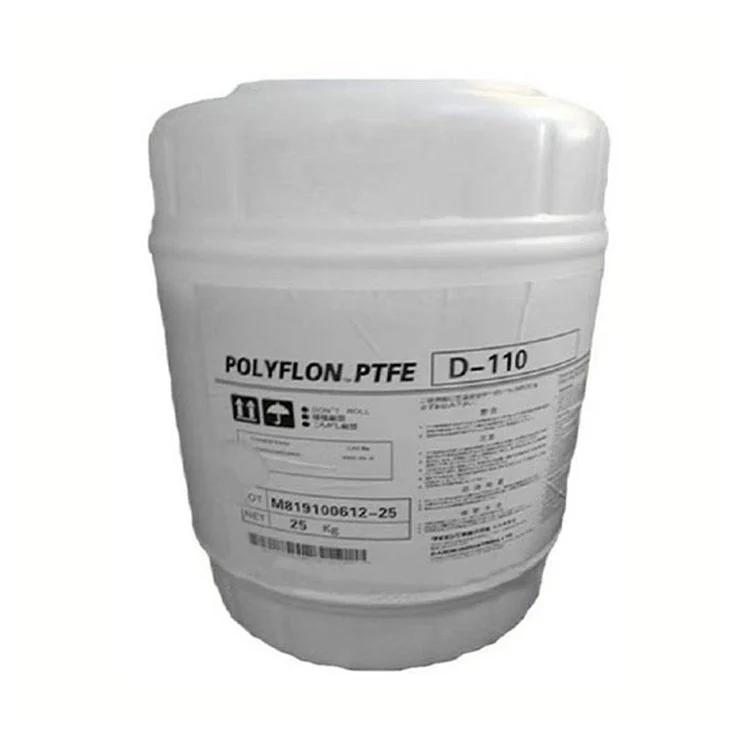
Why PTFE Emulsion Matters in Battery Binders
PTFE Emulsion functions as a fluoropolymer binder that delivers chemical inertness, thermal stability, and mechanical flexibility. Unlike conventional PVDF systems, PTFE Emulsion supports dry-process and aqueous processing routes, reduces solvent load, and improves electrode integrity under aggressive cycling conditions.
| Binder Property | Benefit in Electrode Manufacturing |
|---|---|
| Chemical inertness | Resists electrolyte attack and side reactions |
| Thermal stability | Withstands high-temperature drying and calendering |
| Fibrillation capability | Forms strong conductive networks in dry processing |
| Low surface energy | Improves coating uniformity and release behavior |
| Aqueous dispersion form | Reduces organic solvent usage |
Key Roles of PTFE Emulsion in Electrode Manufacturing
-
Slurry stabilization: Uniform PTFE Emulsion particles prevent aggregation and support consistent mixing.
-
Binder network formation: During drying, PTFE Emulsion forms fibrous structures that bind active material and conductive additives.
-
Adhesion improvement: Enhanced bonding between coating and current collector reduces delamination.
-
Flexibility and crack resistance: Electrodes tolerate volume expansion during charge-discharge cycles.
-
Dry electrode processing: PTFE Emulsion enables solvent-free or low-solvent routes for thick electrodes.
Processing Parameters That Influence Performance
| Parameter | Recommended Range | Impact |
|---|---|---|
| Solids content | 40–60% | Affects viscosity and coating thickness |
| Particle size | 0.1–0.3 μm | Influences dispersion stability |
| Drying temperature | 80–120°C | Controls film formation |
| Shear during mixing | Moderate | Promotes fibrillation without degradation |
| pH adjustment | 8–10 | Maintains emulsion stability |
PTFE Emulsion FAQ
Q: What makes PTFE Emulsion suitable for lithium battery binders?
A: PTFE Emulsion offers outstanding chemical inertness, thermal stability up to high operating temperatures, and strong fibrillation behavior. These properties allow it to bind active materials securely while resisting electrolyte degradation, which extends cycle life and improves electrode reliability.
Q: How does PTFE Emulsion compare with PVDF in electrode manufacturing?
A: PTFE Emulsion provides superior thermal and chemical resistance and supports aqueous or dry processing, reducing solvent costs and environmental load. PVDF offers well-established slurry behavior, but PTFE Emulsion is increasingly favored for high-temperature and specialty cells requiring robust mechanical integrity.
Q: What should be considered when storing and handling PTFE Emulsion?
A: Store PTFE Emulsion between 5°C and 30°C, avoid freezing, and gently agitate before use to maintain dispersion uniformity. Keep containers sealed to prevent contamination, and follow proper shear control during mixing to preserve particle stability and fibrillation performance.
Conclusion
PTFE Emulsion plays a decisive role in binder formulation and electrode manufacturing by improving adhesion, flexibility, and processing versatility. With Nianjing's specialized PTFE Emulsion portfolio, battery producers can optimize slurry design, reduce solvent dependence, and achieve consistent electrode quality at scale.
Contact us today to request PTFE Emulsion samples, technical data sheets, and tailored formulation support for your lithium battery projects.