
What Test Methods Should Be Used to Evaluate Mullite Powder Sand in a Thermal Insulation Material
2026-11-10
Selecting the right raw materials is the foundation of reliable thermal protection, and Mullite Powder Sand for Thermal Insulation Material plays a decisive role in the performance of refractory linings, castables, and insulating bricks. At Jar Hing, we have supported manufacturers and engineers in verifying material quality through disciplined laboratory testing, because the difference between acceptable and excellent insulation often comes down to measurable data rather than visual inspection. This guide outlines the test methods that matter most when qualifying Mullite Powder Sand for demanding thermal applications.
Why Testing Matters Before Production
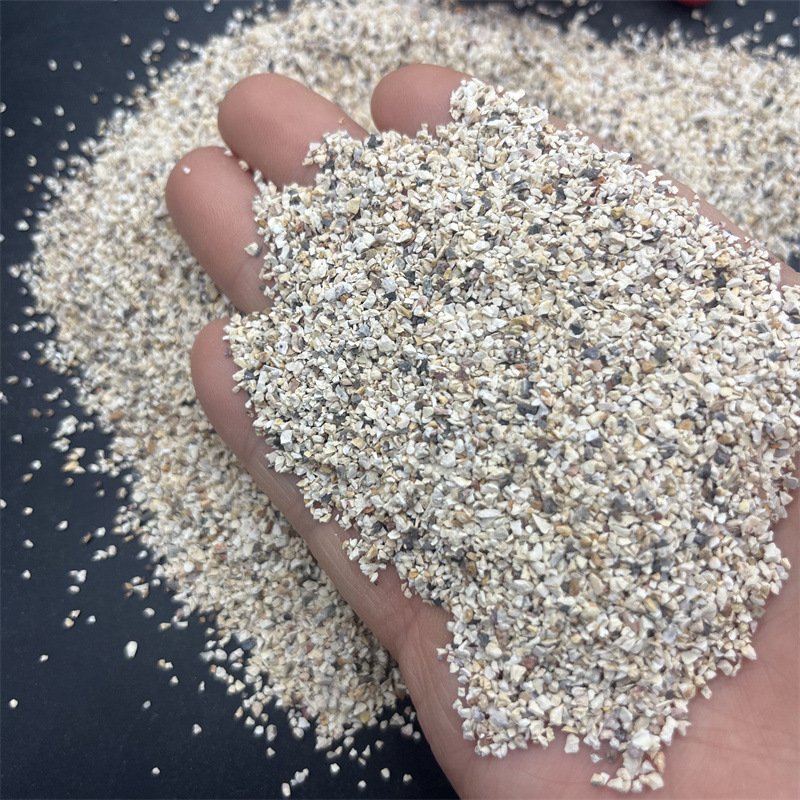
Mullite Powder Sand is valued for its refractoriness, low thermal conductivity, and dimensional stability. However, natural variation in mineral source, calcination temperature, and particle grading can shift performance significantly. A structured testing protocol protects kiln efficiency, reduces lining failure risk, and supports consistent batch-to-batch quality. Jar Hing recommends evaluating both chemical and physical indicators before approving any shipment for production.
Key Test Methods at a Glance
| Test Category | Method / Standard | What It Reveals | Typical Target |
|---|---|---|---|
| Chemical composition | XRF spectrometry | Al₂O₃, SiO₂, Fe₂O₃, alkalis | High Al₂O₃, low iron and alkalis |
| Mineral phase | XRD analysis | Mullite content, corundum, glassy phase | High mullite crystallinity |
| Particle size distribution | Laser diffraction / sieve analysis | Grading consistency, fines content | Matches formulation design |
| Bulk density | EN 1097-3 / GB/T 2999 | Packing efficiency, porosity | Stable within batch |
| Thermal conductivity | Hot-wire or guarded hot plate | Insulation efficiency | Low λ at service temperature |
| Refractoriness | RUL and PCE tests | Load-bearing capacity at heat | Meets application rating |
| Loss on ignition | Muffle furnace | Moisture, carbonates, organics | Low and consistent |
| Moisture content | Oven drying | Storage and handling quality | Below agreed limit |
Chemical and Mineralogical Analysis
X-ray fluorescence (XRF) confirms the alumina-silica ratio and flags impurities such as iron oxide and alkalis that raise conductivity and reduce refractoriness. X-ray diffraction (XRD) then quantifies mullite phase development. For Mullite Powder Sand for Thermal Insulation Material, a well-crystallized mullite phase is a strong indicator of thermal stability. Jar Hing treats these two tests as the baseline for material acceptance.
Physical and Thermal Performance Testing
Particle size distribution directly affects packing density and pore structure, which in turn govern insulation performance. Laser diffraction or sieve analysis should be paired with bulk density and porosity measurement. Thermal conductivity testing using the hot-wire or guarded hot plate method verifies whether the Mullite Powder Sand delivers the expected insulating value at operating temperature. Refractoriness under load (RUL) and pyrometric cone equivalent (PCE) tests confirm behavior under combined heat and load.
Sampling and Quality Control Discipline
Representative sampling is essential. Composite samples should be taken from multiple positions in each lot, quartered, and dried before testing. Jar Hing recommends retaining reference samples for traceability and repeating critical tests at defined intervals to detect drift in supplier quality.
Frequently Asked Questions
Q: What is the most important test for Mullite Powder Sand for Thermal Insulation Material?
A: Chemical composition by XRF combined with XRD mineral phase analysis is the most important starting point, because alumina content and mullite crystallinity determine refractoriness and thermal stability; these should always be supported by particle size and thermal conductivity testing.
Q: How often should Mullite Powder Sand for Thermal Insulation Material be tested?
A: Every incoming lot should receive chemical and particle size checks, while thermal conductivity and RUL tests can be performed per batch or at agreed intervals, and any change in supplier, mine source, or calcination process should trigger full re-qualification.
Q: Can thermal conductivity of Mullite Powder Sand for Thermal Insulation Material be predicted from density alone?
A: Density is a useful indicator but not a substitute, because pore structure, phase composition, and fines content also influence heat transfer, so direct conductivity measurement at service temperature remains necessary for reliable insulation design.
Conclusion and Contact
Consistent testing turns Mullite Powder Sand from a commodity into a predictable engineering material. Jar Hing supplies tested, traceable Mullite Powder Sand for Thermal Insulation Material and supports customers with sampling guidance, specification review, and application advice. Contact us today to discuss your testing requirements, request a technical data sheet, or arrange samples for your next thermal insulation project.