

Which Industrial Grade Colloidal Silica Meets the Requirements of Low Sodium Custom Silica Sol Applications?
2026-11-18
Industrial grade colloidal silica is widely used in precision investment casting, refractory materials, ceramic manufacturing, coatings, polishing, and other industrial processes. However, when production requirements become more demanding, standard silica sol may not provide the required sodium content, particle size distribution, solids concentration, or chemical stability. Low sodium custom silica sol offers a practical solution for manufacturers who need better control over material composition and process compatibility.
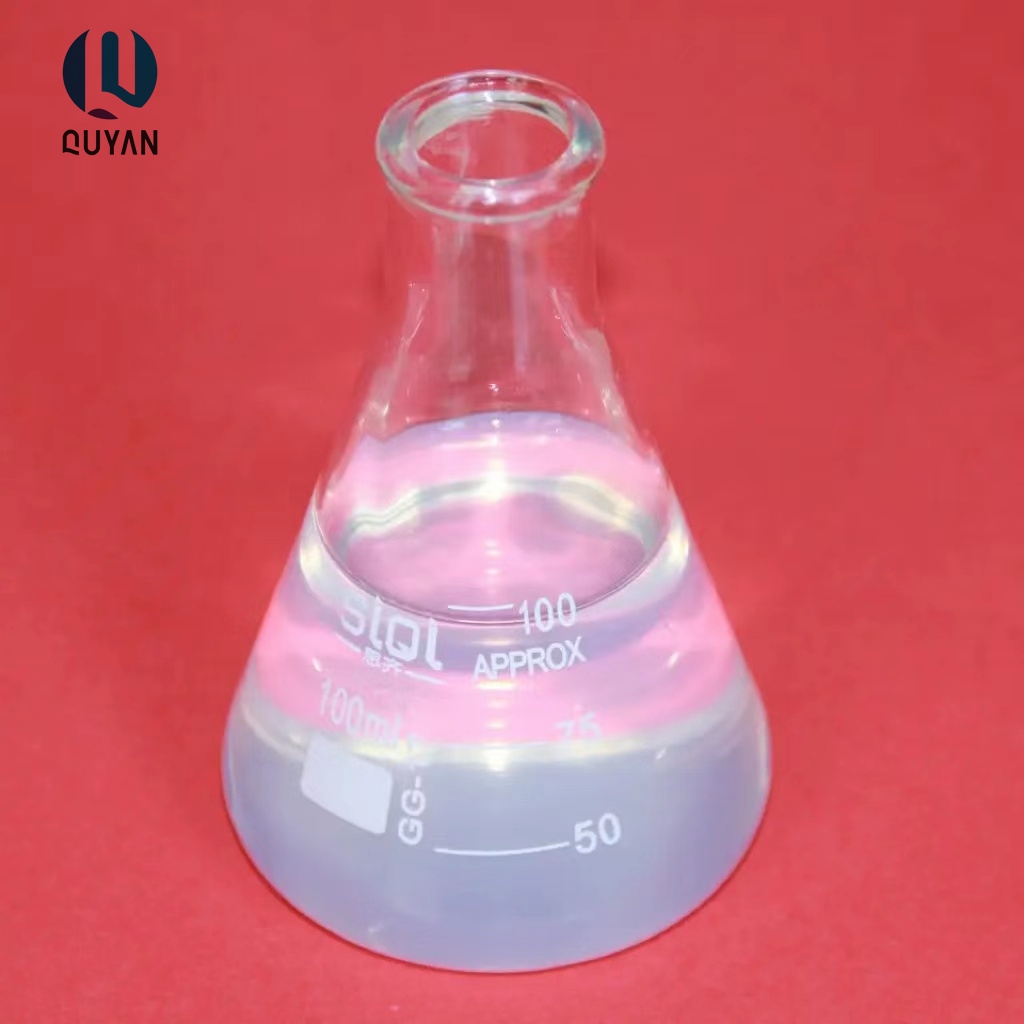
Table of Contents
- What Is Industrial Grade Colloidal Silica?
- Why Does Low Sodium Content Matter?
- Key Properties of Custom Silica Sol
- How Is Industrial Colloidal Silica Manufactured?
- Major Industrial Applications
- How to Choose the Right Low Sodium Silica Sol
- Common Production Challenges and Solutions
- Quality Control and Product Testing
- Storage, Handling, and Transportation
- Why Work with a Custom Silica Sol Supplier?
- Frequently Asked Questions
1. What Is Industrial Grade Colloidal Silica?
Industrial grade colloidal silica, also known as silica sol, is a stable liquid dispersion of extremely fine amorphous silicon dioxide particles in a liquid medium, most commonly water. Unlike ordinary silica powder, colloidal silica is supplied in liquid form, allowing fine silica particles to be distributed throughout a formulation without requiring the same powder-dispersion process.
These particles are generally measured in nanometers. Their small size and large specific surface area make them useful in applications that require binding performance, surface modification, polishing, and controlled deposition of silica.
When water evaporates from a silica sol formulation, the particles can approach one another and form a connected silica structure. Under appropriate application conditions, this structure contributes to bonding, coating formation, and improved surface properties.
What Makes Industrial Grade Silica Sol Different?
Industrial grade silica sol is designed for manufacturing processes rather than laboratory experimentation alone. Its formulation must meet practical production requirements, including consistent solids content, manageable viscosity, suitable pH, controlled particle size, and reliable storage stability.
Different industries require different material characteristics. A precision casting manufacturer may prioritize shell strength, slurry stability, and surface quality, while a polishing formulation producer may pay greater attention to particle uniformity, contamination levels, and surface finishing performance.
Industrial Colloidal Silica and Custom Silica Sol
Standard industrial silica sol is generally supplied with established specifications. Custom silica sol, however, is developed around the customer's production requirements. Depending on manufacturing capabilities, customization may involve SiO₂ concentration, particle diameter, pH, sodium content, stabilizing system, viscosity, and packaging.
For manufacturers operating under strict chemical or process specifications, customized material can help reduce formulation adjustments and improve production consistency.
2. Why Does Low Sodium Content Matter?
Sodium content is an important consideration when selecting industrial colloidal silica. Although sodium-containing stabilization systems are used in many commercial silica sols, certain production processes require tighter control over alkali metal content.
Excessive sodium may influence the chemical behavior of a formulation, particularly in applications sensitive to alkali ions, moisture exposure, surface chemistry, or product purity. Its effect depends on the complete formulation and the conditions under which the silica sol is used.
2.1 Better Control of Chemical Composition
Low sodium silica sol can help manufacturers meet defined chemical composition limits. This is especially important when the final product must satisfy customer specifications for sodium or total alkali content.
For example, certain electronic material formulations, precision polishing systems, and specialty coatings may require closer control over trace ionic impurities than conventional industrial applications.
2.2 Compatibility with Sensitive Formulations
Some formulations are sensitive to the presence of additional ions. Sodium can influence ionic strength and surface charge conditions, potentially affecting dispersion behavior or interactions with other formulation ingredients.
When a process is sensitive to ionic composition, selecting a suitable low sodium silica sol may reduce the risk of unwanted chemical interactions. Compatibility should still be confirmed through laboratory testing with the complete formulation.
2.3 More Predictable Process Performance
In processes with strict material specifications, controlling sodium content helps reduce one source of raw material variation. This can make incoming material inspection and batch qualification more straightforward.
Low Sodium Does Not Automatically Mean Better for Every Application
Low sodium is a specific material requirement, not a universal measure of product quality. Some conventional sodium-stabilized silica sols are suitable for industrial applications where their composition meets the process requirements.
The correct product should be selected according to chemical compatibility, stabilization system, operating conditions, and final performance rather than focusing on a single specification.
3. Key Properties of Custom Silica Sol
Understanding the technical properties of colloidal silica helps buyers compare products and communicate more effectively with manufacturers. Several parameters should be evaluated together because changing one characteristic may influence other properties.
3.1 SiO₂ Concentration
SiO₂ concentration indicates the proportion of silicon dioxide in the liquid dispersion. Industrial products are available in different solids concentrations, with grades around 30% and 40% commonly used in manufacturing applications.
Higher concentration can reduce the amount of water introduced into a formulation and may lower transportation volume per unit of silica solids. However, concentration can also affect viscosity, storage stability, and ease of handling.
3.2 Particle Size and Distribution
Particle size influences specific surface area, dispersion behavior, penetration, and the development of silica networks. Smaller particles generally provide greater surface area per unit mass, while larger particles may offer different rheological and packing characteristics.
Particle size distribution is also important. A consistent distribution helps reduce unexpected variations in slurry behavior and finished product performance.
3.3 Sodium Content
Sodium content is commonly expressed as Na, Na₂O, or another agreed analytical basis. Buyers should specify the required maximum value and the testing method used for verification.
3.4 pH Value
The pH of silica sol influences particle surface charge and dispersion stability. Alkaline, acidic, and ammonia-stabilized systems behave differently. A product with an unsuitable pH may be incompatible with the customer's formulation or process conditions.
3.5 Viscosity and Density
Viscosity affects pumping, mixing, coating, and application behavior. Density helps verify product consistency and supports process calculations. Both properties should be measured at a specified temperature because temperature changes can affect test results.
3.6 Storage Stability
A suitable industrial silica sol should maintain its required properties during the agreed storage period when handled under recommended conditions. Gel formation, sedimentation, particle aggregation, and viscosity changes are potential warning signs of instability.
| Technical Parameter | What It Indicates | Why Buyers Should Check It |
|---|---|---|
| SiO₂ Content | Silica solids concentration | Influences formulation ratio and solids loading. |
| Na or Na₂O Content | Sodium impurity or alkali level | Important for low-alkali and sensitive applications. |
| Particle Size | Average or measured particle diameter | Affects surface area and dispersion characteristics. |
| Particle Size Distribution | Range and uniformity of particle sizes | Supports consistent process behavior. |
| pH | Acidity or alkalinity of the dispersion | Influences stability and formulation compatibility. |
| Viscosity | Resistance to flow | Determines pumping, mixing, and coating convenience. |
| Density | Mass per unit volume | Helps monitor concentration and batch consistency. |
| Appearance | Visual condition of the dispersion | Helps identify visible contamination or instability. |
4. How Is Industrial Colloidal Silica Manufactured?
Industrial colloidal silica production involves converting a suitable silica precursor into a controlled dispersion of fine silica particles. One established route uses sodium silicate, commonly known as water glass, as a starting material.
Depending on the manufacturing process, ion exchange can be used to reduce sodium ions in the precursor solution. Subsequent control of pH, concentration, temperature, and particle growth conditions helps produce the required silica sol characteristics.
Typical Production Considerations
- Raw material preparation: Select and prepare suitable silica-containing feedstocks and process water.
- Ion management: Use appropriate purification or ion-exchange operations when low sodium specifications are required.
- Particle formation: Control chemical conditions to produce silica particles with the required characteristics.
- Stabilization: Establish suitable surface charge and chemical conditions to maintain a dispersed state.
- Concentration adjustment: Adjust the SiO₂ solids content according to the target product specification.
- Quality testing: Evaluate particle size, sodium content, pH, viscosity, density, and other agreed parameters.
- Packaging: Transfer the finished product into compatible containers under controlled handling conditions.
Not every silica sol follows the same manufacturing route. Different stabilization systems and production technologies can produce different particle structures and chemical characteristics.
5. Major Industrial Applications
Industrial grade colloidal silica is used across multiple sectors because its fine particles and silica-based bonding characteristics can support different manufacturing functions. The appropriate grade depends on the required solids content, particle properties, sodium level, and formulation chemistry.
5.1 Precision Investment Casting
One of the major applications of silica sol is precision investment casting. It is used as a binder in ceramic shell slurry formulations, helping bond refractory particles and develop a shell structure around the wax pattern.
For casting manufacturers, binder consistency influences slurry behavior, shell strength, drying characteristics, and surface quality. A suitable silica sol can contribute to more stable shell preparation and consistent casting production.
Grades such as JN30 and JN40 are relevant product references for buyers evaluating silica sol for ceramic shell applications. The final selection should be based on the foundry's slurry formulation and casting requirements.
5.2 Refractory Materials
Colloidal silica can function as an inorganic binder in selected refractory formulations. It helps bond refractory particles and contributes to the formation of a silica-based structure after drying and appropriate thermal treatment.
Applications may include refractory coatings, ceramic fiber treatments, monolithic materials, and other high-temperature industrial products. Compatibility with refractory aggregates and the complete formulation should be evaluated before production.
5.3 Ceramic Manufacturing
In ceramic manufacturing, silica sol may be used as a binder or surface-modifying additive. It can support particle bonding, coating formation, and the development of specific surface characteristics.
Particle size and concentration should be selected according to the ceramic system, drying conditions, and required final properties.
5.4 Industrial Coatings
Silica sol is used in certain water-based and inorganic coating systems to improve hardness, abrasion resistance, and surface characteristics. Its performance depends on the substrate, binder system, drying conditions, and compatibility with other ingredients.
5.5 Paper and Textile Treatment
Selected colloidal silica grades are used in paper treatment, surface modification, and textile processing. Depending on the formulation, they can contribute to friction control, surface properties, and the performance of specialty coatings.
5.6 Electronics and Precision Polishing
In precision polishing applications, particle size uniformity and contamination control are especially important. Colloidal silica can serve as a polishing material in suitable formulations, where controlled particle characteristics help achieve the desired surface finish.
These applications may require tighter impurity limits than general industrial grades. Buyers should specify the required sodium and trace metal limits rather than assuming that every low sodium industrial silica sol is suitable for semiconductor or high-purity polishing processes.
Ceramic shell binder for foundry production and precision metal components.
Inorganic bonding support for selected high-temperature materials.
Binder and surface modification for suitable ceramic formulations.
Surface hardness, abrasion resistance, and coating performance modification.
Surface treatment and functional modification in selected production systems.
Controlled silica particles for specialized polishing formulations.
6. How to Choose the Right Low Sodium Silica Sol
Selecting a low sodium custom silica sol requires more than comparing sodium percentages. Buyers should begin with the actual production problem and determine which material characteristics are responsible for achieving the required result.
Step 1: Define the Application
Identify whether the product will be used for investment casting, refractory bonding, coatings, ceramic production, polishing, or another process. Each application places different demands on particle properties and formulation compatibility.
Step 2: Set a Clear Sodium Limit
Specify the maximum acceptable sodium concentration and the reporting basis. For example, state whether the limit is expressed as Na or Na₂O and whether it is calculated on a total-product or SiO₂-solids basis.
Step 3: Determine the Required SiO₂ Concentration
Consider the required solids loading, dilution ratio, storage volume, and mixing conditions. A higher concentration may be useful for reducing water input, but viscosity and stability must remain suitable for the application.
Step 4: Confirm Particle Size Requirements
Discuss the target average particle diameter and the acceptable distribution range. Ask the supplier which measurement method is used and whether the reported value represents a mean, median, or another particle-size statistic.
Step 5: Check pH and Stabilization Compatibility
Confirm whether an alkaline, acidic, or alternative stabilization system is required. A product's stabilizing ions and pH should be compatible with the other materials in the customer's process.
Step 6: Evaluate Actual Application Performance
Laboratory data provides an initial reference, but application testing is essential. Evaluate mixing behavior, viscosity changes, drying characteristics, bonding performance, and finished product quality under representative production conditions.
| Buyer Requirement | Information to Provide | Evaluation Focus |
|---|---|---|
| Low Sodium | Maximum Na or Na₂O value | Analytical method and reporting basis. |
| High Solids | Target SiO₂ percentage | Viscosity and storage stability. |
| Controlled Particle Size | Target diameter and distribution | Measurement method and batch consistency. |
| Specific pH | Required pH range | Stabilization and formulation compatibility. |
| Low Viscosity | Maximum viscosity at a stated temperature | Pumping, mixing, and application behavior. |
| Long-Term Storage | Required shelf life and storage conditions | Resistance to aggregation and gel formation. |
7. Common Production Challenges and Solutions
Even when a silica sol meets its initial specifications, production difficulties can occur because of differences in raw materials, mixing procedures, water quality, or operating conditions. Understanding these problems helps buyers select a more suitable product and establish better process controls.
Problem 1: Unstable Slurry or Unexpected Gel Formation
Possible causes: Incompatible additives, excessive electrolyte concentration, unsuitable pH, contamination, or improper mixing conditions.
Recommended approach: Review the complete formulation, test additive compatibility, control water quality, and introduce materials according to a validated mixing procedure.
Problem 2: Inconsistent Casting Shell Performance
Possible causes: Variations in silica sol concentration, particle characteristics, refractory material properties, or slurry preparation.
Recommended approach: Establish consistent incoming material inspection and monitor slurry viscosity, density, temperature, and coating conditions.
Problem 3: Excessive Viscosity
Possible causes: High solids concentration, particle aggregation, temperature variation, or interactions with other formulation ingredients.
Recommended approach: Check the product's concentration and storage history, verify compatibility, and adjust dilution only according to an approved formulation procedure.
Problem 4: Sodium Content Exceeds the Specification
Possible causes: Raw material variation, inadequate ion removal, process contamination, or differences in analytical reporting methods.
Recommended approach: Agree on the sodium specification and analytical method with the supplier. Require batch-specific test results and investigate any variation before production use.
Problem 5: Product Stability Changes During Storage
Possible causes: Extreme temperatures, contamination, prolonged storage, or unsuitable packaging and handling.
Recommended approach: Follow the supplier's storage recommendations, keep containers sealed, avoid contamination, and monitor product condition before use.
8. Quality Control and Product Testing
Reliable industrial colloidal silica should be evaluated using clear technical specifications and repeatable testing procedures. A product name or nominal concentration alone is not enough to establish whether the material is suitable for a demanding industrial process.
Essential Quality Control Parameters
- SiO₂ content: Confirms the concentration of silica solids.
- Sodium content: Verifies compliance with the agreed low sodium requirement.
- Particle size: Checks the size characteristics of the dispersed particles.
- pH value: Confirms the chemical condition of the dispersion.
- Viscosity: Evaluates flow behavior under specified test conditions.
- Density: Supports concentration and batch consistency checks.
- Appearance: Helps identify visible contamination, sedimentation, or abnormal changes.
- Storage stability: Evaluates whether the product maintains its specified properties over time.
Why Batch Consistency Matters
Manufacturers need raw materials that behave consistently from one delivery to another. Changes in particle size, solids concentration, or pH can require production adjustments and may affect finished product quality.
Buyers should request a technical data sheet (TDS), safety data sheet (SDS), and certificate of analysis (COA), where applicable. These documents help establish the product specifications, handling requirements, and batch-specific analytical results.
9. Storage, Handling, and Transportation
Proper storage is essential for preserving the stability of colloidal silica. Since the material is a liquid dispersion, inappropriate storage conditions or contamination may change its physical properties.
Storage Recommendations
- Store the product in the temperature range specified by the supplier.
- Keep containers tightly sealed when not in use.
- Use clean and chemically compatible storage containers.
- Prevent contamination from dust, foreign materials, and incompatible chemicals.
- Avoid freezing and excessive heat unless the product specification permits the conditions.
- Follow the manufacturer's recommended shelf life and stock rotation procedure.
- Inspect the product before use if it has been stored for an extended period.
Handling and Transportation
Industrial silica sol should be transported in suitable packaging that protects the liquid from leakage and contamination. Depending on order volume and product requirements, packaging options may include drums or larger bulk containers.
Before shipping, buyers should confirm container compatibility, net weight, labeling, transport requirements, and relevant safety documentation. Any special temperature-control or handling requirements should be agreed upon in advance.
10. Why Work with a Custom Silica Sol Supplier?
For industrial buyers, the value of a silica sol supplier goes beyond providing a liquid raw material. A suitable supplier should be able to understand the customer's application, clarify technical requirements, and recommend a product specification that matches the intended process.
Application-Oriented Product Selection
Different manufacturing processes require different silica sol characteristics. Working with a supplier familiar with industrial silica applications can help buyers identify the most relevant technical parameters before placing an order.
Flexible Product Specifications
Customized requirements may involve silica concentration, sodium content, particle size, pH, viscosity, and packaging. The feasibility of each requirement should be confirmed through technical communication and sample evaluation.
Clear Documentation and Quality Communication
Technical data sheets, safety information, and batch analysis documents help buyers assess material suitability and maintain incoming quality control. Clear communication about testing methods is especially important for low sodium specifications.
Jar Hing Products Co.,Ltd. – Industrial Colloidal Silica Solutions
Jar Hing Products Co.,Ltd. provides industrial material solutions including colloidal silica products for applications such as precision investment casting and related manufacturing processes.
Its colloidal silica product range includes JN30, JN40, JN1430, and JN830 references. These grades give buyers a starting point when evaluating silica sol for different solids concentration and application requirements.
For customers with specific sodium limits or other technical requirements, product selection should be discussed with the supplier in advance. Buyers can provide their target SiO₂ content, sodium specification, particle size, pH, viscosity, and intended application to determine whether a suitable customized formulation is available.
Rather than selecting a product based only on its grade name, manufacturers should compare the actual technical data and conduct application trials to verify performance.
11. Frequently Asked Questions
Q1. What is industrial grade colloidal silica?
Industrial grade colloidal silica is a liquid dispersion of fine amorphous silicon dioxide particles, usually in water. It is used in manufacturing processes such as precision investment casting, refractory production, ceramic bonding, coatings, and polishing.
Q2. What is low sodium silica sol?
Low sodium silica sol is a colloidal silica formulation manufactured to meet a specified low sodium content requirement. The acceptable sodium level depends on the application and should be clearly defined in the product specification.
Q3. Why is sodium content important in colloidal silica?
Sodium can influence ionic composition and formulation compatibility. Some sensitive industrial processes require lower sodium levels to meet raw material purity requirements or reduce unwanted chemical interactions.
Q4. What is the difference between Na and Na₂O content?
Na represents elemental sodium, while Na₂O represents sodium oxide equivalent. They use different reporting bases, so buyers must confirm the basis before comparing specifications or analytical results.
Q5. What SiO₂ concentration is suitable for industrial applications?
The appropriate concentration depends on the application, formulation, and handling requirements. Industrial silica sol grades around 30% and 40% are commonly considered for different manufacturing processes, but the final selection should be based on actual performance requirements.
Q6. Can colloidal silica be customized according to customer requirements?
Depending on the manufacturer's capabilities, customization may involve SiO₂ concentration, particle size, sodium content, pH, viscosity, stabilization system, and packaging. Buyers should submit a detailed technical specification for evaluation.
Q7. Is low sodium silica sol suitable for precision investment casting?
It can be suitable for investment casting when its concentration, particle characteristics, bonding behavior, and slurry compatibility meet the foundry's requirements. Production trials should be conducted before full-scale use.
Q8. How should industrial colloidal silica be stored?
Store it in clean, compatible, tightly sealed containers under the temperature conditions specified by the supplier. Avoid contamination, freezing, and excessive heat, and follow the recommended shelf life.
Q9. What documents should buyers request when purchasing silica sol?
Commonly requested documents include a technical data sheet, safety data sheet, and certificate of analysis. For low sodium products, the buyer should also confirm the sodium testing method and reporting basis.
Q10. How can buyers evaluate a new colloidal silica supplier?
Review the supplier's technical specifications, product consistency, documentation, sample availability, application experience, and ability to communicate about customization. A controlled production trial is recommended before approving regular supply.
Q11. What is the difference between silica sol and silica powder?
Silica sol is a liquid dispersion of fine silica particles, whereas silica powder is a dry solid material. Their handling, dispersion behavior, formulation methods, and industrial functions can be different.
Q12. Can low sodium silica sol be used in electronics and precision polishing?
Selected low sodium grades may be suitable for certain specialized applications. However, electronics and precision polishing processes can require strict limits on sodium, other metal impurities, particle distribution, and contamination. Application-specific qualification is essential.
Conclusion: Choosing the Right Industrial Grade Colloidal Silica
Industrial grade colloidal silica plays an important role in modern manufacturing, from precision investment casting and refractory materials to ceramics, coatings, and specialized polishing formulations. Its performance depends on more than the total silica concentration. Particle size, particle distribution, sodium content, pH, viscosity, and storage stability all contribute to the suitability of a product for a particular process.
For manufacturers with strict chemical composition requirements, low sodium custom silica sol can provide a more controlled raw material option. However, the best specification should always be determined by the actual application, and its performance should be confirmed through technical evaluation and production testing.
Jar Hing Products Co.,Ltd. offers industrial colloidal silica product options, including JN30, JN40, JN1430, and JN830. By communicating specific technical requirements and application conditions, industrial buyers can evaluate a suitable silica sol solution for their manufacturing needs.
Looking for Industrial Grade Colloidal Silica?
Need low sodium silica sol for precision investment casting, refractory materials, coatings, or other industrial applications?
Jar Hing Products Co.,Ltd. provides colloidal silica product options for industrial customers with different material and application requirements.
Tell us your target SiO₂ concentration, sodium content, particle size, pH, and intended application. Contact us to discuss product specifications, customization possibilities, and sample requirements.
Contact Us