

Which Mullite Powder Sand Is Suitable for Thermal Insulation Material?
2026-11-13
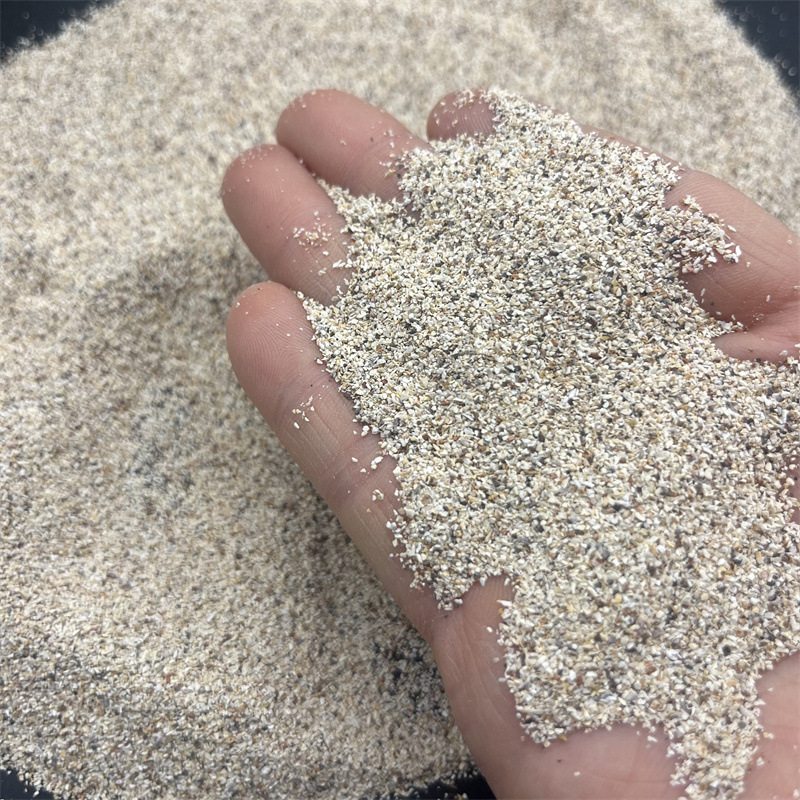
1. Understanding Mullite Powder Sand
Mullite is an aluminosilicate ceramic material primarily composed of aluminum oxide (Al₂O₃) and silicon dioxide (SiO₂). Its commonly referenced stoichiometric composition is 3Al₂O₃·2SiO₂, although industrial mullite materials can have different alumina-to-silica ratios depending on their production processes and intended applications.
Mullite powder sand generally refers to granular or powdered mullite-based material prepared for use as a raw material in refractory and ceramic manufacturing. Depending on the manufacturing route, it may be produced through controlled high-temperature reactions, sintering, fusion, crushing, and subsequent particle-size classification.
Unlike ordinary silica sand or general-purpose mineral fillers, mullite-based materials are selected for applications that require a combination of thermal stability and ceramic performance. Their characteristics make them particularly relevant to high-temperature industrial environments.
What Makes Mullite Different from Ordinary Mineral Sand?
The main distinction is its engineered aluminosilicate composition and ceramic structure. Ordinary mineral sand may serve primarily as an aggregate or filler, while mullite powder sand is selected for more demanding thermal and refractory applications.
- High-temperature capability: Mullite maintains useful ceramic properties under demanding thermal conditions.
- Low thermal expansion: Its relatively low expansion helps reduce dimensional changes during temperature fluctuations.
- Thermal stability: Appropriate mullite grades can maintain structural integrity during repeated heating and cooling.
- Chemical resistance: Mullite ceramics can provide good resistance in many industrial environments, subject to the surrounding atmosphere and chemical exposure.
- Formulation flexibility: Different particle sizes can be incorporated into ceramic bodies, refractory mixtures, and other engineered materials.
2. Why Is Mullite Used in Thermal Insulation Materials?
Industrial insulation materials must do more than simply slow down heat transfer. They need to maintain their shape, resist thermal damage, and provide predictable performance throughout their operating life. These requirements become especially important in furnaces, kilns, heat-treatment equipment, and high-temperature processing systems.
Mullite is attractive because it combines several useful ceramic properties in one material. When properly processed into porous or fiber-reinforced structures, mullite-based formulations can contribute to effective high-temperature insulation.
2.1 Resistance to High Temperatures
Mullite is a refractory aluminosilicate phase with a high melting temperature. Its thermal stability makes it suitable for many applications involving elevated operating temperatures.
For insulation manufacturers, this characteristic is important because raw materials must withstand the temperatures involved in production and subsequent service. However, the maximum continuous working temperature of a finished insulation product should always be established through product-specific testing rather than inferred from the melting point of mullite alone.
2.2 Relatively Low Thermal Expansion
Materials exposed to repeated heating and cooling can expand and contract. Excessive dimensional changes may cause cracking, deformation, or separation between different components.
Mullite has a relatively low coefficient of thermal expansion compared with many conventional ceramic materials. This property helps support dimensional stability and can be beneficial in components that experience temperature cycling.
2.3 Compatibility with Porous Insulation Structures
One of the most important factors in thermal insulation is the control of heat transfer through the material. Porous ceramic structures can reduce heat conduction by introducing small air-filled spaces into the material.
Mullite powder sand can serve as a solid ceramic component in formulations designed to create controlled porosity. Depending on particle size, forming methods, pore distribution, and firing conditions, manufacturers can develop lightweight refractory and insulation products with different combinations of strength and thermal performance.
2.4 Chemical and Structural Stability
Industrial insulation may come into contact with furnace gases, process dust, metal vapors, or other chemical substances. Mullite-based ceramics offer useful chemical stability in many service environments.
Nevertheless, resistance is not universal. Strong alkalis, certain slags, and particular molten materials may attack aluminosilicate ceramics. Buyers should evaluate the actual operating atmosphere and chemical exposure before selecting a grade.
3. Key Properties That Influence Mullite Powder Sand Performance
Understanding the material's technical characteristics helps manufacturers determine whether a particular grade is suitable for their production requirements. The following properties deserve attention during raw material evaluation.
3.1 Chemical Composition
The alumina and silica contents are fundamental indicators of mullite powder sand quality. However, chemical composition should not be evaluated using only one figure.
Iron oxide, alkali oxides, calcium oxide, magnesium oxide, and other impurities may affect sintering behavior and high-temperature performance. Their influence depends on the total formulation and processing conditions.
For applications requiring consistent refractory performance, buyers should request a chemical analysis report and verify that the specified composition meets their production requirements.
3.2 Particle Size and Distribution
Particle size is an important consideration when incorporating mullite powder sand into ceramic mixtures. Fine particles and coarse particles can perform different functions during processing.
- Fine particles can improve the distribution of raw materials and contribute to a more uniform matrix.
- Medium-sized particles can help balance packing behavior and processing characteristics.
- Coarser particles may serve as aggregate components in selected refractory formulations.
An appropriate particle-size distribution depends on the forming method, target density, required porosity, and finished product dimensions. There is no single particle size that is ideal for every application.
3.3 Thermal Conductivity
Thermal conductivity describes how readily heat passes through a material. Lower thermal conductivity is generally desirable when developing insulation products.
However, the conductivity of a mullite raw material should not be confused with that of a finished mullite-based insulation body. The latter is affected by density, pore structure, temperature, moisture, and other formulation variables.
3.4 Refractoriness and Thermal Shock Resistance
Refractoriness refers to the ability of a material to withstand high temperatures without unacceptable deformation or deterioration. Thermal shock resistance describes its ability to withstand rapid temperature changes.
Mullite's relatively low thermal expansion is beneficial in applications where thermal cycling occurs. Actual thermal shock performance, however, also depends on component geometry, porosity, microstructure, mechanical strength, and heating or cooling rates.
| Property | Why It Matters | What Buyers Should Check |
|---|---|---|
| Chemical composition | Controls the material's chemical and refractory characteristics. | Al₂O₃, SiO₂ and impurity levels. |
| Particle size | Influences mixing, packing, and forming. | Specified mesh size and particle distribution. |
| Thermal expansion | Affects dimensional stability. | Test data over the intended temperature range. |
| Thermal conductivity | Indicates resistance to heat transfer. | Test temperature, density, and sample structure. |
| Impurity content | May influence high-temperature reactions. | Fe₂O₃, Na₂O, K₂O, CaO and other relevant oxides. |
| Bulk density | Helps assess packing and material handling. | Measurement method and specified range. |
4. How Does Mullite Powder Sand Work in Insulation Systems?
The insulation performance of a mullite-based product is determined by its complete microstructure rather than by the raw material alone.
In many porous ceramic insulation systems, the objective is to create a structure containing a stable solid framework and a controlled network of pores. Heat transfer can then be reduced by limiting solid conduction and managing gas movement through the structure.
The Role of Porosity
Porosity is one of the most important design factors in lightweight insulation materials. Small, evenly distributed pores can reduce the amount of solid material available for heat conduction.
However, increasing porosity excessively may reduce mechanical strength. Large or interconnected pores can also increase gas movement and affect insulation efficiency, especially at elevated temperatures.
Manufacturers therefore need to balance porosity, density, strength, and thermal conductivity rather than maximize a single parameter.
The Role of Particle Packing
The particle-size distribution of mullite powder sand influences how particles fit together before and during firing. A carefully designed mixture can improve forming consistency and help control the final microstructure.
Depending on the intended product, manufacturers may combine mullite powder sand with other ceramic raw materials, binders, fibers, or pore-forming additives. The final recipe should be established through laboratory testing and production trials.
The Importance of Firing Conditions
Firing temperature, holding time, heating rate, and cooling rate influence phase development, bonding, shrinkage, and porosity. Inadequate firing may result in insufficient bonding, while excessive firing can lead to unwanted densification or dimensional changes.
Consistent process control is essential for producing insulation products with predictable performance from batch to batch.
5. Common Industrial Applications of Mullite Powder Sand
Because of its combination of thermal and ceramic properties, mullite-based raw materials are used in a variety of industrial products. The exact application depends on the powder grade, formulation, and processing method.
5.1 Refractory Insulation Bricks
Mullite powder sand can be used in the production of refractory formulations intended for high-temperature furnace linings and insulation bricks.
These materials must withstand thermal exposure while maintaining sufficient structural integrity. Their final density, porosity, strength, and thermal conductivity are determined by the complete formulation and manufacturing process.
5.2 High-Temperature Furnace Components
Industrial furnaces require components capable of maintaining stable performance under repeated thermal exposure. Mullite-based ceramics are relevant to selected furnace structures, supports, and heat-resistant components.
Material selection should consider the operating temperature, load conditions, furnace atmosphere, and potential contact with corrosive substances.
5.3 Ceramic Fiber and Porous Ceramic Products
Mullite-related materials can be incorporated into advanced ceramic insulation systems, including fiber-containing and porous ceramic structures.
These products are developed for applications requiring a combination of low weight, thermal stability, and appropriate mechanical properties. Research on mullite fiber insulation has also demonstrated the importance of binder selection and microstructure in determining the balance between strength and insulation performance.
5.4 Kiln Furniture and Ceramic Supports
In ceramic production, kiln furniture and support components must withstand repeated heating and cooling. Mullite-based ceramics can be considered for selected applications because of their dimensional stability and high-temperature characteristics.
5.5 Advanced Ceramic Coatings
Specially processed mullite powders are also used in thermal barrier and environmental barrier coating systems. In these applications, powder morphology, purity, particle size, and deposition compatibility are especially important.
Thermal spray grades are not automatically interchangeable with conventional refractory aggregate grades. Buyers should identify the intended manufacturing process before choosing a product.
| Application | Main Material Requirement | Important Evaluation Factors |
|---|---|---|
| Insulation bricks | Thermal stability and controlled porosity | Particle distribution, density, strength |
| Furnace linings | Refractoriness and service durability | Working temperature and chemical resistance |
| Porous ceramics | Low density and stable pore structure | Particle size, binder and firing process |
| Kiln components | Dimensional stability and mechanical strength | Thermal cycling and load conditions |
| Thermal spray coatings | Suitable powder morphology and deposition behavior | Particle size, purity and spray compatibility |
6. Factors That Affect the Quality of Mullite Powder Sand
Not all mullite powder sand products deliver the same results. Even when two materials have similar chemical compositions, differences in manufacturing and particle characteristics can influence their behavior in production.
Raw Material Selection
The quality of the alumina- and silica-bearing starting materials affects the consistency of the final product. Impurity levels, raw material uniformity, and the selected production route all influence the resulting ceramic phase and properties.
Manufacturing Temperature and Process Control
Temperature control is critical during mullite synthesis and processing. Insufficient reaction or unsuitable heat treatment may result in inconsistent phase development. Proper control helps achieve the intended material characteristics.
Grinding and Classification
After thermal processing, grinding and particle classification determine the final size distribution. Inconsistent grinding can produce excessive fine particles, oversized grains, or an unstable distribution that complicates downstream processing.
Contamination Prevention
Cross-contamination during crushing, grinding, storage, or packaging may introduce unwanted impurities. This is particularly important for manufacturers working with strict chemical specifications or specialized ceramic formulations.
Batch-to-Batch Consistency
Industrial production requires reliable raw material behavior. Significant variations between batches can affect mixing, forming, firing, shrinkage, and finished product quality.
Suppliers should be able to provide appropriate technical documentation and establish clear product specifications for repeat orders.
7. How to Select the Right Mullite Powder Sand for Your Project
Choosing the correct material begins with understanding the finished product and its working environment. Instead of selecting a grade based on price alone, industrial buyers should evaluate the following factors.
Step 1: Define the Intended Application
Identify whether the material will be used in insulation bricks, refractory castables, porous ceramics, kiln components, or thermal spray coatings. Each application may require a different particle form and technical specification.
Step 2: Confirm Chemical Requirements
Specify the required alumina and silica contents, along with acceptable impurity limits. If your production process is sensitive to iron oxide or alkali content, make these requirements clear before ordering.
Step 3: Choose the Appropriate Particle Size
Provide the target mesh size or particle-size distribution. If your formulation uses several particle fractions, explain the intended mixing proportions so that the supplier can assess the material requirements more accurately.
Step 4: Evaluate Thermal and Physical Properties
Request relevant technical data, such as bulk density, thermal expansion, refractoriness, phase composition, and other application-specific properties. For finished insulation products, evaluate thermal conductivity under clearly defined testing conditions.
Step 5: Request Samples and Conduct Trials
Small-scale testing can help identify potential processing problems before large-volume procurement. Evaluate the material in your actual formulation whenever possible.
Step 6: Confirm Packaging and Delivery Requirements
Industrial buyers should also consider packaging strength, moisture protection, storage conditions, order quantity, and delivery arrangements. Reliable material handling helps prevent contamination and unnecessary losses.
- Confirm the exact product grade and intended application.
- Request a chemical composition report.
- Specify particle size and acceptable size tolerance.
- Check relevant physical and thermal properties.
- Confirm batch consistency and sample availability.
- Discuss packaging, order quantity, and delivery schedules.
8. Processing and Storage Recommendations
Proper handling is essential for maintaining the quality of mullite powder sand before it enters the manufacturing process.
Keep the Material Dry
Although mullite itself is a stable ceramic material, moisture can affect the behavior of powder mixtures, particularly when binders or moisture-sensitive additives are involved. Store bags in a dry environment and avoid direct contact with floors or exposed outdoor surfaces.
Prevent Dust and Foreign Material Contamination
Keep the storage area clean and separate different grades to avoid accidental mixing. Use suitable dust-control measures during unloading, transfer, and mixing.
Maintain Consistent Mixing Procedures
Follow established batching instructions and mixing times. Variations in material proportions or mixing procedures can result in inconsistent forming and firing behavior.
Follow Application-Specific Firing Parameters
Do not assume that all mullite-containing formulations require the same firing schedule. Temperature and holding time should be determined by the complete composition, component dimensions, binder system, and desired microstructure.
Where possible, record batch numbers and production parameters to improve traceability and support quality investigations.
9. Common Purchasing Mistakes to Avoid
Even experienced buyers can encounter difficulties when raw material specifications are incomplete. The following mistakes may lead to unnecessary production costs and inconsistent finished products.
Choosing Material Based Only on Price
A low purchase price does not necessarily mean a lower overall production cost. Inconsistent composition, unsuitable particle size, or excessive impurities can increase rejection rates and processing adjustments.
Ignoring Particle Size Distribution
Requesting only a general mesh specification may be insufficient for applications requiring controlled packing or precise powder behavior. Clarify the distribution and acceptable tolerance.
Confusing Raw Material Properties with Finished Product Performance
A high-temperature ceramic raw material does not automatically produce an insulation product with a specific maximum service temperature or thermal conductivity. These values must be established for the finished formulation.
Overlooking Chemical Compatibility
Even a high-quality mullite product may be unsuitable for a particular furnace environment. Evaluate contact with slags, alkalis, molten materials, and process gases before making a final selection.
Failing to Test Samples
Skipping sample evaluation can create problems during large-scale production. Laboratory trials and small production batches provide valuable information about material compatibility and processing stability.
10. Why Choose a Reliable Material Supplier?
For industrial manufacturers, supplier reliability is closely connected to production stability. A suitable supplier should understand the technical requirements of ceramic and refractory applications and provide clear information about available material specifications.
Jar Hing Products Co.,Ltd. recognizes the importance of material consistency, application suitability, and clear communication in industrial raw material procurement.
When evaluating mullite powder sand for thermal insulation material, buyers should focus on several important aspects of supplier cooperation:
- Clear specifications: Product information should identify the relevant chemical and physical characteristics.
- Application communication: The supplier should understand the intended use, particle-size requirements, and technical concerns.
- Quality documentation: Appropriate technical data and available test reports help buyers evaluate material suitability.
- Supply consistency: Repeat orders should follow agreed product specifications and quality requirements.
- Professional support: Effective communication helps resolve questions about product grades, packaging, and procurement arrangements.
For manufacturers developing refractory insulation products, choosing a suitable raw material is an important part of controlling finished product quality. Working with a supplier that communicates specifications clearly can make procurement more efficient and help reduce avoidable production risks.
11. Frequently Asked Questions About Mullite Powder Sand
Q1: What is mullite powder sand used for?
Mullite powder sand is used as a raw material in refractory ceramics, thermal insulation products, porous ceramic structures, furnace components, kiln furniture, and selected thermal barrier coating applications. Its suitability depends on the material grade and manufacturing process.
Q2: What is the chemical composition of mullite?
The commonly referenced stoichiometric composition of mullite is 3Al₂O₃·2SiO₂, consisting of aluminum oxide and silicon dioxide. Commercial materials may have different compositions depending on their grade and production route.
Q3: Why is mullite suitable for high-temperature insulation applications?
Mullite offers high-temperature stability, relatively low thermal expansion, and useful chemical and mechanical characteristics. When incorporated into properly designed porous ceramic structures, it can contribute to high-temperature insulation performance.
Q4: Does mullite powder sand have low thermal conductivity?
Mullite-based ceramics can offer useful thermal insulation characteristics, but thermal conductivity depends on density, porosity, microstructure, temperature, and formulation. Buyers should request test data for the specific material or finished product rather than assume a universal value.
Q5: Which particle size is suitable for mullite powder sand?
The suitable particle size depends on the intended application and production method. Fine powder may be appropriate for certain ceramic matrices, while coarser fractions can be used as aggregates. The required mesh size should be specified according to the formulation and forming process.
Q6: Can mullite powder sand be used in refractory bricks?
Yes. Mullite-based raw materials can be incorporated into selected refractory brick formulations. The final performance depends on the complete composition, particle grading, forming conditions, firing schedule, and finished microstructure.
Q7: Is mullite resistant to thermal shock?
Mullite has a relatively low thermal expansion coefficient, which is beneficial for thermal cycling applications. However, actual thermal shock resistance also depends on porosity, strength, component design, and the rate of temperature change.
Q8: What should buyers check before ordering mullite powder sand?
Buyers should check chemical composition, impurity levels, particle-size distribution, bulk density, relevant thermal properties, packaging, sample availability, and batch consistency. Application-specific testing is recommended before large-volume procurement.
Q9: How should mullite powder sand be stored?
Store the material in sealed or properly protected packaging in a clean, dry, and well-ventilated area. Prevent moisture exposure, contamination, and accidental mixing between different product grades.
Q10: Can mullite powder sand be customized for different industrial applications?
Product specifications may be selected or adjusted according to available manufacturing capabilities and application requirements. Buyers should communicate their target chemical composition, particle size, physical properties, and intended production process when requesting a quotation.
12. Conclusion: Selecting the Right Mullite Powder Sand for Better Insulation Performance
Mullite powder sand is a valuable aluminosilicate raw material for manufacturers developing refractory ceramics and high-temperature insulation products. Its high-temperature stability, relatively low thermal expansion, and compatibility with engineered ceramic structures make it useful across a range of industrial applications.
However, successful material selection requires more than checking the product name or alumina content. Particle-size distribution, impurity levels, phase composition, processing conditions, and the intended working environment all influence the final result.
For industrial buyers, the best approach is to define the application clearly, establish measurable technical specifications, request relevant documentation, and conduct practical material evaluations before placing bulk orders.
Looking for Mullite Powder Sand for Your Thermal Insulation Project?
Choosing the right ceramic raw material can make a meaningful difference to product consistency, manufacturing efficiency, and long-term performance. Jar Hing Products Co.,Ltd. welcomes inquiries from manufacturers, distributors, and industrial buyers looking for suitable material solutions.
Whether you need information about chemical composition, particle size, product specifications, or bulk purchasing requirements, our team is ready to discuss your project needs.
Contact us today to share your technical requirements and discuss mullite powder sand solutions for your thermal insulation and refractory material applications.
Note: Material properties and application suitability vary by grade, production method, formulation, and operating conditions. Always refer to the relevant technical datasheet and application-specific test results when making engineering or purchasing decisions.