
Article Summary: Nonylphenol Ethoxylate (NPE) is a nonionic surfactant valued for its wetting, emulsifying, dispersing, and cleaning properties in various industrial processes. However, choosing a suitable grade requires more than comparing prices or selecting a familiar product number. Buyers must consider ethylene oxide (EO) content, hydrophilic-lipophilic balance (HLB), solubility, formulation compatibility, operating conditions, environmental impacts, and applicable regulations. This guide explains how NPE grades differ, how to evaluate technical specifications, how to avoid common procurement mistakes, and how to assess whether an NPE-based formulation is appropriate for a particular application. It also outlines practical sourcing considerations for businesses working with Dotachem.
Understanding Nonylphenol Ethoxylate
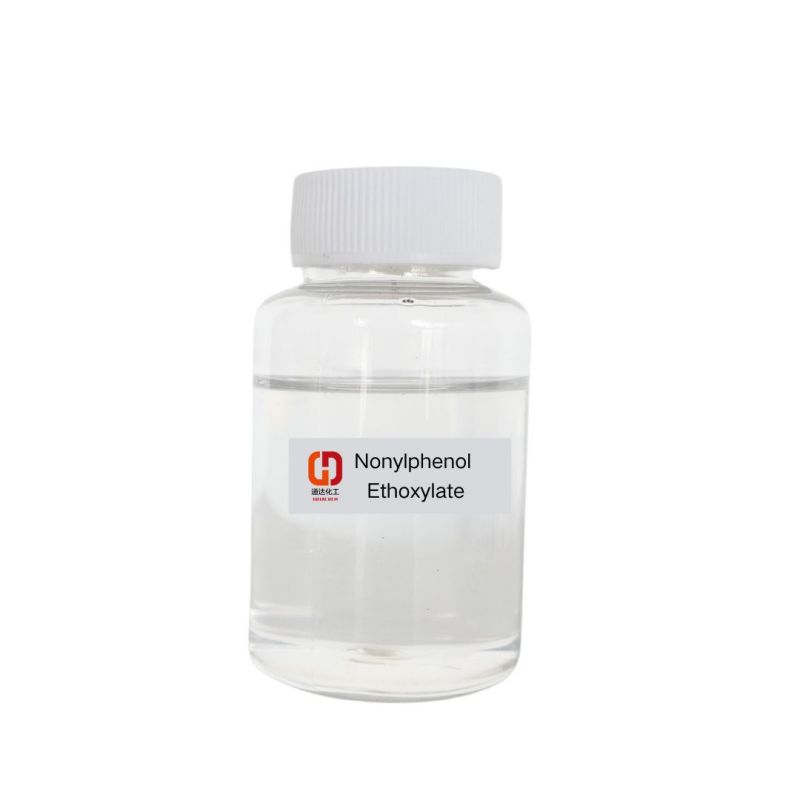
Nonylphenol Ethoxylate, commonly abbreviated as NPE, belongs to the family of nonionic surfactants. These substances are used to help different ingredients interact, especially when a formulation contains materials with different affinities for water and oil. Depending on the grade and formulation, NPE can contribute to wetting, emulsification, dispersion, and removal of oily contaminants.
A surfactant reduces interfacial tension between phases. In practical terms, this can help a liquid spread across a surface, support the distribution of an oil phase in water, or improve contact between a cleaning solution and a contaminated substrate.
NPE products are commonly identified by their average ethoxylation level, often expressed as the number of ethylene oxide units associated with the nonylphenol structure. Grades such as NP-6, NP-9, NP-10, NP-12, and NP-20 may have different balances of water affinity, oil affinity, and physical properties.
Important purchasing principle: An NPE grade is not defined by its product number alone. Buyers should confirm the exact grade designation, specification, composition information, intended application, and regulatory status before approving a product for production.
Although NPE has established industrial uses, it is not automatically suitable for every formulation. Environmental concerns and legal restrictions have led many businesses to investigate alternative surfactants. The correct purchasing decision must therefore consider both technical performance and whether the substance is permitted for the intended use and destination market.
How Does Nonylphenol Ethoxylate Work in Industrial Formulations?
The molecular structure of NPE contains an oil-affine nonylphenol portion and a hydrophilic ethoxylate chain. The balance between these portions influences how the surfactant behaves in a formulation.
When added to a suitable system, NPE molecules can accumulate at interfaces between water and oil or between a liquid and a solid surface. This behavior helps explain why different grades can be useful for processes involving wetting, emulsification, and cleaning.
Wetting and Surface Contact
In industrial processing, a liquid may not spread easily across a substrate because of surface tension or surface contamination. A suitable surfactant can improve wetting, allowing the liquid to make more uniform contact with the material being treated.
Emulsification and Dispersion
Some formulations need to distribute an oil phase throughout an aqueous phase. Surfactants can help form and stabilize emulsions under appropriate conditions. Performance depends on the grade, oil phase, concentration, temperature, mixing method, and other ingredients.
Cleaning and Soil Removal
Oily residues can be difficult to remove with water alone. Surfactants may help wet the contaminated surface and facilitate the removal or dispersion of oily soil. The final cleaning result still depends on the substrate, contaminant, water hardness, temperature, and overall detergent formulation.
These functions are useful reference points, but laboratory testing remains essential. A surfactant that performs well in one application may produce inadequate emulsification, excessive foam, poor stability, or unwanted material interactions in another.
How Does EO Content Influence NPE Grade Selection?
The average ethylene oxide content is one of the most important factors when comparing NPE grades. Increasing the ethoxylation level generally increases the hydrophilic character of the molecule. This can change water compatibility, HLB, physical state, and performance in a particular formulation.
However, EO content should not be treated as a stand-alone performance guarantee. Actual behavior also depends on product composition, temperature, the oil phase, electrolyte concentration, and the other ingredients in the system.
| Grade Group | General Property Tendency | What Buyers Should Verify |
|---|---|---|
| Lower EO grades | Relatively greater oil affinity and lower hydrophilic character | Oil-phase compatibility, water dispersibility, and intended function |
| Intermediate EO grades | Intermediate balance between hydrophilic and lipophilic behavior | Emulsion stability, wetting, compatibility, and process conditions |
| Higher EO grades | Generally greater hydrophilic character and water affinity | Solubility, physical form, temperature response, and formulation stability |
This table describes general tendencies, not a universal grade-selection rule. Specific commercial grades can differ in detailed properties, and supplier specifications should be used for actual formulation decisions.
Why HLB Matters
The hydrophilic-lipophilic balance, or HLB, is a useful indicator when screening surfactants for emulsification and related applications. A relatively lower HLB indicates a stronger lipophilic tendency, while a higher HLB indicates a stronger hydrophilic tendency.
For a formulation containing oil and water, the required balance depends on the oil phase, desired emulsion type, processing conditions, and stability requirements. Matching a surfactant to the target HLB range can narrow the options, but it cannot replace compatibility and stability testing.
Do not select a grade using HLB alone. Confirm the product's actual specification, physical form, temperature behavior, compatibility, and regulatory suitability. The grade that looks correct on paper may not be the best performer in the finished formulation.
Industrial Applications and Formulation Needs
NPE has historically been used across several industrial sectors because of its surfactant functionality. The following examples explain the technical needs that formulators may encounter. They do not mean that NPE is permitted or recommended for every application in these sectors.
Industrial Cleaning
Cleaning formulations may require effective wetting, removal of oily soils, and compatibility with builders and other surfactants. Foam control, rinsability, substrate protection, and local chemical restrictions should also be evaluated.
Textile Processing
Textile auxiliaries may require uniform wetting, penetration, and process consistency. Dyeing and finishing operations also demand attention to residual chemicals, wastewater management, fabric compatibility, and customer-specific restricted-substance requirements.
Coatings and Emulsion Systems
Emulsion-based systems depend on suitable interfacial properties and stability during storage and application. Formulators should test compatibility, particle or droplet stability, temperature tolerance, and the effect on the finished product.
Industrial Processing
Some processing formulations require reliable wetting or dispersion under demanding operating conditions. Selection should account for chemical exposure, process temperature, concentration, equipment materials, and discharge requirements.
Why Application Testing Is Essential
Two formulations can use the same surfactant grade and still produce different results. One may contain salts, solvents, pigments, polymers, or other surfactants that change solubility and interfacial behavior.
Before scaling up, evaluate the intended grade under representative production conditions. Check performance at the expected concentration, temperature, mixing speed, water quality, and storage period. This helps identify instability before a formulation enters routine production.
Which Technical Properties Should Buyers Evaluate?
Choosing an appropriate surfactant begins with a clear specification. A purchase based only on a grade name or a low quotation may lead to unexpected formulation changes, production interruptions, or compliance problems.
| Property | Why It Matters | What to Request or Test |
|---|---|---|
| EO content | Influences hydrophilic-lipophilic behavior | Declared grade and applicable product specification |
| HLB value | Helps screen emulsification suitability | Supplier data and formulation trials |
| Appearance and physical form | Affects storage, handling, and dosing | Appearance, viscosity or physical-state information |
| Water content | May influence formulation concentration and consistency | Certificate of Analysis and agreed limits |
| pH | Provides information about the tested aqueous preparation | Specified test concentration and test method |
| Cloud point | Can indicate temperature-related changes in aqueous behavior | Test method, concentration, and measurement conditions |
| Compatibility | Determines whether the ingredient works in the complete formula | Bench testing and stability evaluation |
| Regulatory status | Determines whether the intended use and market are permitted | Current legal review and relevant product documentation |
Physical Properties Need Test Conditions
Specifications are useful only when their measurement methods are understood. For example, cloud point can vary with concentration, the test medium, and other conditions. A pH result is also meaningful only when the aqueous preparation and measurement method are specified.
When comparing suppliers, ask for the same information for each candidate grade. This makes the comparison more reliable and reduces the risk of treating different test methods as equivalent.
Compatibility and Performance Trials
A practical trial should assess more than initial appearance. Depending on the application, evaluate emulsion stability, wetting time, cleaning performance, foam, phase separation, storage behavior, and compatibility with packaging or process materials.
Document the formula, dosage, preparation method, and test conditions. Consistent records help your technical team explain unexpected results and repeat successful trials during scale-up.
Quality Control and Supplier Evaluation
Reliable chemical sourcing involves both product consistency and technical documentation. A suitable supplier should be able to clarify the offered grade, explain its specifications, and provide the information needed for safe handling and purchasing review.
Review the Certificate of Analysis
A Certificate of Analysis (COA) provides test results for a particular batch against stated specifications. Buyers should verify the product name, batch identification, test parameters, results, and applicable acceptance criteria. A COA supports batch review but does not replace testing required by the customer's own quality system.
Check Safety and Technical Documents
The Safety Data Sheet (SDS) supports hazard communication, storage planning, personal protective equipment selection, spill response, and transport review. The Technical Data Sheet (TDS), where available, provides product characteristics and guidance for evaluating its suitability.
Confirm Supply Consistency
For ongoing production, confirm packaging options, batch traceability, lead times, sample availability, and communication procedures for specification changes. Buyers should also agree on how deviations will be reported and managed.
Dotachem supplies surfactants and chemical intermediates, including Nonylphenol Ethoxylate grades. When evaluating a supplier, customers should confirm the specific grade available, request current documentation, and establish whether the product meets their technical and regulatory requirements before placing a production-scale order.
A dependable sourcing process combines three checks: technical suitability for the formulation, documented consistency for the batch, and legal acceptability for the intended use and destination market.
Environmental Responsibilities and Regulatory Considerations
Environmental compatibility is a central issue when assessing NPE. The United States Environmental Protection Agency identifies concerns about the toxicity of nonylphenol and nonylphenol ethoxylates to aquatic organisms. NPEs can also degrade into nonylphenol, a substance associated with persistence and environmental concerns.
These considerations are important when evaluating formulations that may enter wastewater during manufacturing, cleaning, or product use. Wastewater controls should be designed around the actual substance, concentration, discharge route, and applicable treatment requirements. Standard biological treatment should not automatically be assumed to eliminate all relevant environmental risks.
Check the Rules for the Specific Market
Regulatory requirements vary by jurisdiction, concentration, product category, and end use. In the European Union, REACH Annex XVII Entry 46 restricts the placing on the market and use of nonylphenol and nonylphenol ethoxylates for specified purposes at or above the applicable 0.1% by-weight threshold, subject to the listed conditions and exceptions. Other legal provisions may apply to additional uses and articles.
Businesses selling into regulated markets should review the current legal text, authorization requirements where relevant, customer restricted-substance lists, and import or product-specific obligations before selecting an NPE-containing formulation.
Useful official resources include:
- European Chemicals Agency: REACH Annex XVII restrictions
- U.S. EPA: Risk Management for Nonylphenol and Nonylphenol Ethoxylates
Evaluate Alternatives Early
Where NPE is restricted, environmentally unsuitable, or prohibited by customer requirements, an alternative surfactant may be necessary. Options can include alcohol ethoxylates and other nonionic surfactant chemistries, depending on the application.
However, a substitute should not be considered equivalent solely because it performs a similar function. Check cleaning performance, emulsification, foam, stability, material compatibility, biodegradation information, aquatic toxicity data, and regulatory status. A structured comparison can prevent one environmental or technical issue from being replaced by another.
Compliance reminder: Confirm the latest requirements for the precise product, application, concentration, and destination country. General supplier information is not a substitute for a jurisdiction-specific compliance assessment.
A Practical Procurement Checklist for Nonylphenol Ethoxylate
Before requesting a quotation or approving a bulk order, prepare a clear list of technical, commercial, and compliance requirements. This helps suppliers provide relevant information and allows purchasing teams to compare offers on a consistent basis.
Technical Requirements
- Identify the intended industrial application and required surfactant function.
- Specify the requested grade and required EO content, where applicable.
- Define critical properties and acceptable specification ranges.
- Describe formulation ingredients and relevant operating conditions.
- Request samples for compatibility and performance testing when appropriate.
Quality and Documentation
- Request a current SDS and applicable TDS.
- Confirm the COA parameters and batch traceability arrangements.
- Agree on packaging, storage conditions, and shelf-life information where available.
- Establish procedures for handling nonconforming batches or specification changes.
Commercial and Compliance Requirements
- Confirm that the product is legally permitted for the intended use and market.
- Evaluate the total delivered cost, including freight, handling, and testing.
- Check lead times, minimum order quantities, and supply continuity.
- Review customer-specific restricted-substance requirements.
- Consider suitable alternatives when environmental or regulatory constraints apply.
Purchasing decisions become more reliable when the technical team, regulatory specialists, quality department, and procurement team work from the same specification. This coordinated approach reduces avoidable reformulation, delivery delays, and compliance surprises.
Frequently Asked Questions About Nonylphenol Ethoxylate
NPE is a nonionic surfactant historically used in industrial cleaning, textile processing, emulsification, coatings, and other formulations. Its suitability depends on the specific grade, application, environmental considerations, and current regulatory requirements.
The numbers generally refer to the average ethoxylation level. NP-9 and NP-10 therefore represent grades with different average EO content, which can influence hydrophilic-lipophilic behavior and formulation performance. The actual specification and measured properties should be confirmed with the supplier.
A higher EO level generally increases the hydrophilic character of NPE. However, actual water behavior depends on the specific grade, temperature, concentration, formulation ingredients, and test conditions. Testing is necessary for a reliable conclusion.
HLB helps formulators screen surfactants according to their relative hydrophilic and lipophilic character. It can support emulsifier selection, but it should be combined with compatibility tests, stability studies, and application-specific performance measurements.
NPE raises environmental concerns because of its aquatic toxicity and its potential degradation to nonylphenol. It should not be assumed environmentally benign. Buyers should assess environmental data, wastewater controls, local restrictions, and potential alternatives for the intended application.
No. Certain jurisdictions restrict NPE in specified cleaning and other applications. The applicable rules depend on the product category, concentration, use, and destination market. Confirm current requirements before formulating, purchasing, or marketing an NPE-containing product.
Common documents include a Safety Data Sheet, Technical Data Sheet where available, and Certificate of Analysis for the supplied batch. Depending on the market and application, buyers may also need additional regulatory declarations, composition information, or customer-specific compliance documentation.
Alcohol ethoxylates may be candidates for some formulations, but they are not universal drop-in replacements. Formulators should compare cleaning or emulsification performance, compatibility, foam, temperature behavior, environmental characteristics, cost, and regulatory status before switching.
Define a clear product specification, review batch COAs, confirm traceability, establish acceptance criteria, and evaluate samples before production-scale purchasing. For recurring orders, maintain a documented process for reviewing specification changes and investigating deviations.
Make Better Surfactant Decisions with a Clear Specification
Selecting Nonylphenol Ethoxylate requires a balanced understanding of chemical properties, application performance, quality requirements, and environmental responsibilities. EO content and HLB provide useful starting points, but a successful choice also depends on formulation testing, supplier documentation, and compliance with the rules governing the intended market.
For manufacturers, the most practical approach is to define the required function first, establish measurable acceptance criteria, verify the product documentation, and conduct representative trials before committing to bulk procurement. Where NPE is restricted or unsuitable, alternative surfactant chemistries should be evaluated against the same technical and regulatory criteria.
Dotachem provides surfactant and chemical intermediate sourcing support for industrial customers. If you are assessing Nonylphenol Ethoxylate specifications, comparing available grades, or investigating alternative surfactant solutions, contact us to discuss your technical requirements, documentation needs, and intended application.
Discuss Your Surfactant Requirements with Dotachem
Looking for product specifications, quality documentation, or assistance evaluating suitable surfactant options? Dotachem can help you clarify your requirements and identify the information needed for an informed sourcing decision.
Explore Nonylphenol Ethoxylate or contact us to discuss your industrial application and product requirements.