

Which Processing Method Is Suitable for Different General-Purpose Polystyrene Resin Products?
2026-11-20
How Should Manufacturers Match Processing Methods to the Final Product?
Choosing the right processing method for General-Purpose Polystyrene Resin is essential when manufacturing sheets, profiles, containers, decorative components, and other rigid plastic products. Different applications require different material flow characteristics, dimensions, surface finishes, and production speeds. Extrusion, thermoforming, and injection molding are three commonly used methods, but they do not serve exactly the same purpose. The most suitable option depends on the product design, wall thickness, shape complexity, production volume, and the properties of the selected resin grade.
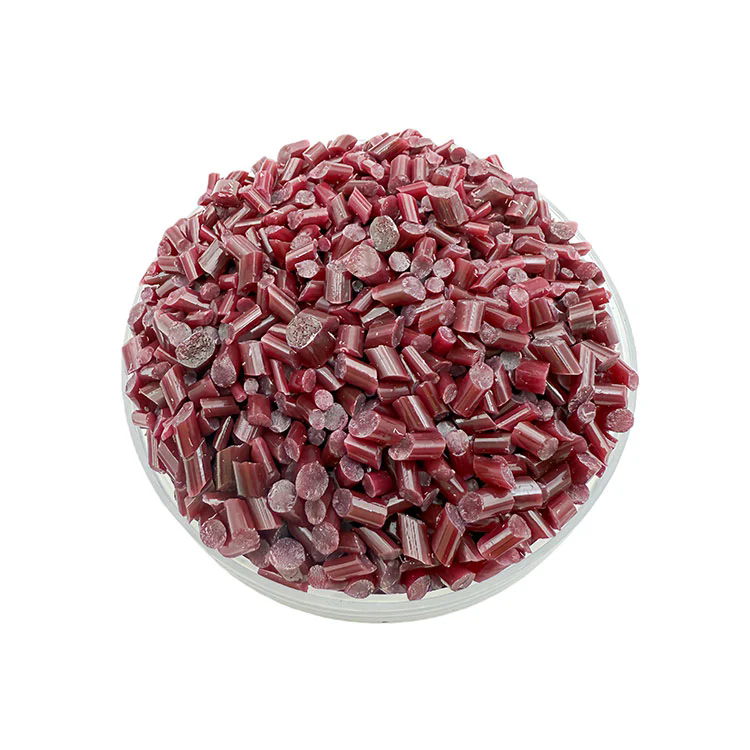
For manufacturers working with recycled polystyrene pellets, process selection also needs to account for color consistency, pellet uniformity, contamination control, and batch stability. Ningbo JUWU International Trading Co., Ltd. supplies recycled PS resin in transparent, high-transparency, white, black, brown, and red categories. Our product range is intended for applications including extruded sheets, profiles, thermoformed parts, containers, picture frames, decorative profiles, insulation panels, and wood-look components. Selecting the right process helps manufacturers make better use of the material while reducing production interruptions and avoidable scrap.
A useful starting point is to identify how the finished product is formed. If the product requires a continuous length or a flat sheet with a consistent cross-section, extrusion is usually the logical starting process. If a sheet must be heated and shaped over a mold, thermoforming is more appropriate. If the product has a defined three-dimensional shape and requires material to fill a mold cavity directly, injection molding may be the better option. These distinctions are important because a resin suitable for one process should not automatically be assumed to perform equally well in another.
When Is Extrusion the Best Choice for Polystyrene Sheets and Profiles?
Extrusion is generally suitable for products manufactured with a continuous cross-section. During production, plastic pellets are fed into an extruder, heated, melted, and conveyed by a rotating screw. The molten material passes through a die that determines the shape of the output. Depending on the production line, the material may then pass through a calibration unit, cooling section, haul-off equipment, and cutting system.
This method is widely used for flat PS sheets and continuous profiles because it supports stable production over extended runs. Sheet extrusion is particularly relevant when the downstream product will be cut, printed, laminated, machined, or thermoformed. Profile extrusion is suitable for products such as picture frame components, decorative trims, and rigid sections with a consistent cross-sectional design.
For sheet production, manufacturers normally pay close attention to:
- Thickness consistency: Uneven sheet thickness can affect forming depth, product weight, and dimensional accuracy.
- Surface appearance: Bubbles, black specks, contamination, and visible flow marks can reduce the quality of transparent or light-coloured sheets.
- Width and dimensional stability: Die design, cooling conditions, and haul-off speed influence the final sheet dimensions.
- Pellet feeding: Consistent pellet size and stable feeding help reduce fluctuations during continuous production.
- Cooling and winding: Appropriate cooling and handling help prevent deformation, residual stress, and damage during storage.
For profile extrusion, the die must match the intended cross-section. A simple flat or rectangular profile may be relatively straightforward to produce, while a decorative profile with several edges, grooves, or hollow sections requires more detailed die design and process adjustment. The manufacturer should assess material flow, die pressure, cooling performance, and dimensional shrinkage during trial production.
General-Purpose Polystyrene Resin is often selected for rigid products where appearance, processability, and dimensional consistency matter. Recycled material selection requires additional attention to feedstock quality and batch variation. Our factory operates three production lines and focuses on pellet uniformity, colour control, and batch consistency. These factors are relevant to extrusion because fluctuations in the incoming material can affect melt behaviour, surface quality, and the stability of a continuous production run.
For manufacturers producing white sheets, black profiles, or coloured decorative sections, colour requirements should be confirmed before mass production. A sample extrusion run can help assess colour distribution, surface appearance, and compatibility with the existing line. Transparent and high-transparency applications require particularly careful inspection because visible impurities or inconsistent appearance may be more noticeable than in darker products.
Extrusion is not automatically the best choice for every rigid plastic item. It is less suitable when the finished part has a complex three-dimensional shape that cannot be produced economically as a continuous profile or sheet. In those cases, injection molding may offer a more direct production route. When a sheet is intended to become a shaped container or formed cover, extrusion may still be necessary as the first stage, followed by thermoforming.
Why Is Thermoforming Suitable for Containers and Shaped Sheet Products?
Thermoforming is a secondary forming process in which a thermoplastic sheet is heated until it becomes sufficiently pliable, then shaped over or into a mold. Vacuum, pressure, or a combination of forming techniques can be used to bring the softened sheet into contact with the mold surface. After cooling, the formed part is removed and trimmed to its final dimensions.
Unlike injection molding, thermoforming does not normally begin by injecting molten resin directly into a closed mold. It begins with a prepared plastic sheet. This makes sheet quality an important part of the final result. If the sheet has uneven thickness, surface defects, or inconsistent heating behaviour, the formed product may show uneven wall thickness, wrinkles, weak corners, or poor dimensional accuracy.
Thermoforming is commonly considered for:
- Rigid containers and trays.
- Protective covers and formed panels.
- Packaging components with relatively shallow or moderate forming depth.
- Display parts and shaped decorative components.
- Custom rigid parts manufactured from extruded plastic sheets.
For these products, the manufacturer should evaluate the sheet thickness, forming temperature window, mold geometry, heating uniformity, forming pressure or vacuum, and cooling cycle. Deep-draw shapes may require more careful control because the material stretches as it moves into the mold. Corners, edges, and areas far from the original sheet plane can become thinner than the surrounding regions. Mold design and forming conditions therefore need to be matched to the product geometry.
When selecting General-Purpose Polystyrene Resin for thermoformed applications, buyers should confirm whether the supplied grade is suitable for producing the required sheet and whether the sheet performs consistently during the secondary forming operation. A resin that can be extruded into an acceptable sheet is not necessarily guaranteed to produce a satisfactory thermoformed part under every heating condition. Trial forming should be carried out using the intended sheet thickness, mold, and production settings.
Colour is another practical consideration. Transparent and high-transparency sheet applications require good visual quality and low visible contamination. White, black, brown, and red materials may be used where the finished product has a defined colour requirement. However, the final shade can be influenced by the base material, pigment system, sheet thickness, heating conditions, and processing history. Our quality control focus includes colour consistency and visible pellet defects, while customers should still approve a formed sample before committing to large production volumes.
Thermoforming is often a sensible choice when the product can be made from sheet stock and does not require the detailed molded features of a complex injection-molded component. It can also be useful when product dimensions or designs change between production runs, although tooling and trimming requirements still need to be considered. For manufacturers already operating a sheet extrusion line, adding a suitable thermoforming stage can create a connected production route from pellets to finished shaped parts.
When Should Manufacturers Choose Injection Molding Instead?
Injection molding is generally suitable for producing individual three-dimensional parts with defined geometry. The process begins when plastic pellets are fed into a heated barrel. A rotating screw conveys and melts the material before injecting it under pressure into a closed mold. The material cools and solidifies inside the cavity, after which the mold opens and the finished part is ejected.
This process is useful for products that need detailed molded features, repeatable dimensions, integrated ribs, bosses, mounting points, or other shapes that would be difficult to produce through sheet forming. It is commonly used for rigid molded components, small housings, fittings, accessories, and selected container designs.
Injection molding requires close coordination between the resin, machine, and mold. Important process considerations include melt temperature, injection pressure, injection speed, holding pressure, cooling time, mold temperature, and screw conditions. If the material does not flow consistently, the finished product may show short shots, sink marks, flash, warpage, or other molding defects. These issues should be assessed through machine trials rather than corrected by changing processing settings without understanding the cause.
For recycled polystyrene, material consistency is particularly important. Variations between batches can influence melt flow, filling behaviour, shrinkage, and surface appearance. Manufacturers should verify the actual grade's processing data and run a molding trial using the intended mold and machine. Our recommendations are based on the application and available material information rather than assuming that every recycled PS pellet grade has identical flow characteristics.
Injection molding is usually more attractive when the production volume justifies the mold investment and the product requires repeatable three-dimensional geometry. It may be less economical for a simple long profile or a large flat sheet, where extrusion can produce the required shape more directly. For a shallow formed container, thermoforming may also be worth comparing with injection molding, especially when the product can be manufactured from sheet stock.
The following table summarises the practical differences between the three methods.
| Processing method | How the product is formed | Typical product types | Main selection considerations |
| Extrusion | Molten resin passes continuously through a shaped die | Sheets, profiles, decorative trims, continuous sections | Die design, thickness consistency, cooling, output stability, surface quality |
| Thermoforming | A heated sheet is shaped over or into a mold | Containers, trays, covers, formed panels, packaging components | Sheet quality, heating uniformity, forming depth, wall thickness, mold design |
| Injection molding | Molten resin is injected into a closed mold cavity | Rigid molded parts, housings, accessories, detailed components | Melt flow, mold design, injection pressure, cooling, dimensional repeatability |
The table should be treated as a process selection guide rather than a guarantee that one method will suit every product in a category. The final decision depends on dimensions, tolerances, required surface finish, production quantity, equipment capability, and the confirmed processing characteristics of the resin.
Which Material Parameters and Quality Checks Should Buyers Confirm?
Processing performance is determined by more than the polymer name printed on a product label. Buyers should review the technical data available for the specific grade and batch, then compare it with the requirements of the intended production process. This is particularly important for recycled PS pellets because feedstock composition and processing history can influence material behaviour.
The currently specified product range from JUWU includes recycled PS pellets in several colour and appearance categories. The available product information identifies extrusion, thermoforming, and injection molding as processing routes, but does not establish numerical values for melt flow rate, density, Vicat softening temperature, impact strength, tensile strength, or other grade-specific mechanical properties. These figures should be obtained from the relevant technical data sheet or confirmed through testing rather than assumed from general-purpose polystyrene reference values.
| Product information | Available specification | Why it matters to manufacturers |
| Material type | Recycled General-Purpose Polystyrene Resin pellets | Defines the base polymer category and intended material application |
| Appearance and colour | Transparent, high-transparency, white, black, brown, and red | Helps match visual requirements for sheets, profiles, and molded products |
| Processing methods | Extrusion, thermoforming, and injection molding | Supports different product shapes and manufacturing routes |
| Typical applications | Sheets, profiles, containers, thermoformed parts, insulation panels, picture frames, decorative profiles, and wood-look components | Provides an application basis for material and process evaluation |
| Production facilities | Approximately 5,000 square metres and three production lines | Provides manufacturing context for supply and production planning |
| Stated monthly capacity | Approximately 2,400 metric tons | Supports preliminary assessment of supply requirements |
| Quality priorities | Colour control, pellet uniformity, batch consistency, and black-spot control | Relevant to appearance, stable feeding, and production repeatability |
| Safety and transport documents | SDS or MSDS and applicable transport hazard-assessment reports | Supports material handling, storage, and transport review |
For extrusion, buyers should pay particular attention to melt flow behaviour, colour stability, contamination, and the consistency of the pellet supply. For thermoforming, the sheet produced from the resin should be evaluated for thickness distribution, surface appearance, heating response, and forming performance. For injection molding, the relevant checks include melt flow, filling behaviour, shrinkage, dimensional stability, and the appearance of the molded surface.
Before approving a new batch, manufacturers can use a practical evaluation sequence:
- Review the grade description and available technical data.
- Confirm the required colour and appearance using an approved sample.
- Check pellet condition, including visible contamination and black spots.
- Run a trial using the actual machine and intended processing method.
- Measure finished-product dimensions and inspect surface quality.
- Record process settings and compare results between production batches.
Ningbo JUWU International Trading Co., Ltd. was established in 2001 and has more than 20 years of experience in recycled polystyrene. Our factory has approximately 5,000 square metres of production space, three production lines, and a stated monthly capacity of around 2,400 metric tons. Our production focus includes colour control, pellet uniformity, and batch consistency. For buyers assessing a new supplier, our team can provide available material information and relevant SDS or MSDS documentation, together with applicable transport hazard-assessment reports.
How Can Manufacturers Make a More Reliable Processing Decision?
The most effective selection method is to work backwards from the finished product. Start with the required dimensions, geometry, appearance, mechanical performance, and production quantity. Then identify the process that can produce that shape with the least unnecessary conversion and the most stable production conditions.
A flat sheet or continuous decorative section will generally point towards extrusion. A shaped container or cover made from sheet stock will usually require thermoforming after sheet production. A detailed three-dimensional component with molded features may be better suited to injection molding. Where two methods appear technically possible, compare tooling investment, material utilisation, cycle time, trimming requirements, scrap rate, and the consistency of the finished product.
For buyers evaluating General-Purpose Polystyrene Resin, the material should be tested under the conditions of the intended process. A sample that looks acceptable as a pellet may behave differently after extrusion, heating, or injection. It is therefore useful to establish a sample approval procedure and retain production records for each approved batch. Our technical approach is to connect material selection with the customer's actual manufacturing route, rather than recommend a grade based on colour or polymer category alone.
For large-volume production, batch traceability and supply planning also deserve attention. Manufacturers should confirm the required monthly quantity, packaging arrangement, delivery schedule, and documentation before placing a repeat order. Our customers can assess the material through sample trials and confirm whether its appearance and processing behaviour meet their product requirements. Our batch consistency priorities are intended to support more predictable production, although final acceptance should always be based on the buyer's own quality criteria and processing tests.
Conclusion
Extrusion, thermoforming, and injection molding each serve a different manufacturing purpose. Extrusion is suitable for continuous sheets and profiles, thermoforming converts prepared sheets into shaped products, and injection molding produces individual components with defined three-dimensional geometry. The right method depends on product design, production volume, equipment, and the verified properties of the selected recycled PS grade. Matching the processing route to the finished product helps manufacturers improve material utilisation, maintain dimensional consistency, and reduce avoidable production defects.
If you are evaluating recycled PS pellets for sheets, profiles, containers, decorative components, or molded products, contact Ningbo JUWU International Trading Co., Ltd. with your target application, processing method, required colour, and estimated purchasing quantity. Our team can discuss available material categories, provide relevant product information, and help arrange sample evaluation for your production requirements.
Frequently Asked Questions
Can the same recycled polystyrene resin be used for extrusion and injection molding?
Not necessarily. A recycled PS grade may be suitable for more than one processing method, but its actual performance depends on melt flow behaviour, material consistency, contamination level, and the requirements of the finished product. Extrusion requires stable continuous flow through a die, while injection molding requires the melt to fill a closed mold cavity under controlled pressure. Buyers should confirm the intended processing applications with the supplier and conduct machine trials before using one grade across different production lines.
Why can thermoformed polystyrene products have uneven wall thickness?
Uneven wall thickness can result from inconsistent sheet thickness, non-uniform heating, excessive forming depth, unsuitable mold geometry, or inadequate control of vacuum or pressure. During forming, the sheet stretches as it follows the mold surface, and areas around deep corners may become thinner than flatter sections. Manufacturers can improve results by reviewing the starting sheet thickness, heating zones, mold design, forming conditions, and cooling cycle. A trial using the actual sheet and mold is the most reliable way to identify the main cause.
What should buyers request when comparing recycled GPPS suppliers?
Buyers should request the available grade description, colour sample, processing suitability, technical data, SDS or MSDS, and applicable transport documentation. Where available, numerical data such as melt flow rate, density, heat resistance, and mechanical properties should be checked against the intended application. It is also useful to ask about pellet uniformity, visible contamination, batch control, production capacity, packaging, and sample availability. Finished-product trials remain essential because supplier data alone cannot guarantee performance on every production line.