

Which Sodium Lauryl Ether Sulphate Is Right for Your Formulation?
2026-11-11
Article Summary
Sodium Lauryl Ether Sulphate (SLES) is one of the most widely used anionic surfactants in personal care, household cleaning, and industrial detergent formulations. Recognized for its effective cleansing performance, rich foam generation, and versatility, SLES is an important raw material for manufacturers seeking a balance between cleaning efficiency, formulation flexibility, and production cost.
However, choosing the right SLES grade involves more than comparing prices. Active matter content, ethoxylation level, viscosity, salt response, formulation compatibility, and batch consistency can all influence the performance of the finished product. This article explores the essential characteristics, applications, selection criteria, and purchasing considerations of SLES to help manufacturers make informed sourcing decisions.
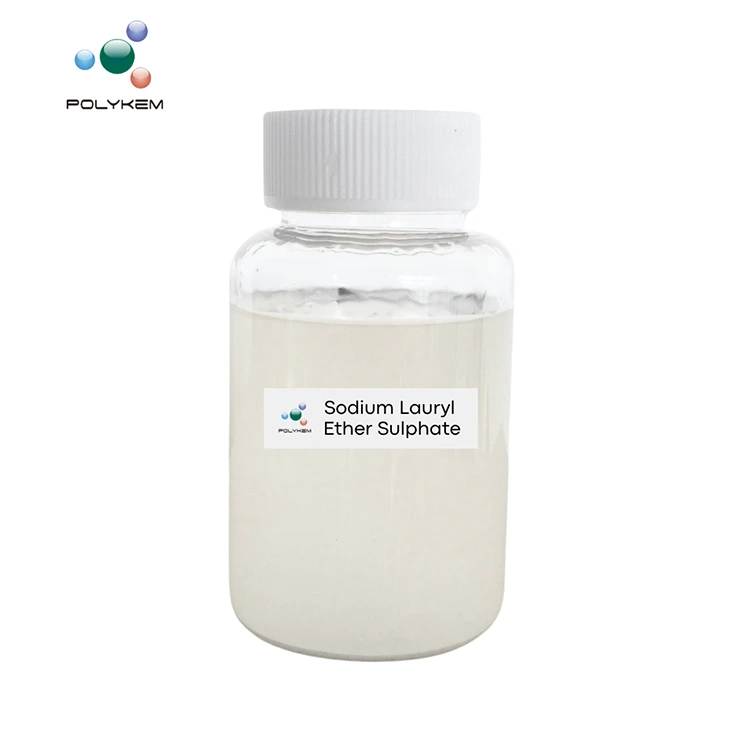
1. What Is Sodium Lauryl Ether Sulphate?
Sodium Lauryl Ether Sulphate, commonly abbreviated as SLES, is an anionic surfactant widely used in cleaning and personal care products. It is also commonly known as Sodium Laureth Sulfate. Its ability to reduce surface tension, remove oily contaminants, and produce foam makes it a valuable ingredient in a broad range of commercial formulations.
SLES is generally produced through the ethoxylation of fatty alcohols, followed by sulfation and neutralization. The ethoxy groups in its molecular structure distinguish it from Sodium Lauryl Sulfate (SLS), giving SLES different formulation and performance characteristics.
In commercial markets, SLES is commonly supplied in concentrated paste or liquid forms. SLES 70% is a widely traded concentrated grade, while lower-concentration liquid grades are also available. The exact specifications depend on the manufacturer's production process and product grade.
2. Chemical Structure and Working Principle
Understanding how SLES works helps manufacturers select suitable formulations and troubleshoot performance problems during production.
2.1 Molecular Structure
SLES has a hydrophobic fatty alkyl chain and a hydrophilic sulfate-containing head group. It also contains ethoxy units between these two functional regions. This amphiphilic structure allows the molecule to interact with both water and oily substances.
When added to water, SLES molecules migrate toward interfaces and help reduce surface tension. Above an appropriate concentration, they can form micelles, which help incorporate and disperse oily materials within an aqueous cleaning system.
2.2 How Does SLES Clean?
The cleaning process involves several interconnected mechanisms:
- Surface tension reduction: Helps water spread across surfaces instead of remaining in isolated droplets.
- Wetting: Improves contact between the cleaning solution and the target surface.
- Oil removal: Helps loosen and disperse greasy substances during washing.
- Micelle formation: Helps solubilize and suspend oily contaminants in water.
- Foam generation: Produces foam that contributes to the sensory and functional characteristics of cleaning products.
These properties make SLES suitable for products that require reliable cleansing performance and a noticeable foam profile.
3. Key Properties and Performance Characteristics
For industrial buyers, evaluating SLES requires attention to both chemical characteristics and practical formulation performance. Different grades may behave differently depending on their concentration, ethoxylation level, and manufacturing conditions.
3.1 Main Performance Characteristics
| Property | Performance Description | Formulation Importance |
|---|---|---|
| Cleansing ability | Helps remove dirt, oil, and greasy residues. | Supports effective cleaning performance. |
| Foaming performance | Produces abundant foam under suitable conditions. | Important for shampoos and liquid detergents. |
| Water compatibility | Can be incorporated into suitable aqueous formulations. | Facilitates liquid product manufacturing. |
| Viscosity response | Viscosity can be adjusted through formulation design. | Helps achieve the desired product texture. |
| Surfactant compatibility | Can be combined with many compatible surfactants. | Allows flexible formulation development. |
| Wetting performance | Improves liquid contact with different surfaces. | Supports cleaning and washing efficiency. |
3.2 Factors That Influence SLES Performance
Actual performance depends on more than the SLES concentration alone. Several formulation variables should be evaluated:
- Active matter: Determines the effective surfactant content and affects dosage calculations.
- Water hardness: Dissolved minerals may influence the performance of the overall surfactant system.
- pH: The finished formulation should remain within a range appropriate for the product and all its ingredients.
- Temperature: Can influence solubility, processing behavior, and viscosity.
- Electrolyte concentration: Salt and other dissolved materials can significantly change viscosity.
- Co-surfactants: Other surfactants may improve foam quality, mildness, or cleansing performance.
4. Common SLES Grades and Specifications
SLES is available in different concentrations and commercial grades to accommodate different production requirements. Buyers should always check the manufacturer's technical data sheet rather than assuming that all products sold under the same name have identical specifications.
4.1 Common Commercial Concentrations
| Grade | Typical Product Form | Common Purchasing Considerations |
|---|---|---|
| SLES 70% | Concentrated paste | High active matter, transportation efficiency, and dilution requirements. |
| SLES 28% | Liquid solution | Easier liquid handling and suitability for certain manufacturing processes. |
| Other concentrations | Liquid or concentrated solution | Specific production requirements and supplier availability. |
These concentrations are common commercial examples, not universal product specifications. Actual active matter, appearance, pH, unsulfated matter, sodium sulfate content, and other quality indicators should be confirmed against the relevant batch documentation.
4.2 Important Parameters to Check
Before placing an order, manufacturers should review the following information:
- Active matter content and test method.
- Appearance, color, and physical condition.
- pH value and measurement conditions.
- Unsulfated matter content.
- Sodium sulfate content.
- Residual impurities and relevant quality limits.
- Batch number and certificate of analysis.
- Packaging specifications and shelf-life information.
Comparing these parameters helps buyers avoid situations where two products appear commercially similar but deliver different results in actual production.
5. Major Applications Across Industries
Because of its cleansing, foaming, and wetting properties, SLES is used in many industries. The appropriate grade and concentration depend on the intended product, manufacturing process, and applicable regulations.
5.1 Shampoo and Hair Care Products
SLES is widely used as a primary cleansing ingredient in shampoos. It helps remove sebum, dirt, and product residues from hair and the scalp. Its foaming characteristics also contribute to the familiar washing experience expected by many consumers.
Formulators often combine SLES with other surfactants and conditioning ingredients to balance cleansing strength, foam characteristics, viscosity, and consumer preferences.
5.2 Body Wash and Liquid Hand Soap
In body washes and liquid hand soaps, SLES provides cleansing and foam generation. It can be incorporated into formulations with suitable secondary surfactants, moisturizers, fragrances, and other functional ingredients.
For products designed for frequent use, manufacturers should carefully evaluate skin compatibility and finished-product performance through appropriate testing.
5.3 Dishwashing Liquid
SLES is used in dishwashing liquid formulations to support the removal of food residues and grease. Its wetting and foaming properties help create a convenient washing experience.
Manufacturers may combine it with other anionic or nonionic surfactants to improve grease removal, foam stability, and rinsing characteristics.
5.4 Household Cleaning Products
Liquid household cleaners, general-purpose detergents, and certain surface-cleaning products may use SLES as part of their surfactant systems. The ingredient helps wet surfaces and disperse oily contaminants.
5.5 Industrial and Institutional Cleaning
In selected industrial and institutional cleaning applications, SLES can serve as a component of formulated detergent systems. Its suitability depends on the target soil, substrate, water conditions, cleaning temperature, and required rinsing performance.
| Application | Primary Function | Key Formulation Focus |
|---|---|---|
| Shampoo | Cleansing and foaming | Hair feel and scalp compatibility |
| Body wash | Washing and foam generation | Skin feel and mildness |
| Hand soap | Removal of everyday dirt | Viscosity and rinsing |
| Dishwashing liquid | Grease removal and wetting | Cleaning efficiency and foam |
| Household detergents | Surface cleaning | Surfactant compatibility |
| Industrial cleaners | Wetting and detergency | Substrate and process compatibility |
6. Why Manufacturers Choose SLES
Manufacturers select raw materials according to product performance, production efficiency, formulation costs, and supply reliability. SLES offers several practical advantages that explain its continued popularity.
6.1 Effective Cleansing Performance
SLES helps remove oily and particulate contaminants by improving wetting and supporting the dispersion of soil in water. This makes it useful in products where reliable everyday cleaning performance is required.
6.2 Rich Foam Formation
Foam is an important product characteristic in many personal care and household cleaning applications. SLES can generate substantial foam under suitable formulation conditions, making it useful in shampoos, body washes, and liquid detergents.
6.3 Flexible Formulation Options
SLES can be used alongside a variety of compatible surfactants and functional ingredients. This flexibility allows manufacturers to develop products with different cleansing strengths, foam profiles, textures, and cost targets.
6.4 Established Industrial Supply
As a widely used commercial surfactant, SLES is available through established chemical supply chains. Manufacturers can evaluate different grades, packaging formats, and sourcing arrangements according to their production scale.
6.5 Practical Cost Management
Its availability in concentrated grades can help manufacturers optimize transportation and raw material handling costs. However, the lowest purchase price does not necessarily represent the lowest formulation cost. Active matter, handling losses, quality consistency, and finished-product performance should all be considered.
7. How to Use SLES in Formulations
Correct incorporation is essential for achieving consistent product quality. Although the detailed procedure varies by product type, the following practices provide a useful starting point for manufacturers.
7.1 Calculate Dosage Based on Active Matter
One common formulation mistake is calculating raw material dosage without considering its active matter content.
For example, when using SLES 70%, 10 kg of raw material contains approximately 7 kg of active surfactant, assuming the stated concentration is accurate.
Active Surfactant = Raw Material Weight × Active Matter Percentage
Required Raw Material Weight = Target Active Surfactant Weight ÷ Active Matter Percentage
For instance, to provide 7 kg of active surfactant using a 70% grade, the required raw material quantity is 10 kg. This calculation helps maintain comparable active surfactant levels when switching between different commercial concentrations.
7.2 Incorporate SLES Gradually
For concentrated paste grades, gradual addition into the appropriate water phase can help reduce handling difficulties and improve mixing uniformity.
- Prepare the water phase according to the formulation.
- Add SLES gradually under controlled mixing.
- Allow sufficient time for uniform incorporation.
- Avoid unnecessary high-speed mixing that introduces excessive air.
- Monitor temperature and viscosity throughout processing.
7.3 Adjust Viscosity Carefully
SLES viscosity is influenced by several factors, including surfactant concentration, electrolyte level, temperature, and the presence of other ingredients.
Salt may be used to adjust viscosity in certain SLES-based systems, but the relationship is not linear. Adding too much salt can reduce viscosity instead of increasing it. Therefore, small-scale trials and controlled additions are recommended.
7.4 Evaluate Compatibility
Before scaling up production, test the compatibility of SLES with all major formulation components. Particular attention should be given to cationic ingredients, electrolytes, fragrances, preservatives, and specialty additives.
Laboratory testing should evaluate appearance, viscosity, pH, foam, stability, and performance under the expected storage and use conditions.
8. How to Select the Right SLES Supplier
Choosing a dependable SLES supplier is an important purchasing decision, especially for manufacturers operating continuous production lines or serving customers with strict quality requirements.
8.1 Check Product Specifications
Start by requesting a current technical data sheet and certificate of analysis. These documents help confirm whether the offered material meets the required active matter, impurity limits, and other purchasing specifications.
8.2 Evaluate Batch Consistency
Inconsistent raw materials can lead to changes in viscosity, foam performance, and finished-product appearance. Buyers should ask suppliers about batch testing, quality control procedures, and traceability systems.
8.3 Review Packaging and Transportation
Packaging should match the product concentration, physical form, transportation distance, and storage conditions. Common commercial packaging may include drums, IBC containers, or other suitable industrial packaging, depending on the supplier's available options.
8.4 Confirm Documentation and Compliance
International buyers should confirm the availability of relevant documents, such as:
- Technical Data Sheet (TDS).
- Safety Data Sheet (SDS).
- Certificate of Analysis (COA).
- Product specifications and batch information.
- Country-of-origin and shipping documentation, where applicable.
- Additional regulatory or customer-specific documents when required.
8.5 Compare Total Purchasing Value
A reliable sourcing decision should consider more than the quoted price per ton. Buyers should also evaluate active matter, product consistency, packaging efficiency, delivery lead time, communication, and after-sales support.
9. Quality Control and Storage Recommendations
Proper quality control and storage practices help protect SLES quality throughout warehousing, transportation, and manufacturing.
9.1 Incoming Quality Inspection
Manufacturers should establish an incoming inspection procedure for every delivered batch. Depending on product requirements, testing may include:
- Visual appearance and color.
- Active matter determination.
- pH measurement under specified conditions.
- Unsulfated matter analysis.
- Sodium sulfate determination.
- Physical condition and handling characteristics.
9.2 Storage Conditions
SLES should be stored in suitable, tightly closed containers under the conditions specified by the supplier. Protect the material from contamination, excessive heat, freezing, and other conditions that may affect product quality.
For concentrated paste grades, temperature management is particularly important because temperature changes can influence viscosity and handling properties.
9.3 Inventory Management
Use a first-in, first-out inventory system where appropriate. Record batch numbers, receiving dates, storage conditions, and inspection results to improve traceability and reduce the risk of using unsuitable material.
10. Handling and Safety Considerations
Although SLES is widely used in formulated consumer products, concentrated raw material should be handled responsibly. Its hazard profile depends on concentration, grade, and exposure conditions.
Direct contact with concentrated SLES may cause eye or skin irritation. Appropriate precautions should be established according to the supplier's SDS and workplace risk assessment.
- Wear suitable chemical-resistant gloves and protective eyewear.
- Prevent splashes and unnecessary direct contact.
- Use appropriate ventilation during handling and processing.
- Keep containers closed when not in use.
- Follow the SDS instructions for spills, first aid, and disposal.
- Train employees in safe handling and emergency procedures.
For personal care applications, the safety and suitability of the finished product must be assessed separately. Ingredient selection, concentration, exposure time, product type, and applicable cosmetic regulations should all be considered.
11. Frequently Asked Questions About Sodium Lauryl Ether Sulphate
Q1. What is Sodium Lauryl Ether Sulphate mainly used for?
SLES is mainly used as an anionic surfactant in shampoos, body washes, liquid hand soaps, dishwashing liquids, household detergents, and selected industrial cleaning formulations. Its main functions include cleansing, foaming, wetting, and helping disperse oily contaminants.
Q2. What is the difference between SLES and SLS?
SLES contains ethoxy groups in its molecular structure, while SLS does not. Both are anionic surfactants, but their formulation behavior and application characteristics differ. SLES is frequently selected for personal care and household cleaning formulations where its specific balance of cleansing and foaming properties is desired.
Q3. What does SLES 70% mean?
SLES 70% generally refers to a concentrated commercial grade containing approximately 70% active matter. The remaining portion consists of water and other components associated with the product specification. Always verify the exact composition and test method with the supplier.
Q4. Is SLES suitable for shampoo manufacturing?
Yes. SLES is widely used as a cleansing and foaming ingredient in shampoo formulations. Manufacturers commonly combine it with other surfactants and conditioning ingredients to achieve the desired cleansing performance, foam quality, viscosity, and hair feel.
Q5. Can SLES be mixed with other surfactants?
Yes. SLES can be combined with many compatible anionic, nonionic, and amphoteric surfactants. The compatibility of each ingredient should be evaluated through laboratory trials, especially when the formulation contains cationic materials or high electrolyte concentrations.
Q6. How can manufacturers increase the viscosity of SLES-based products?
Viscosity can be adjusted through surfactant concentration, suitable salt addition, and the selection of compatible thickening agents. Since salt response varies with the formulation, manufacturers should perform gradual additions and monitor viscosity rather than relying on a fixed salt dosage.
Q7. Does SLES produce stable foam?
SLES can produce abundant foam under suitable conditions. Actual foam volume and stability depend on concentration, water quality, temperature, co-surfactants, and other formulation ingredients.
Q8. What documents should buyers request from an SLES supplier?
Buyers should normally request a Technical Data Sheet, Safety Data Sheet, and Certificate of Analysis. Additional documents may be necessary depending on destination-market regulations, customer requirements, and the intended application.
Q9. How should SLES be stored?
SLES should be stored in tightly closed, suitable containers under the temperature and handling conditions specified by the manufacturer. Protect it from contamination, excessive heat, freezing, and unsuitable storage environments.
Q10. What should I consider when purchasing SLES in bulk?
Important considerations include active matter, product grade, batch consistency, quality documentation, packaging, delivery schedule, supplier reliability, and total purchasing cost. Requesting a sample for production testing before a large order is recommended.
12. Conclusion: Building Better Formulations with the Right SLES
Sodium Lauryl Ether Sulphate remains an important raw material in the personal care, household cleaning, and detergent industries. Its cleansing efficiency, foaming performance, wetting ability, and formulation flexibility make it a practical choice for a wide range of commercial products.
However, successful application depends on choosing the appropriate grade, understanding active matter, controlling formulation conditions, and maintaining consistent raw material quality. Manufacturers should also consider compatibility testing, storage management, and supplier documentation when developing or optimizing their products.
For buyers looking for a dependable chemical sourcing partner, Qingdao Polykem Co., Ltd. provides a professional point of contact for discussing chemical raw material requirements and sourcing needs. Selecting suitable specifications and establishing reliable supply arrangements can help manufacturers improve production consistency and support long-term business growth.
Looking for a Reliable SLES Supplier?
Searching for Sodium Lauryl Ether Sulphate for your personal care, detergent, or industrial cleaning formulations? Contact Qingdao Polykem Co., Ltd. to discuss your product specifications, application requirements, packaging preferences, and bulk purchasing needs.
Our team is ready to help you explore suitable chemical raw material solutions for your business.
Contact Us