
Why Are Electroplating Labels Suitable for Outdoor Products?
2026-10-14
A product manager for a camping gear brand reviews warranty claims for a popular backpack model. The most common complaint is not a broken zipper or a torn strap. It is the brand label on the front pocket. Customers report that the label has faded, peeled, or turned black after a few months of outdoor use. The label is a standard printed polyester film. It was not designed for continuous UV exposure, rain, and temperature cycling. The product manager decides to evaluate Electroplating Labels as a replacement. These labels use a metallic electroplated layer that is bonded to the substrate, not just printed on the surface. This guide explains why electroplating labels outperform conventional labels in outdoor applications.
1. What Makes Electroplating Labels Different From Printed Labels?
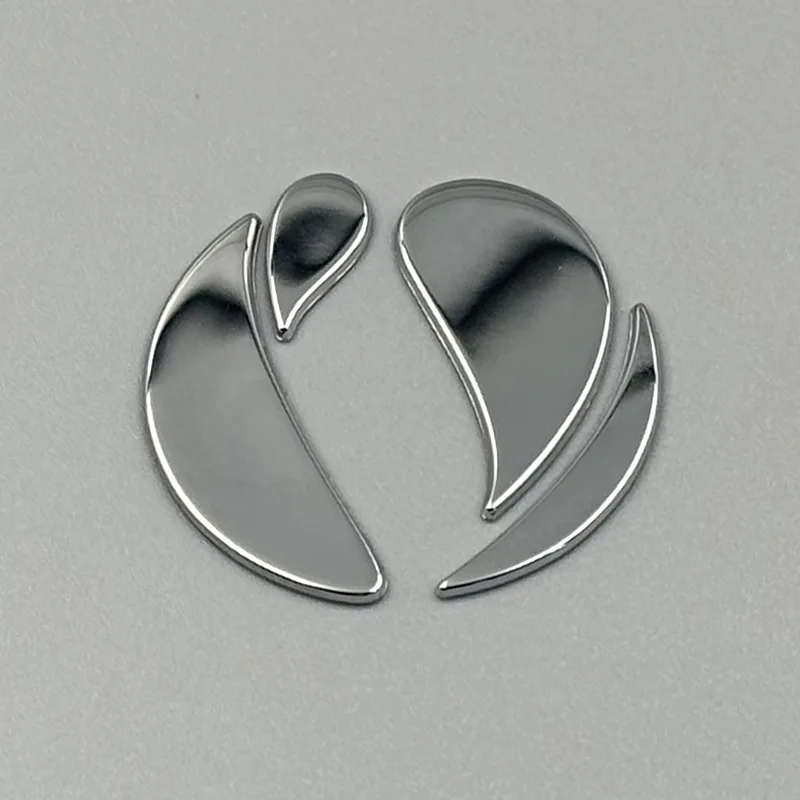
A conventional printed label is made by printing an image onto a plastic film or paper substrate. The image sits on the surface of the material. It is exposed to abrasion, chemicals, and UV radiation. An Electroplating Labels is made by depositing a thin metal layer onto a substrate through an electroplating process. The metal layer becomes part of the label surface. It is not an ink that can fade or wear away. The metal layer can be nickel, chrome, gold, or silver. The table below compares the construction of printed labels and electroplating labels.
| Feature | Printed label | Electroplating label |
| Image formation | Ink printed on surface | Metal deposited on substrate |
| Durability | Moderate | High |
| UV resistance | Fades within 6 – 12 months | No fading (metal) |
| Abrasion resistance | Low | High (metal surface) |
| Chemical resistance | Moderate | Excellent |
| Appearance | Flat, printed | Metallic, reflective |
In our factory, we produce Electroplating Labels with a nickel or chrome finish. The metal layer is 0.05 to 0.10 microns thick. It is bonded to a PET substrate with a high-strength adhesive. The labels are die-cut to the customer's shape and supplied on a release liner. Yiwu Tangwu crafts Co., Ltd. has been manufacturing electroplating labels for over 10 years.
2. How Do Electroplating Labels Resist Outdoor Weathering?
Outdoor products are exposed to four environmental factors: UV radiation, moisture, temperature cycling, and abrasion. Electroplating Labels resist all four. The metal layer does not absorb UV radiation, so it does not fade or degrade. The metal layer is also impermeable to moisture, so the label does not swell or delaminate. The adhesive is a solvent-based acrylic that maintains its bond strength from -30°C to +90°C. The table below shows the performance of electroplating labels in accelerated weathering tests.
| Test | Test condition | Duration | Result |
| UV exposure | ASTM G154, cycle 1 | 1,000 hours | No color change (Delta E < 1.0) |
| Salt spray | ASTM B117 | 500 hours | No corrosion, no delamination |
| Temperature cycling | -30°C to +80°C | 100 cycles | No cracking, no lifting |
| Abrasion | Taber abraser, 500 g | 1,000 cycles | No metal removal |
| Humidity | 85°C, 85% RH | 1,000 hours | No change in adhesion |
The UV exposure test is the most important for outdoor products. A printed label will fade within 200 to 400 hours of UV exposure. The Electroplating Labels shows no color change after 1,000 hours. This is equivalent to 2 to 3 years of outdoor exposure in a moderate climate. In our factory, we test every batch of electroplating labels for adhesion and appearance after the weathering tests. Yiwu Tangwu crafts Co., Ltd. provides the test report with each shipment.
3. What Surface Finishes Are Available for Electroplating Labels?
The surface finish of an Electroplating Labels determines its appearance and its resistance to fingerprints and scratches. The most common finishes are bright chrome, satin nickel, gold, and rose gold. Bright chrome is highly reflective and is used for premium branding. Satin nickel has a matte appearance that resists fingerprints. Gold and rose gold are used for luxury products. The table below shows the properties of each finish.
| Finish | Appearance | Fingerprint resistance | Scratch resistance | Typical application |
| Bright chrome | High gloss, mirror-like | Low | Moderate | Premium branding, automotive |
| Satin nickel | Matte, brushed | High | High | Outdoor gear, tools |
| Gold | Warm, reflective | Low | Low | Luxury packaging, cosmetics |
| Rose gold | Pink, reflective | Low | Low | Fashion accessories, gifts |
| Black chrome | Dark, semi-gloss | Moderate | High | Tactical gear, electronics |
Selection tip: For outdoor products that are handled frequently, we recommend a satin nickel or black chrome finish. These finishes hide fingerprints and resist scratching better than bright chrome or gold. For products that are displayed on a shelf and handled less, bright chrome or gold provides a more premium appearance. In our factory, we can provide finish samples so that the customer can evaluate the appearance and the fingerprint resistance before making a decision.
4. How Should Electroplating Labels Be Applied for Best Performance?
The application of the label is critical for its performance. The surface must be clean, dry, and free of oil or mold release agent. The label should be applied with a pressure of at least 20 N/cm² to ensure full contact between the adhesive and the surface. The temperature should be between 15°C and 30°C. The table below shows the application requirements for different surfaces.
| Surface type | Preparation | Application pressure | Recommended temperature |
| ABS plastic | Isopropyl alcohol wipe | 20 – 30 N/cm² | 18 – 25°C |
| Polypropylene | Flame treatment or primer | 30 – 40 N/cm² | 20 – 30°C |
| Powder-coated metal | Isopropyl alcohol wipe | 25 – 35 N/cm² | 18 – 28°C |
| Anodized aluminum | Isopropyl alcohol wipe | 20 – 30 N/cm² | 18 – 25°C |
| Textured plastic | Isopropyl alcohol wipe | 30 – 40 N/cm² | 20 – 30°C |
In our factory, we provide an application guide with every order. The guide includes the surface preparation method, the recommended application pressure, and the cure time. We also offer a hand roller for applying the labels. Yiwu Tangwu crafts Co., Ltd. provides technical support for customers who are applying electroplating labels for the first time.
Frequently Asked Questions About Electroplating Labels for Outdoor Products
Summary for Product Managers and Designers
Electroplating Labels are suitable for outdoor products because the metal layer resists UV radiation, moisture, temperature cycling, and abrasion. They do not fade like printed labels, and they maintain their appearance for 2 to 3 years of outdoor exposure. The surface finish can be selected to match the product's aesthetic and to provide fingerprint or scratch resistance. The application process is critical for performance, so the surface must be properly prepared and the label must be applied with adequate pressure. Yiwu Tangwu crafts Co., Ltd. has been manufacturing electroplating labels for over 10 years and provides full technical support for our customers.
Yiwu Tangwu crafts Co., Ltd. manufactures Electroplating Labels with nickel, chrome, and gold finishes, on PET substrates with high-strength acrylic adhesive. We provide finish samples, weathering test reports, and application guides for all of our products.