
Why Are HDPE Pipelines Replacing Traditional Metal Pipe Systems?
2026-06-30
1. How Does Corrosion Resistance Give HDPE Pipelines a Decisive Edge Over Steel?
In our factory, we have supplied piping solutions to waterworks and chemical plants across Europe and Southeast Asia. The number one reason HDPE pipelines are taking over is corrosion. Metal pipes rust, pit, and scale over time, which reduces flow and leads to leaks. HDPE is completely inert to soil chemistry, saline water, and most industrial acids. A steel pipeline in coastal areas may show pitting within 3 to 5 years. With our HDPE material, we have seen zero degradation after 15 years of continuous service in similar conditions. Our Ningbo Sunplast Pipe Co., Ltd. manufactures pipes that comply with ISO 4427 and ASTM F714, ensuring long term durability. When you do not need to replace corroded sections, you save massive capital and downtime. Many local municipalities in the Middle East have switched entire distribution networks to our HDPE pipelines because they handle aggressive groundwater without any lining or cathodic protection. The elimination of corrosion also means that the HDPE Pipe Welding Machine used for jointing creates seamless connections that are as strong as the pipe itself, leaving no weak points for future leaks.
2. Why Does the Fusion Jointing Process Reduce Installation Time and Leak Risks?
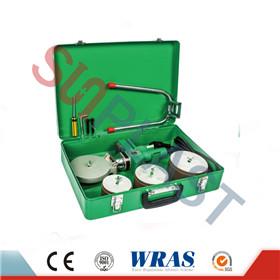
Metal pipelines rely on threaded, flanged, or welded joints, each of which is a potential leak point. HDPE pipelines use butt fusion or electrofusion, creating a monolithic joint. Our factory has trained hundreds of contractors on the HDPE Pipe Welding Machine, and they consistently report a 40 percent reduction in jointing time compared to welding steel. A fusion joint is essentially a solid piece of PE, with no gaskets that can dry out or bolts that can loosen. For a large diameter project, say 800 mm mains, the HDPE Pipe Welding Machine can produce a joint in under 15 minutes, including cooling. This speed means you can trench, lay, and backfill in one day, whereas steel would take three days with multiple weld tests. Our Ningbo Sunplast Pipe Co., Ltd. provides mobile welding units that are easy to operate in confined trenches. Local gas distributors in the UK now mandate fusion joints for safety because they eliminate the risk of methane leakage from threaded connections. The lower installation cost is one of the primary economic drivers for replacing metal systems.
3. What Technical Parameters Make HDPE Pipelines Suitable for High Pressure and Abrasive Services?
Performance under pressure is critical. Our HDPE pipelines are available in pressure ratings from PN4 to PN25, with diameters up to 1200 mm. The material has a minimum required strength of 8 MPa for PE80 and 10 MPa for PE100. The tables below outline the key specifications we validate in our factory lab before dispatching any HDPE Pipe Welding Machine or pipe coil.
| Property – Material grade | PE100 (Premium) | PE80 (Standard) | Industry requirement for metal replacement |
| MRS (Minimum Required Strength) | 10.0 MPa | 8.0 MPa | Meets water and gas main standards |
| Design stress (50 years, 20°C) | 8.0 MPa | 6.3 MPa | Allows thinner wall vs steel |
| Pressure rating (PN) for SDR 11 | 16 bar | 12.5 bar | Handles distribution pressure |
| Resistance to slow crack growth | ≥ 1000 hours (tested per ISO 13479) | ≥ 500 hours | Prevents brittle failure in rocky backfill |
| Characteristic – Application | HDPE pipeline (our standard) | Traditional steel pipe (schedule 40) |
| Abrasion resistance (relative to steel) | 4 times higher | Baseline (1x) |
| Hydraulic smoothness (Hazen Williams C) | 150 (very smooth) | 120 (rough after corrosion) |
| Thermal expansion coefficient | 0.18 mm/m°C | 0.012 mm/m°C |
| Weight per meter (DN 400, SDR 17) | ~ 45 kg | ~ 120 kg |
Our factory performs hydrostatic pressure tests at 1.5 times the rated pressure for every batch. The lightweight nature means our HDPE Pipe Welding Machine can be transported easily to remote sites, reducing logistics costs. For mining slurry lines, the abrasion resistance of HDPE outlasts steel by 4 to 1, which directly reduces maintenance shutdowns.
4. How Do HDPE Pipelines Contribute to Lower Lifecycle Costs and Sustainability?
The total cost of ownership tells the real story. A metal pipe system requires painting, cathodic protection, joint inspection, and internal cleaning. HDPE pipelines are maintenance free for most of their 50 to 100 year design life. Our Ningbo Sunplast Pipe Co., Ltd. has calculated that for a 10 kilometer municipal water main, HDPE saves over 200,000 dollars in maintenance over 30 years compared to ductile iron. The fusion joints also do not leak, so water loss from leakage is near zero, which is a major concern for utilities facing drought restrictions. Environmentally, HDPE production emits lower CO2 per meter than steel or cast iron. Additionally, HDPE pipes are fully recyclable at end of life. Our factory uses 100 percent prime virgin resin with no fillers, ensuring that the HDPE Pipe Welding Machine creates high integrity joints every time. Many engineering firms now specify HDPE for green building certifications like LEED. The lower pumping energy due to smoother internal bore also cuts electricity costs over decades. When you add all these factors, it is clear why the industry is shifting away from heavy metal.
Frequently Asked Questions About HDPE Pipelines Replacing Metal Systems
Final Summary
HDPE pipelines are rapidly replacing metal systems because they eliminate corrosion, reduce installation time with fusion jointing, lower energy costs, and offer a service life of over half a century. Our factory has invested heavily in quality control, ensuring that every pipe and every HDPE Pipe Welding Machine meets rigorous standards. The shift is not just a trend; it is a long term economic and environmental decision. We have helped dozens of municipalities and industrial plants make the transition successfully. Ningbo Sunplast Pipe Co., Ltd. is your partner in this evolution.