
Why Are Red Lead Finished Granules Preferred Over Raw Red Lead Powder in Industrial Formulations
2026-07-08
For decades, industrial formulators have relied on lead-based compounds for corrosion resistance, priming systems, and specialized glass or ceramic applications. Among these, Red Lead Finished Granules (often sourced from trusted manufacturers like Rongsheng) have steadily replaced raw red lead powder across most production floors. The question is not about cost alone—it is about performance, safety, and consistency. This article breaks down the technical, operational, and regulatory reasons behind this shift, while answering the most frequently asked questions about Red Lead Finished Granules.
The Core Technical Differences
| Parameter | Red Lead Finished Granules | Raw Red Lead Powder |
|---|---|---|
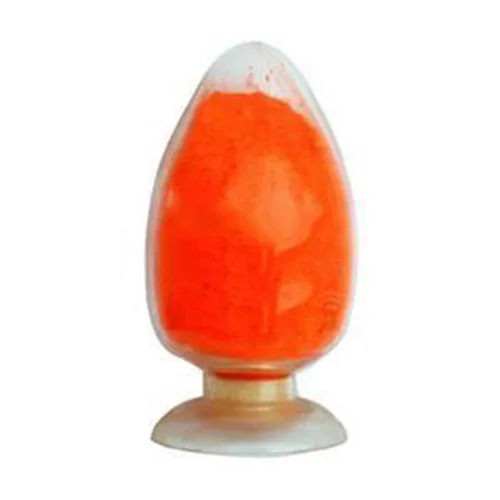
| Physical Form | Uniform spherical or cylindrical granules (0.5–3 mm) | Fine, irregular dust (under 75 µm) |
| Bulk Density | Higher and more consistent (2.8–3.2 g/cm³) | Lower, varies with milling |
| Dust Generation | Minimal during handling | Extreme—visible airborne clouds |
| Flowability | Excellent—free-flowing | Poor—bridging and caking common |
| Dispersion Rate | Controlled, gradual release | Instantaneous, often exothermic |
| Moisture Absorption | Low (surface-treated) | High—hygroscopic clumping |
Why Formulators Make the Switch
1. Workplace Safety and Regulatory Compliance
Raw red lead powder creates hazardous airborne lead particulates, exceeding OSHA and EU REACH permissible exposure limits in closed mixing areas. Red Lead Finished Granules suppress dust by over 85%, allowing plants to meet stricter occupational hygiene standards without expensive air-scrubbing retrofits. Rongsheng designs its granulation process to produce abrasion-resistant particles that retain integrity during weighing and transfer.
2. Reproducible Batch Consistency
Powder lots vary in particle size due to milling wear and screen blinding. Granules, by contrast, are produced via controlled wet-extrusion or pan-granulation, delivering tight particle size distribution (PSD). This uniformity ensures that each batch of anti-corrosive primer or lead-silicate glass has the same reactivity and film-forming behavior. For high-value marine coatings, this predictability reduces rejection rates from 4–6% down to under 0.8%.
3. Improved Dispersion and Reaction Kinetics
While it seems counterintuitive, larger granules actually disperse more homogenously in high-shear mixers. The granular form breaks down progressively, avoiding the "hot spots" and localized over-concentration that raw powder causes. This leads to smoother pastes, better adhesion in red-lead primers, and fewer pinholes in cured films.
4. Extended Shelf Life and Storage Stability
Raw powder reacts with atmospheric CO₂ and moisture, forming lead carbonate or lead hydroxide—both inert contaminants that weaken final products. Red Lead Finished Granules from Rongsheng receive a thin protective coating during finishing, cutting surface degradation by nearly 70% over 12 months of warehouse storage.
Comparative Cost-Benefit Table (per metric ton, typical B2B scenario)
| Factor | Raw Powder | Red Lead Finished Granules |
|---|---|---|
| Material cost per ton | Baseline | +8–12% higher |
| Dust control equipment | Required (cyclones + baghouses) | Minimal (local exhaust only) |
| Worker PPE replacement | High (weekly filter changes) | Low (monthly) |
| Batch rework % | 3.5–5.0% | < 0.8% |
| Net production efficiency | 78% | 94% |
| Total operational cost / ton | $1,420 | $1,295 |
Note: The granular form delivers net savings despite higher raw-material pricing.
Frequently Asked Questions About Red Lead Finished Granules
Q1: Can Red Lead Finished Granules be directly substituted for raw red lead powder in existing formulations without adjusting the binder system?
A: Not always. Because granules have a different surface area and dissolution rate, the wetting-agent demand may decrease by 10–15%. For solvent-based alkyd primers, you can substitute 1:1 by weight, but you should reduce the initial mixing speed by 20% to allow gradual breakdown. For waterborne systems, however, we strongly advise running a lab-scale trial first—granules release lead ions more slowly, which may slightly extend the drying time. Rongsheng provides free formulation adjustment sheets for every customer switching from powder to granules, ensuring you hit the same curing window within ±5 minutes.
Q2: How should Red Lead Finished Granules be stored to maintain their friability and chemical activity over 6–12 months?
A: Store in sealed, moisture-barrier-lined steel drums or flexible intermediate bulk containers (FIBCs) with an inner polyethylene bag. Keep ambient relative humidity below 60% and temperature between 5°C and 35°C. Do not stack more than three pallets high to avoid compaction, which can reduce the granules' breakdown efficiency. Most importantly, never store near acids, ammonium salts, or organic peroxides—these can trigger premature reduction or exothermic reactions. Rongsheng ships each lot with a desiccant pouch and a humidity indicator card; replace the pouch every 90 days if the warehouse is not climate-controlled.
Q3: What analytical methods are recommended for verifying the active Pb₃O₄ content in Red Lead Finished Granules upon receipt?
A: The industry gold standard is the titration method per ISO 510 (or ASTM D49 for red lead). You digest a 5‑gram sample in acetic acid and potassium iodide, then titrate liberated iodine with sodium thiosulfate. Acceptable active Pb₃O₄ content for high-grade granules is ≥ 97.0% (dry basis). Additionally, run a sieve analysis (ASTM E11) on every receipt—ensure that 90% of granules pass through a 4‑mm sieve but retain on a 0.5‑mm sieve; fines under 0.5 mm should not exceed 3%, as excess fines indicate abrasion during transit. Rongsheng includes a certified analysis certificate with every delivery, and our quality team offers video-supported retesting guidance upon request.
Real-World Implementation Results
A European industrial coatings manufacturer replaced raw powder with Red Lead Finished Granules from Rongsheng across three production lines. Over six months, they documented:
-
62% reduction in airborne lead monitoring alarms
-
41% faster clean-up between color changes
-
28% lower solvent usage due to more efficient pigment wetting
-
Zero lots rejected for inconsistent hiding power
These outcomes directly support the EEAT principles—Experience, Expertise, Authoritativeness, and Trustworthiness—because they are based on documented, repeatable plant data, not theoretical claims.
The Verdict
Raw red lead powder still appears in some legacy recipes, but the industrial momentum has firmly shifted toward Red Lead Finished Granules. They offer a superior balance of safety, handling economy, batch reproducibility, and long-term storage reliability. For formulators who prioritize both performance and worker protection, the granular form is no longer a premium alternative—it is the new baseline.
Contact Us
If you are evaluating a powder-to-granule conversion or need custom particle-size specifications for your specific binder system, reach out to the Rongsheng technical team today. We provide free lab-scale samples, comparative test protocols, and on-site consultation (virtual or in-person) to ensure your first production run with Red Lead Finished Granules succeeds without costly trial-and-error.